


Miami officials cite a largely untested state law as they back away from a promise by District 2 Commissioner Damian Pardo to block Grove properties from buying or selling housing density tied to affordable housing construction.
Coconut Grove will not be exempt from a controversial City of Miami zoning provision that allows developers to transfer housing density from affordable housing projects to market-rate and luxury developments elsewhere in the city, enabling projects such as The WELL and other high-end condominiums to build up to 50% more units than allowed under base zoning.
The proposed exemption — negotiated with residents by Miami District 2 Commissioner Damian Pardo after public outcry last month over plans to expand the city’s so-called “density transfer” program — would have barred Coconut Grove developments from buying or selling housing density linked to affordable housing projects.
But in an email to constituents last Friday, District 2 community liaison Javier Gonzalez argued that a Coconut Grove carve-out from the transfer provision would likely violate a 2025 state law that bars municipalities from adopting land-use rules more restrictive than those permitted under existing codes.
Instead, Gonzalez said the Pardo-backed proposal — scheduled for review Wednesday by the city’s Planning, Zoning and Appeals Board — would raise the threshold for participation in the program by requiring projects to build more affordable units before becoming eligible to sell and transfer excess density to developments in Coconut Grove.
But the revised proposal also adds a new incentive that could make the program even more attractive to developers in Coconut Grove and elsewhere in the city: waiving parking requirements for units added through transferred density.

The city’s density transfer program allows developers of affordable housing projects in economically distressed areas to build fewer units than zoning allows and sell the unused density elsewhere in the city, enabling those “receiving site” developments to increase unit counts by up to 50% — even if the additional units are not affordable.
Receiving-site developments must fall within a mile of transit hubs such as Metrorail stations or along high-volume transit corridors — areas that include more than half of the residential properties in the City of Miami. In Coconut Grove, those corridors include SW 27th Avenue, Grand Avenue, Douglas Road and Bird Avenue, among others.
City officials defend the density transfer practice, arguing that allowing developers to monetize unused housing density — rather than build the full number of affordable units permitted under zoning rules — can help make those projects financially viable by giving developers an additional revenue stream.
A proposed expansion of the program, now under review, would increase the number of areas citywide eligible to sell and transfer unused housing density and, in some cases, lower the number of units developers must build before qualifying as a so-called “sending site.”
Pardo announced the proposed carve-out — exempting Coconut Grove from the law’s provisions — after residents complained that unrealized housing density generated by price-restricted affordable housing projects in Miami’s lower-income neighborhoods was, paradoxically, fueling luxury condo development in Coconut Grove, along with the traffic and infrastructure demands that accompany it.
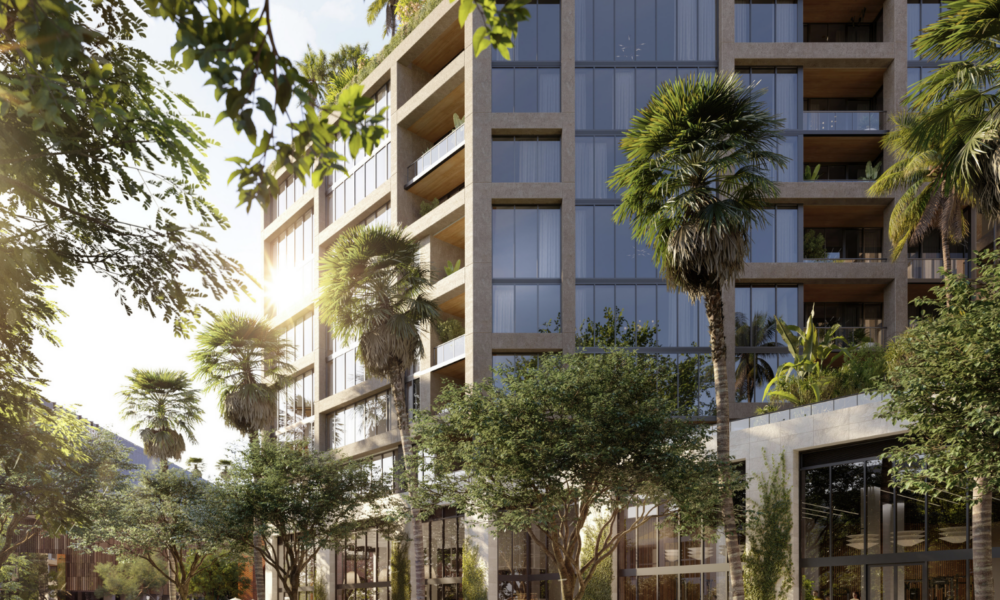
Indeed, one project that could benefit from the program is The WELL Coconut Grove, a 194-unit luxury condominium on Tigertail Avenue in Center Grove. Under existing zoning, the site is limited to 129 residential units, but city officials have told the Spotlight that the developer, Coconut Grove-based Terra Group, plans to boost that capacity by the maximum allowable 50% by purchasing enough transferred density to add 65 units. Such transfers could occur through either the city’s affordable housing density transfer program or a similar program that allows development rights tied to historic properties to be bought and sold.
Pre-construction prices at The WELL range from $1.4 million to $8 million.
Other projects that could benefit include The Lincoln, The Lennox, an unnamed eight-story development proposed near the Ritz-Carlton, and a slew of other proposed and pending projects along the SW 27th Avenue corridor from U.S. 1 to South Bayshore Drive.
The state law cited as an impediment to exempting Grove properties from the density transfer program is Florida Senate Bill 180, a sweeping measure adopted in 2025 (but retroactive to 2024) to speed hurricane recovery by temporarily limiting the ability of cities and counties to adopt land-use rules that make development “more restrictive or burdensome.”
While some cities and counties have begun pushing back on the measure, development interests have interpreted the law broadly as a shield against zoning changes of virtually any kind that could limit development capacity, far beyond its original storm-recovery purpose.
Despite the city’s decision to forgo a Coconut Grove carve-out, the legal exposure under the state law may not be as clear-cut as suggested. Excluding the Grove from the density transfer program would not change base zoning or reduce the number of units already permitted; it would simply remove access to a voluntary program that allows developers to exceed those limits, raising questions about whether such a step would be considered “more restrictive or burdensome.”
And Pardo’s negotiated proposal to tighten, rather than eliminate entirely, the eligibility requirements for projects selling and transferring density into the Grove — a compromise provision in the revised amendment up for review on Wednesday — may undercut the city’s own claim that the state law bars restrictions on the program of any kind.
Through a spokesperson, Pardo declined to answer questions from the Spotlight.
Editor’s note: An earlier version of this story stated that Senate Bill 180 was passed in 2024. The bill was passed in 2025. The story has been updated.














The City of Miami, Miami-Dade County and The State of Florida are all whores for developers.
They ignore the insanity of enabling infinite growth.
Developers only care about making money in the short term. They couldn’t care less about the traffic, overcrowding and harmful impact that overdevelopment causes on our quality of life and infrastructure.
In theory, our elected officials should be protecting our long term quality of life. In reality, they love getting campaign contributions from developers, so they kiss the hands that are slowly strangling us.
As any teenager might say, this City Commission and Mayor need to “grow a pair” and stand up to both the County and State. Miami is the premiere municipality in the State, it has its own zoning code that provides multiple ways for the city to grow and increase density other than using the bogus magical mantra “affordable housing.” Even our little neighborthe municipality of South Miami stood up to the State and successfully maintained its sovereignty and its dignity. So “grow a pair,” Commissioners. Try it.
Apparently Commissioner Pardo has a revision to the proposed Ordinance that will be discussed at tomorrow evening’s zoning meeting. I don’t understand the suggested language that Commissioner Pardo’s office emailed to me. My question to Commissioner Pardo and Javier Gonzalez is whether the City’s legal department is of the opinion that this suggested language, if approved by the zoning commission and adopted by the City Commission, would preclude Terra Group from increasing the number of units from 129 to 194 units (129 +65 =194 units.) If Terra Group is able to build an additional 65 units, would they then be able to build higher than 8 stories in order to accommodate the additional 65 units (if the current T5 Ordinance lawsuit against the City does not prevail?)