Even as overall violent crime declines across the city, a decade of unsolved homicides in the Grove — all involving Black male victims — has left families waiting for answers while law enforcement remains largely silent.
When Antovis Stanley got out of prison in 2017, he vowed to stay away from Coconut Grove, the place he was born, raised and ran into so much trouble.
Using the skills he learned in a carpentry program behind bars, he landed a steady job with a Miami kitchen appliance store. He found an apartment in Liberty City, bought a car and connected with his daughter.
But in a decision that Jalena Stanley later said she found surprising, her brother decided in 2022 to visit his old haunts for a Christmas Eve party in the West Grove, on Percival Avenue, where a fight broke out and Stanley was shot. Hit with three bullets, Stanley was rushed by ambulance to Ryder Trauma Center at Jackson Memorial Hospital, where he was pronounced dead. Stanley was 43.
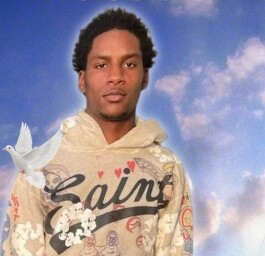
Despite the number of people at the party who may have witnessed the shooting, Miami police have made no arrests in the killing of Antovis Stanley, which is officially listed as an “unsolved homicide.”
“I think the case is cold,” said Jalena Stanley, 30, a public charter school teacher. “We got no return calls. It’s like they didn’t care to finish an investigation. I think there’s more that they could do. But he’s Black and had a criminal record…”
Antovis Stanley is one of at least seven homicide victims in Coconut Grove, or originally from the Grove, over the past decade whose cases remain unsolved — all of them Black men, according to a Spotlight review.
Black men account for more than 70 percent of the 168 homicide victims between 2016 and 2024 that Miami police list on the department’s website as unsolved. (Cases from 2025 and 2026 are not included). The list does not include any unsolved homicides from other local municipalities or within the jurisdiction of the Miami-Dade Sheriff’s Office.
Disparities in arrest rates in cases involving Black and white victims have been well documented. A 2018 analysis by The Washington Post, for example, found that of more than 50,000 homicides across major U.S. cities over a decade, only about half resulted in an arrest. The data also revealed a disparity: police made arrests in 63 percent of cases involving white victims, compared with 47 percent for cases involving Black victims.
“I am not surprised,” said Marvin Dunn, an emeritus professor of psychology at Florida International University and a onetime Coconut Grove resident. “It’s a national phenomenon that the loss of Black lives has never been considered as urgent as the loss of others.”
Melba Pearson is a civil rights attorney who works in the Jack D. Gordon Institute for Public Policy at FIU. She is also a former Miami-Dade County prosecutor who has handled homicide cases. The reasons Black and brown homicides tend to go unsolved more than those of white victims, she says, include fear in the communities that keep witnesses from coming forward, understaffed investigative units, and the lack of attention the cases get from police.
“It’s an epidemic that will continue if law enforcement doesn’t make a concerted effort,” said Pearson. “Resources are not adequately designated. Police departments are swamped, and the squeakiest wheel gets the attention. So, when there is advocacy on part of family, those are the cases that rise to the top of the pile.”

On the City of Miami Police Department’s unsolved homicides webpage, police and the nonprofit Miami-Dade Crime Stoppers have posted the pictures of 168 victims killed in Miami from 2016 to 2024 and a brief notation of where each was killed.
The page urges the public to “Speak up against community violence” and “Say something, stay anonymous.” Two phone numbers are listed: the Miami Police Homicide Unit at 305-603-6350 and Crime Stoppers at 305-471-8477.
“Crime Stoppers offers a reward of up to $3,000 to anyone who provides information that leads to the arrest of the person or persons responsible for any homicide committed in our city,” the page advises. (It is unclear why unsolved homicides in Miami since 2024 are omitted from the city’s webpage).
Miami police did not respond to the Spotlight’s repeated requests for comment over a number of months regarding ongoing investigations into unsolved homicides or potential disparities in solve rates by race. A request to review investigative files for each of the cases has been denied.

For the family of Antovis Stanley, chances of any resolution in his killing seem faint. “I hope they work the case and give the family closure,” said sister Lamesha Stanley. “But it’s a cold case.”
Born in the Grove and raised by his grandmother, Stanley was described in his obituary as a “very creative and unique guy that enjoyed home improvement projects and outdoor sports.” As a youngster he played roller hockey and practiced martial arts.
Known by the nicknames Tovis or Street, Stanley was certainly no stranger to local police. He was convicted of armed robbery in 1995, when he was just 16 years old, and sentenced to six years in prison. He was released after four and a half years.
Arrested again in 2005 for carrying a concealed weapon, Stanley went back to prison for another two years. In 2011 he was arrested for a third time, convicted of drug possession and sales. He did nearly four more years behind bars.
Upon his release in 2017, he told family members he “was excited to be home, and was going to try to be an adult,” said Jalena Stanley. “He got his driver’s license, bought a car and went to work every day.” He was employed by LA Cuisine Appliances, “where he served dutifully,” his obituary said.
After his death, Jalena Stanley said, she kept in touch with police and waited for results of their investigation. “We know there were detectives working it,” she said. “They said they would be in touch.”
But no arrests were made. A year after Stanley’s homicide, the family was told to pick up his car, a Ford Fusion, from the impound lot.
“I don’t have any hope that anyone will ever pay at this point,” said Jalena Stanley. “I feel that they wrote him off. He had a criminal record. They probably thought, ‘He got himself into this situation.’ And then there’s the code – the code that says no snitching. From what I can see so far, the code is alive and well in Coconut Grove.”
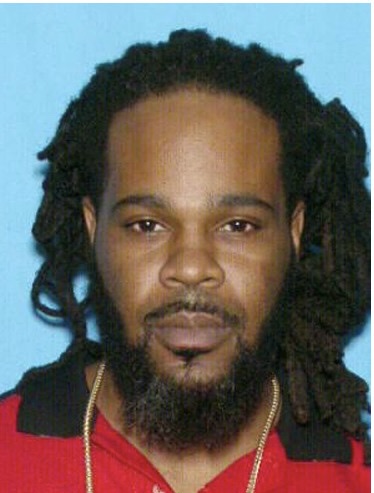
Following is a list of unsolved homicides in Coconut Grove, or involving Grove residents, over the past 10 years:
Rasaad Sawyer, 23: Raised in the Grove, Sawyer was a graduate of Coral Gables High School, where he played wide receiver on the football team. He was killed in Miami’s Brownsville neighborhood on March 5, 2024. Police said unknown shooters opened fire on a car in which he was traveling. A 20-year-old woman in the car was wounded. Known by the nickname “Tounk,” Sawyer was described in his obituary as “a gentle genuine soul always laughing, giving out hugs and being a leader and teacher amongst his peers.”
Demonte Poitier, 24: Poitier was shot and killed on Feb. 13, 2024, as he sat in his silver 2003 Toyota Camry parked in the 3300 block of Plaza Street. His mother, Sabrina Rolle, told the Spotlight that her son had been living in Broward County and may have been lured to the Grove to meet someone. Known as Red, Poitier was hit by at least 10 bullets, his mother was told. “He was a very kind-hearted human being and gave a lot to the ones he cared for,” Rolle wrote in a GoFundMe page. “Our hearts are broken more than one could imagine.” In the days after the killing, police released surveillance footage capturing the shooting and urged anyone with information to come forward.
Antovis Stanley, 43: Stanley was shot at a Christmas Eve party of Percival Avenue in 2022. He was pronounced dead at Jackson Memorial Hospital.
Dwight Dupuch, 37: A truck driver and the father of two, Dupuch was shot and killed early on the morning of Sept. 9, 2019, near Ike’s Food Center on Douglas Road. Video from television stations show his body in the street near a bicycle. “My son and his other brothers just lost a great father,” Roxanne Gomez, the mother of Dupuch’s 18-month-old child, told NBC 6. Grove resident Patricia Dupuch, the slain man’s mother, told the Spotlight that police never updated her on any progress in an investigation into his death.
Derrick Larenzo Williams, 29: Williams was apparently riding a bicycle in the 3300 block of Thomas Avenue just before 8 p.m. on March 3, 2018, when he was shot in the right side of his abdomen, police said. Responding to a 911 call, police found Williams around the corner and a few hundred feet away at 3427 Margaret St. He was taken by ambulance to the Ryder Trauma Center at Jackson Memorial Hospital, where he was pronounced dead.

Maurice Reath 39: Police said Reath had multiple gunshot wounds when he was found just after 10 p.m. on Nov. 7, 2017, in the 3400 block of Grand Avenue. Florida Department of Corrections records indicate he was arrested at the age of 14 and subsequently adjudicated as a sexual offender.
Tyrone Burch, Jr., 31: Just after midnight on July 31, 2016, police were called to the 3700 block of Percival Avenue where Burch was found on the ground with multiple gunshot wounds. The responding officer performed CPR on Burch until the ambulance arrived to take him to the Ryder Trauma Center at Jackson Memorial Hospital, where he was pronounced dead. Detectives interviewed two witnesses at the scene, but no arrests were made.

Coconut Grove — like much of Miami-Dade — has seen a sharp decline in violent crime in recent years, but gun violence in the predominantly Black West Grove neighborhoods remains stubbornly persistent. In 2025 two men were shot and killed, in March and August, just blocks from each other in unrelated incidents. The suspects are now in custody.
And just last month, another man was shot during an argument on Douglas Road just north of Grand Avenue. The man survived the shooting but no arrests have been made.