
Miami’s Planning, Zoning and Appeals Board voted Wednesday to dust off a long-delayed rezoning plan that city staff says could revitalize an important West Grove corridor.
Miami’s Planning Zoning and Appeals Board voted unanimously Wednesday to approve a resolution that could advance a long-stalled rezoning effort in the West Grove.
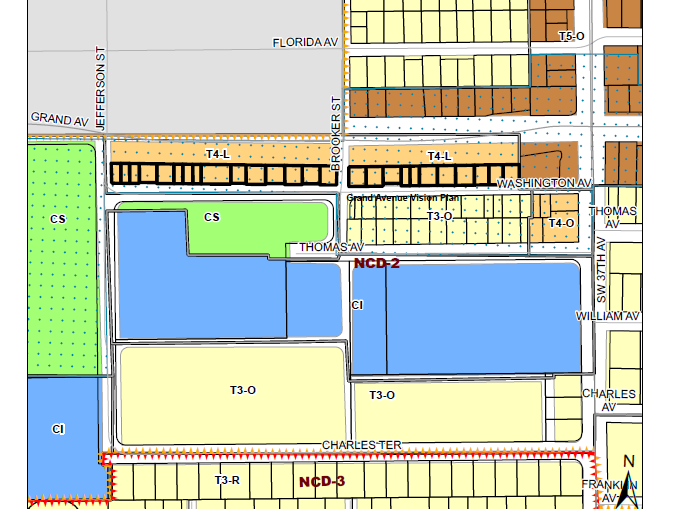
The resolution authorizes city staff to prepare a rezoning application for 26 properties on Washington Avenue that face Grand Avenue, changing their zoning designation from T3-O, a single-family designation, to T4-L, a medium-density designation that allows for greater density and mixed-use development.
The application would also change the properties’ designation on the city’s Future Land Use Map (or FLUM) from “Duplex Residential” to “Low Density Restricted Commercial.”
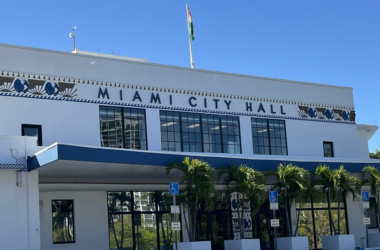
The board’s vote does not rezone the properties. Instead, it starts a process that will require the proposal to return to PZAB for a full hearing and recommendation. If the board approves, the proposal would advance to the City Commission for consideration.
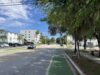
Wednesday’s vote marks the latest step in a city-led rezoning effort along Grand Avenue that has been delayed, revised and withdrawn multiple times over the years.
Sevanne Steiner, assistant director of the city’s Planning Department, told the board that she has seen at least three versions of the application during her four years with the department.
The most recent version was scheduled to come before PZAB in May but was withdrawn the night before the meeting. In an email circulated ahead of the meeting, Javier Gonzalez, the Coconut Grove liaison for District 2 Commissioner Damian Pardo, said the items were pulled because of limited community engagement.
At the time, the city was also proposing to rezone 11 properties on Thomas Avenue between Douglas Road and Plaza Street to allow for more housing.
In an interview after Wednesday’s meeting, Steiner indicated that the Thomas Avenue changes drew the most pushback from the community. Those addresses were not included in Wednesday’s vote.
In a December fact sheet that described both sets of proposed changes, city planners said the new zoning could help to revitalize Grand Avenue’s commercial corridor.
“By allowing a greater variety of housing types and combining commercial with residential units, these (changes) aim to create a more diverse and lively community while supporting long-term growth and employment opportunities,” staff wrote.
Residents and developers have clashed over how to encourage investment on Grand Avenue while preserving the historic character and affordability of the neighborhood, amid ongoing concerns about gentrification across the West Grove.
Steiner described PZAB’s decision as one step toward implementing Miami’s Grand Avenue Vision Plan, published in 2002, and the West Grove Vision Plan. Both call for a mix of residential, commercial and cultural activity along Grand Avenue, she said.
Grand Avenue property owner and architect Clara Garcia attended Wednesday’s meeting in support of the rezoning effort. In an interview after the meeting, she said she’s been advocating for mixed-use rezoning along the corridor since 2014.
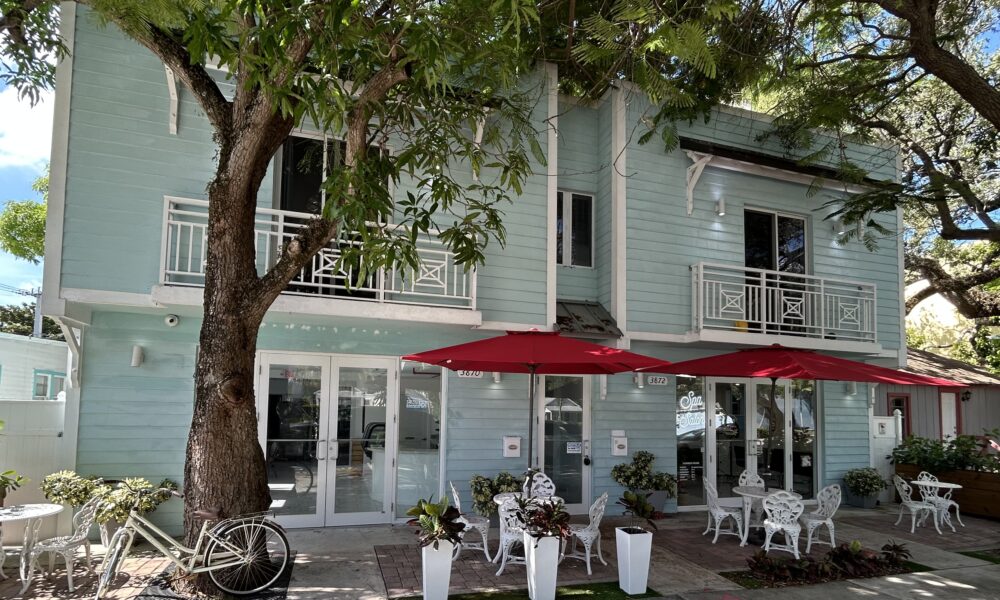
Garcia owns two properties listed in the application: 3893 Washington Avenue and 3870 Grand Avenue, home to Garin Art Caffe. With an exterior designed to reflect Bahamian-style architecture, Garcia said the cafe has served as a much-needed community hub on a stretch of Grand Avenue that has long been “forgotten” by the city.
The cafe reflects Garcia’s vision of what flexible zoning could bring to the community — a revived corridor celebrating the Grove’s unique architectural history, small businesses and the local arts scene.
“Coconut Grove was the core of the art in Miami,” she said, adding that only a handful of resources remain in the West Grove. “We don’t want to lose this focus.”
Garcia said the current T3-O zoning – if left unchanged – could push the neighborhood in a different direction, with larger, more expensive single family homes that would be out of reach for many longtime residents.
“We have to be better for the community,” she said.
Garcia said new T4-L zoning, if approved, would encourage the development of mixed-use projects with commercial space below and more affordable apartments above.
Garcia said affordability is increasingly important as major luxury and market-rate developments continue to reshape the east side of Grand Avenue.
Active Grand Avenue projects include the mixed-use Ziggurat development at Matilda Street, and two Silver Bluff projects: Elemi Phase 2 – a five-story, 27-unit apartment building – and an 80,000-square-foot Class A office building across six cleared properties between Hibiscus and Elizabeth Streets.
“In the next two years Grand Avenue, from CocoWalk to Douglas, is going to be totally changed,” Garcia said. “The character is going to be like Brickell.”
“The only pathway that’s gonna keep the architectural style that belongs to the Bahamian community is what we are trying to develop,” she added.
Steiner estimated that it will take about six months for the application to return to PZAB with a full staff report. If PZAB approves the proposal, she said the City Commission could consider the rezoning as early as April.
Sinclair Holian is a Spotlight reporter and Report for America corps member covering gentrification and development in Coconut Grove. She joins us through our partnership with Report for America, a national organization that places journalists in local newsrooms across the United States.