


Developer David Martin is actively pitching his Seaquarium redevelopment plan to local residents even while he fights efforts to force a public referendum on the project.
Developer David Martin pitched his Seaquarium redevelopment plan on Monday to a live audience at the Rusty Pelican, the second presentation in as many weeks as Martin and Miami-Dade County push to finalize their vision for the county-owned property.
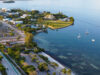
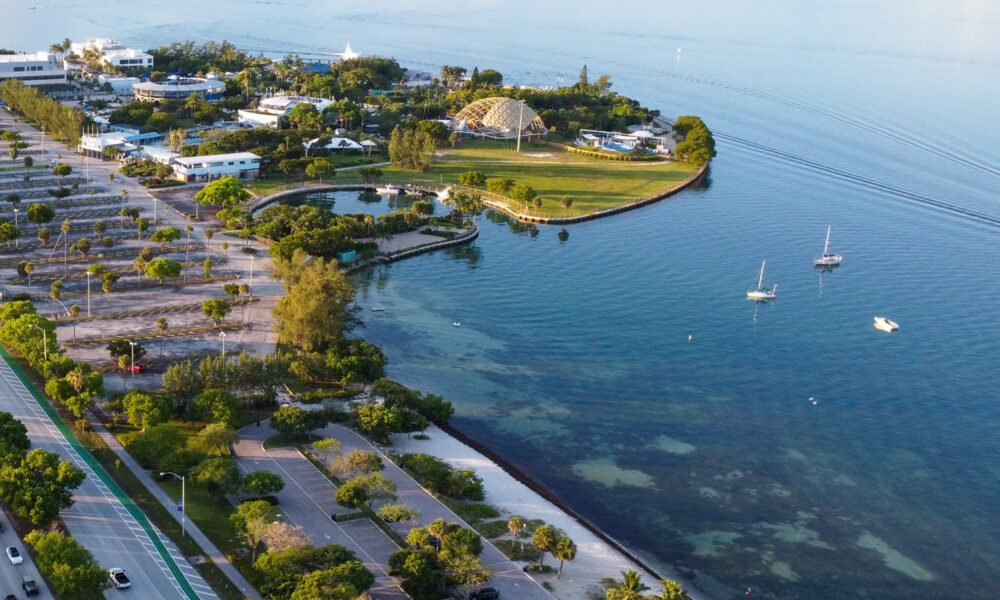
The $100-million project to replace the defunct marine park on Virginia Key with an aquarium, a large marina, a science center and public baywalk has sparked environmental concerns and a lawsuit demanding a voter referendum on the proposed public-private partnership.
“We envision an aquarium without marine mammals, a public waterfront that welcomes people without an attraction ticket, and opportunities for research, education, recreation and restoration,” Martin told listeners on Monday.
“Over the past year, we have been listening to this community, and we will continue to listen,” he added. “It has helped us improve this plan. We’ve heard concerns about the marina, the health of the bay, traffic, and public access.”
The event began with passed hors d’oeuvres and ended with written questions from audience members that Martin and a team of advisors sought to answer.
Here are five takeaways from the event:
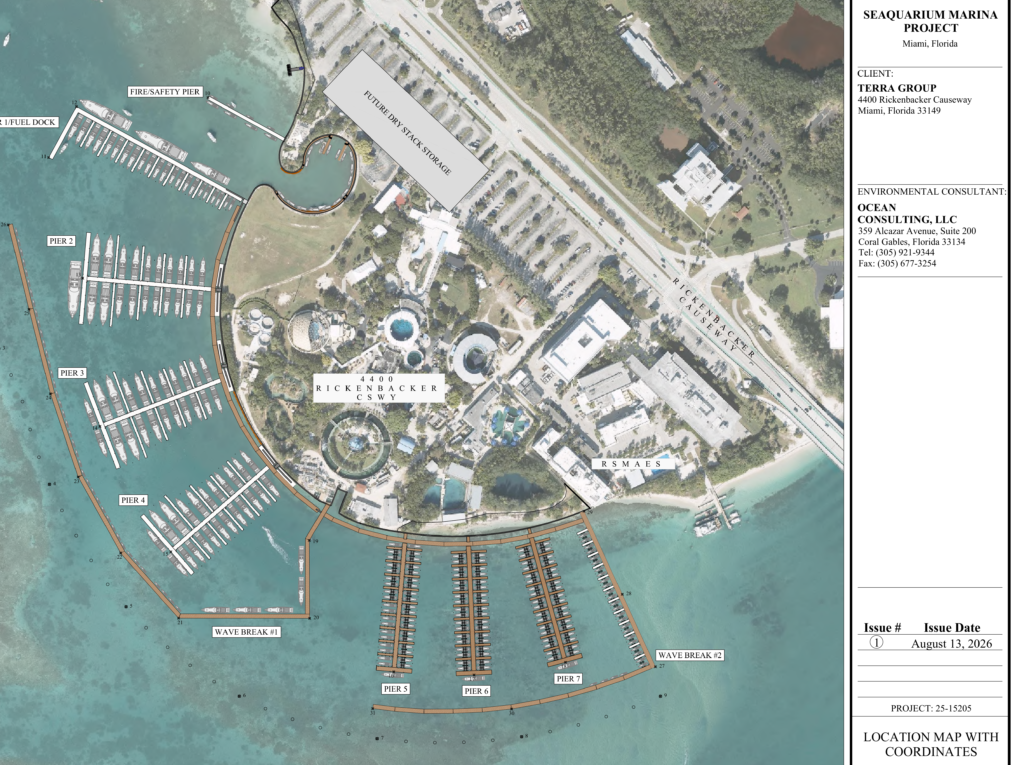
The Proposed Marina: Martin described the proposed marina as the financial engine of the project. The project won’t happen without the marina, he said. The marina would accommodate 841 boats, with 295 wet slips and dry storage for another 546 vessels.
Local environmentalists have expressed concern about the marina’s impact on the surrounding marine habitat. State wildlife officials want Martin to shrink the size of the marina to better protect manatees.
Martin has reduced the size of the marina once (eliminating one pier and 30 wet slips). “There is a request for more, and we are working through that,” he said Monday.
Environmental Impact: Martin said there are no plans to dredge bay bottom to accommodate the marina. The area was previously dredged in the 1940s.
Project plans call for the addition of live coral, oysters, sponges and seagrass – all meant to enhance marine habitat and improve water quality.
Team members said they were confident those and other features would deliver a net positive impact to bay waters. Audience members questioned whether the transplanted colonies would survive, given Biscayne Bay’s poor water quality, and expressed concern about the impact of 800-plus boats on manatees and sensitive marine habitat.
Public Benefit: Martin said the project will include an “Ocean Walk” stretching three quarters of a mile around the perimeter of the Seaquarium property, open to the public free of charge, with a kayak launch and a series of pocket parks.
The Seaquarium’s iconic Golden Dome by Buckminster Fuller, dating to 1960, will be restored as well, he said, and utilized for private and public events.
The Legal Challenge: Martin invited attorney Gene Stearns, a Key Biscayne resident, to comment on the citizens lawsuit that, if successful, would force the county to schedule a countywide referendum on the project.
“I do not believe it is a serious issue,” Stearns said. Stearns, who is representing Martin in the litigation, filed a motion to dismiss the lawsuit on Tuesday.
On Monday, he said the portion of the County Charter that protects public park land (Article 7) includes specific exemptions for marinas and the Seaquarium, allowing the county to move forward without a vote.
Read more: The Seaquarium Project Heads to Court
But why not let voters decide, audience members wanted to know, if the project is as good for the public and the environment, as described?
County Commissioner Raquel Regalado, who joined Mayor Daniella Levine Cava in the audience, said any delay could derail the project because of the bankruptcy case involving the former Seaquarium operator. The Seaquarium lease, which Martin is seeking to acquire and extend, is considered an asset in that bankruptcy.
Martin pushed back as well, saying voters expressed their will in 1993 when they voted to add Article 7 to the county charter. “There was already a referendum for Article 7 where the Seaquarium was exempted,” he said. “I just want to highlight that a referendum did occur… and the people did speak and voted on this.”
What Happens Next: To advance the project, the county is seeking to change the property’s zoning and negotiate a 99-year lease agreement with Resilient Aquarium, an affiliate of Martin’s Terra Group in Coconut Grove.
In coming weeks, the project will be vetted by several county committees and then brought before the County Commission on November 19 for approval of the land-use and zoning changes. The County Commission will also need to approve a lease agreement with Martin. The timing of that vote is uncertain.
Editor’s Note: The virtual briefing Martin delivered on October 21 has been posted on YouTube, and can be seen at https://www.youtube.com/watch?v=AOG5lROT53w