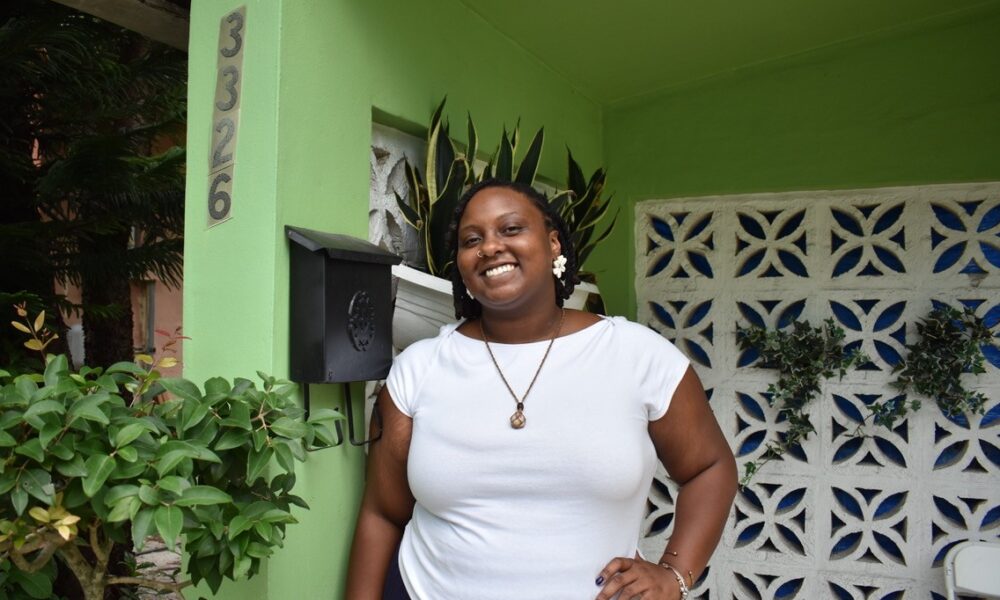

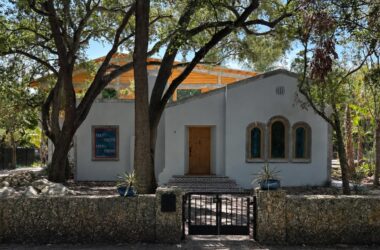
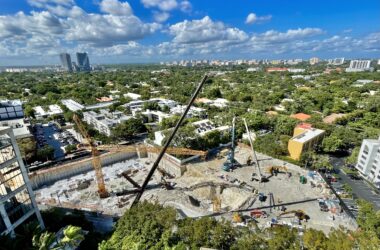

As development reshapes the historically Black West Grove neighborhood, 23-year-old Jasmine Doyle is fighting to preserve the community that raised her.
After Jasmine Doyle left her childhood home for college in 2021, she always counted down the days until her next trip back to Charles Avenue.
But every time she returned home, she found a neighborhood that felt a little less familiar. Another multimillion-dollar home had hit the market. Old apartment buildings had been demolished. Families she had grown up with were moving away.
“I was in a weird place of feeling like I did not recognize where I was,” she recalls. “I didn’t recognize home.”
In recent years, a wave of new development has pressed into the West Grove, bringing construction, rising housing costs and growing uncertainty among neighbors about the future of the historically Black neighborhood.
As Doyle watched more neighbors leave, she became increasingly determined to return — and to help her community remain intact.
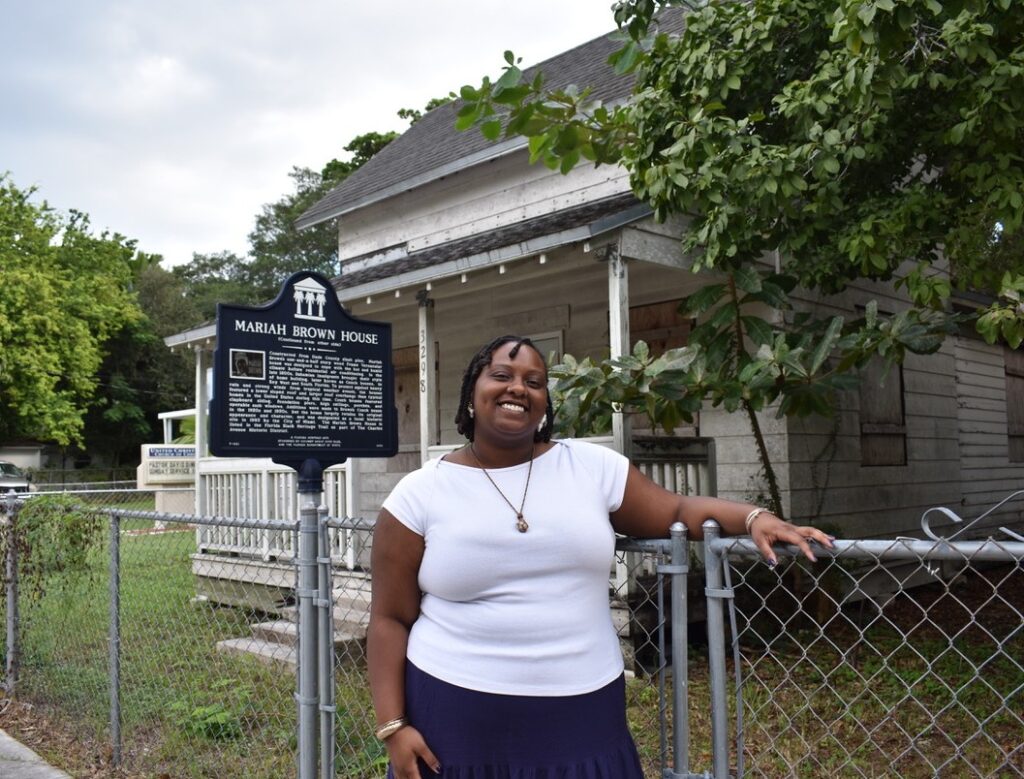
Since graduating from Florida A&M University this spring, she’s done just that. Splitting her time between her childhood home on Charles Avenue and her graduate apartment at Florida International University, she’s immersed herself in community advocacy.
“You know, maybe I can’t fix gentrification, but I know as someone who grew up in Coconut Grove that I can contribute to helping my community thrive and stay,” she said. “It really is my purpose and what I believe I was put on this earth to do.”
Last month, she spoke before the City of Miami’s Planning, Zoning and Appeals Board on behalf of the neighborhood group Preserve the West Grove, challenging a temporary permit that allowed Ransom Everglades School to use two vacant lots on Charles Avenue for construction-worker parking.
“West Coconut Grove is a community where our concerns are minimized and worse, not even heard,” she told the board. “We are not a neighborhood to be taken advantage of and built over. Our community has history worth preserving, a legacy worth protecting and a story that deserves to be told correctly.”
Read more: No Parking: Miami Board Rejects Ransom’s Temporary Parking Lot
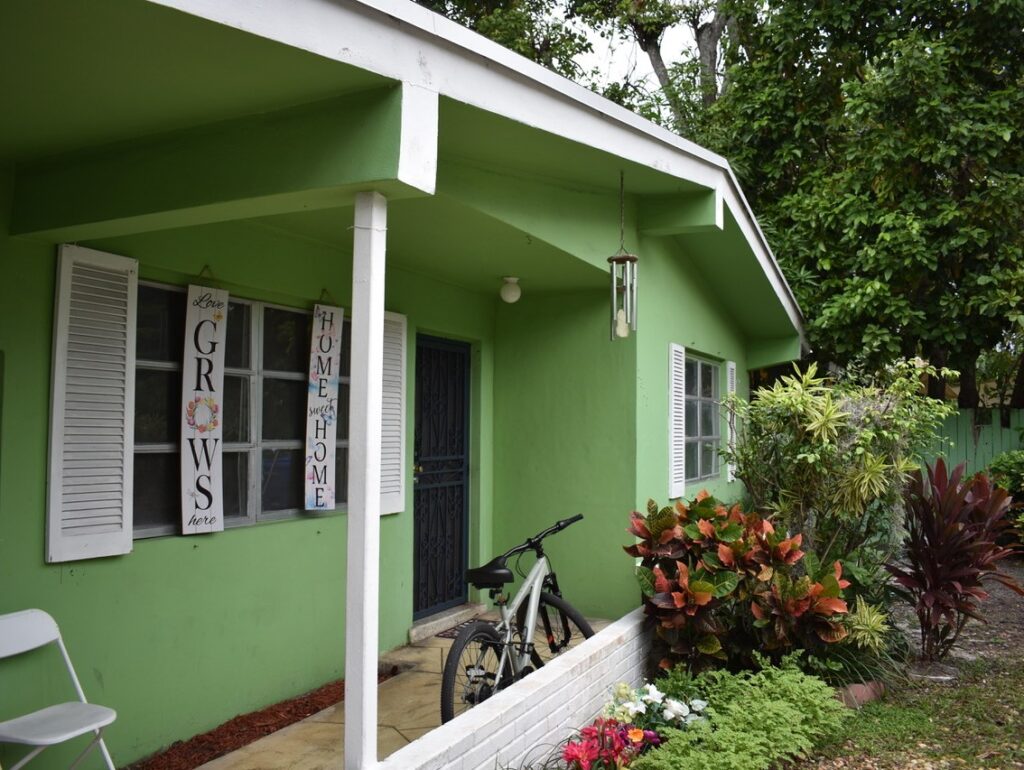
For Doyle, 23, the fight to preserve that history is personal. She grew up on Charles Avenue, surrounded by family and community in the green house her grandmother has called home since the 1970s.
Doyle rode bikes with neighbors, traded her grandmother’s avocados for mangoes, and walked a few doors down to church on Sundays. She remembers her grandfather driving his old truck through the neighborhood, honking and waving to friends.
But as Doyle grew older, that neighborhood began to change. Friends moved away, local businesses closed and houses that looked like her grandmother’s were replaced with modern “sugar cubes.”
As a homesick college student, Doyle turned to history as a way to reconnect with home. Despite spending her childhood on Charles Avenue, a street established by Bahamian immigrants that once served as the community’s main thoroughfare, she realized how little her generation knew about West Grove history.
Charles Avenue is home to some of the most historic structures still standing in Miami, including the house built by Mariah Brown, one of the area’s earliest Bahamian settlers, and the E.W.F Stirrup House, now a bed and breakfast. Built by prominent landowner E.W.F. Stirrup, the house is one of more than 100 he built in Coconut Grove.
Together, those sites symbolize the important history of Black homeownership in Coconut Grove, Doyle said. Yet that history was largely absent from her childhood.
“We always took field trips to the Barnacle, but we never took field trips to the Mariah Brown House,” she said. “We never took field trips to the Stirrup House.”
Now, that history is central to her advocacy. As a first-year graduate student in FIU’s history department, Doyle is seeking to understand how redevelopment and gentrification have contributed to the gap between Black and white homeownership in Coconut Grove.
Doyle’s interest in homeownership isn’t just confined to her research. Her family has rented their house on Charles for decades, and rising rents and the possibility that the property could be sold have left its future uncertain.
“I imagine what I’d do if I won the lottery,” she said with a laugh. “The very first thing I’d do is buy my grandma’s home.”
Rising costs have already affected her family. Doyle’s older sister, Shakia Burnam, had hoped to settle down in the West Grove after law school. But by the time she graduated in 2014, home prices in the neighborhood had put that dream out of reach.
“That’s a sticking point for all of us,” Burnam said. “We all want to eventually be able to own a home, but I don’t know if that’s going to happen with how things are looking right now.”
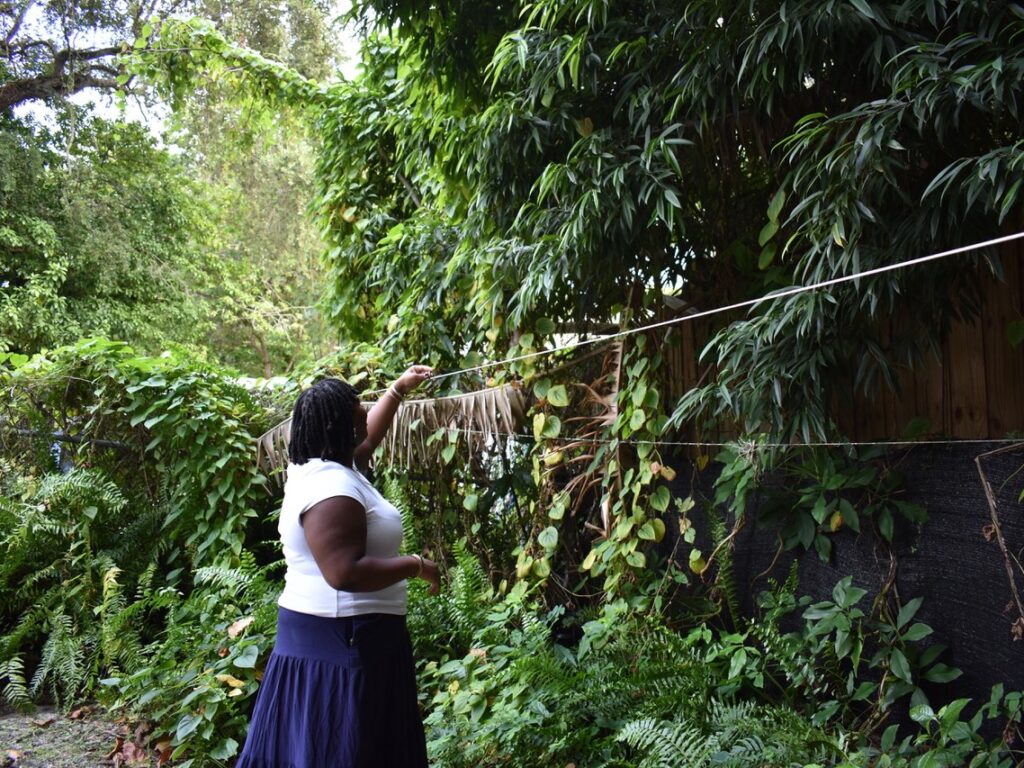
Although Burnam no longer lives in the West Grove, she keeps up with the neighborhood through her sister and takes pride in watching her become a voice for their community.
“She’s making very good strides,” Burnam said. “I’m very proud.”
Beyond her research and work with Preserve the West Grove, Doyle is hoping to get involved with other important community groups across the Grove. Since returning home, she’s connected with the Village West Homeowners and Tenants Association (HOATA), the Coconut Grove Ministerial Alliance, and other leaders in the community.
Ruth Ewing, a West Grove resident and president of the Elizabeth Virrick Park Committee, was delighted to learn Doyle was coming home. Ewing’s daughter grew up with Doyle, and the two spent countless evenings together at Virrick Park’s afterschool program.
Doyle’s decision to return to West Grove sets her apart from many of her peers, Ewing said. “The thing that’s interesting about the Black community in West Grove is that we do seem to have a kind of drain — kids that go on to college, but not coming back to Miami, not coming back to the neighborhood,” Ewing said.
At a time when local organizations like the Virrick Park Committee are struggling to attract younger participants, Ewing said Doyle’s commitment to her community is especially welcome.
“For a young adult who’s now in graduate school, wanting to not only continue her education, but then also wanting to make a difference in her community, it’s certainly admirable,” she said.
Doyle sees her work as a responsibility to the generations who built the community — and those who will inherit it. “When our elders are gone, who’s going to be next?” she asked. “Who’s going to continue the fight?”
Looking ahead, Doyle hopes to make the West Grove’s Black and Bahamian heritage more accessible to younger generations. She plans to pursue a Ph.D. in public history, with the goal of finding new ways to connect residents to the history of the community.
Historic sites such as the Mariah Brown House and E.W.F. Stirrup House, she believes, could become more meaningful resources for young people — places where they can learn about their neighborhood and see themselves as part of its future.
The work is especially important to her because she knows what it feels like to grow up surrounded by history without fully understanding it.
“I know that there are little girls who are like me, who are in the same position as me, that need to see what I did not see,” she said.
Her own future in the neighborhood remains uncertain. She still hopes to own her grandmother’s house one day, though she knows her family’s ability to remain there is not guaranteed.
But leaving the Grove isn’t something she sees in her future.
“I really cannot think of myself moving somewhere else,” she said.
Sinclair Holian is a Spotlight reporter and Report for America corps member covering gentrification and development in Coconut Grove. She joins us through our partnership with Report for America, a national organization that places journalists in local newsrooms across the United States.