

To the Editor:
I was surprised and encouraged during last Thursday’s commission meeting when Miami District 5 Commissioner Christine King spoke out about the damage the Live Local Act will do to our neighborhoods.
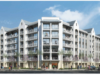
This law, forced upon us from Tallahassee, allows developers “by right” to build huge, towering housing complexes within one mile on either side of the Metrorail or other “transit corridors.”
It overrides the Miami 21 zoning code and our own NCD overlays. The law is intended to stimulate construction of “affordable housing,” but too often results in “unattainable housing” compounded with stress on underfunded infrastructure, roads and parking.
Other people spoke against developing Watson Island, where the city wants to sell land, far below market value, to developers to build a 40-story hotel/condominium complex. This is an island, right at sea level, and in the path of a rising shoreline. It was originally slated for a public park.
Another topic was approving a long-overdue bicycle path upgrade.
All three of these topics deserve serious discussion and thoughtful public input, with an eye toward making sure all of Miami is a place people want to live in and travel to far into the future.
First, the Live Local Act is a direct threat to all Miami neighborhoods. As Andy Parrish noted, with South Miami’s example of pushing back on Live Local, it can be challenged, fought and perhaps solutions reached to preserve our neighborhoods and still achieve sustainable development.
Emasculating local zoning laws and rushing headlong to develop is not the answer. Just because a developer has the ‘right’ to develop, does not make it the right thing to do. Slow it down. Think. Debate.
Find a way to do sustainable growth that doesn’t destroy neighborhoods. I fear for City Hall itself, a historic and valuable coastal property potentially eligible for high-rise development if sold, as it is within one mile of the Metrorail. Will the Coconut Grove Sailing Club be next?
Secondly, we should take the bold step of putting a permanent moratorium on new construction at sea-level along the coast. This includes Watson Island. I am a geologist, and coastal records show an 8-inch sea level rise in the last 50 years (and possibly accelerating), something we now experience regularly with increasing flooding after heavy rains and king tides. We should be championing more parks, trails and open space along the coast as part of the mitigation that will only be more expensive with more development.
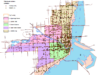
Thirdly, we need to take safe bicycle and pedestrian access seriously and pass the city plan, albeit with some amendments suggested by several groups. The Commodore Trail is the most dangerous, poorly kept five-mile stretch of dedicated bike paths, north, south and east to Key Biscayne. The Underline is a start. Finish the coastal portion. I made it to City Hall in 12 minutes on my bicycle Thursday, clearly beating the 45 minutes it would have taken by car and finding parking. Cycling is a great alternative to driving into the Grove, but remains dangerous.
I write this while vacationing in Colorado, where I once lived for 23 years, volunteering with many groups to preserve historical sites and open space. As in Miami, the fight to prevent over-development remains a constant struggle.
There have been successes, however. Wide bike paths accompany many new developments. The cost is largely borne by developers, but also this increases housing values. Much of the floodplains, like our flood-prone coastline, have been set aside for pedestrian use only, while also creating flourishing wildlife corridors. For over 50 years, new highways and major roads have required parallel bicycle and pedestrian paths.
Miami deserves the same kind of protection. We should make our coast, our canopy and our neighborhoods protected. Sustainable and affordable development is an enormous challenge but can only be solved if there is a concerted will to attain it.
There is no need to rush to approve new development without recognizing that the decisions being made today will persist for the next 100 years. The shoreline is advancing and we can only mitigate against it. Don’t make things worse by pushing to meet short-term pressure from developers who will be long-gone after they have overdeveloped our city.
Costs of stressing our infrastructure with increased density need to be borne by developers but also be sufficient to last well into the future, with strong guarantees that any funds set aside for mitigation actually get spent on mitigation.
Thank you, Commissioner King, for voicing the problem out loud. Push back, slow it down, get it right.
John Dolson
Coconut Grove














amen brother, you are preaching to the choir! it is disheartening to observe the litany of “no comment” from our commissioner, mr. pardo, someone i wanted to believe would quell this rampant “development” of our community. when will it end? that’s the question i ask myself; and where will all these millionaires be driving once they leave their 5 million dollar plus homes and condos? into a sea of unbelievable traffic, unless it’s all underwater, of course. the myopia of our city planners seems limitless. fortunately, i will be dead or will have sold my house in the grove by the time gridlock is an 18 hour a day phenomenon. good luck, miami, you’re digging your own grave.