
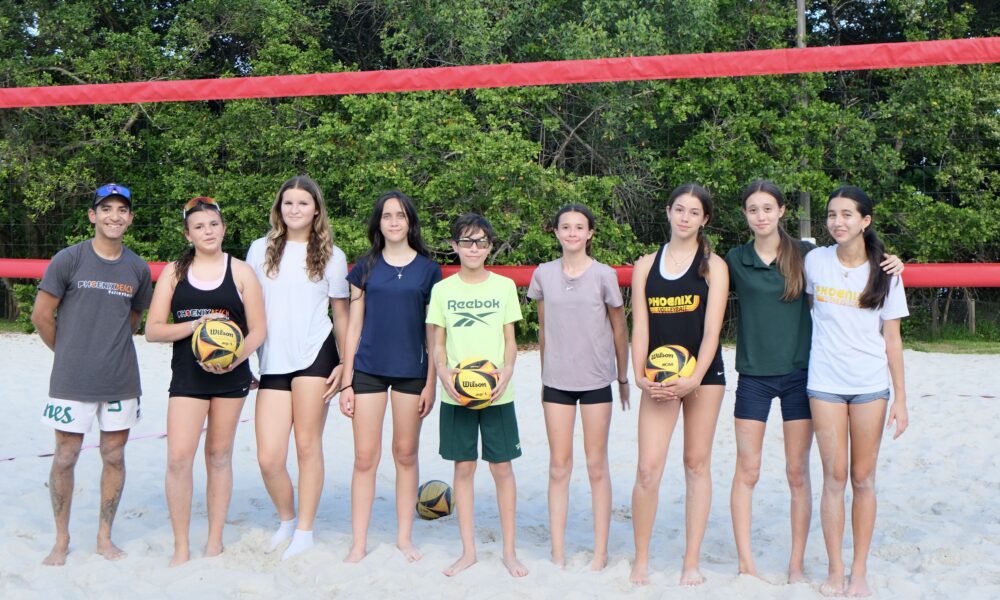


What began as a small program for athletes seeking another path into volleyball has grown into one of Miami-Dade County’s longest-running beach volleyball clubs, helping expand the sport while contributing to the transformation of Kennedy Park’s sand courts.
Most every evening at Coconut Grove’s Kennedy Park, the sand volleyball courts are full.
Players run drills, dive for balls and plead with coaches for five more minutes of practice before the lights shut off at 10 p.m. The courts have become one of the park’s most active gathering places, drawing everyone from elementary school athletes to longtime recreational players.
That wasn’t always the case.
When Phoenix Volleyball Miami was founded in 2016, beach volleyball occupied a much smaller footprint in Coconut Grove — and much of Miami-Dade County. The courts at Kennedy Park lacked lighting, limiting play during much of the year to daylight hours.
This year, Phoenix is celebrating its 10th anniversary. What began as an effort by founder Josh D’Alemberte to help athletes who didn’t make their school volleyball teams, or who wanted a different competitive experience, has grown into one of Miami-Dade’s longest-running beach volleyball programs — and a driving force behind the growth of the sport in South Florida.
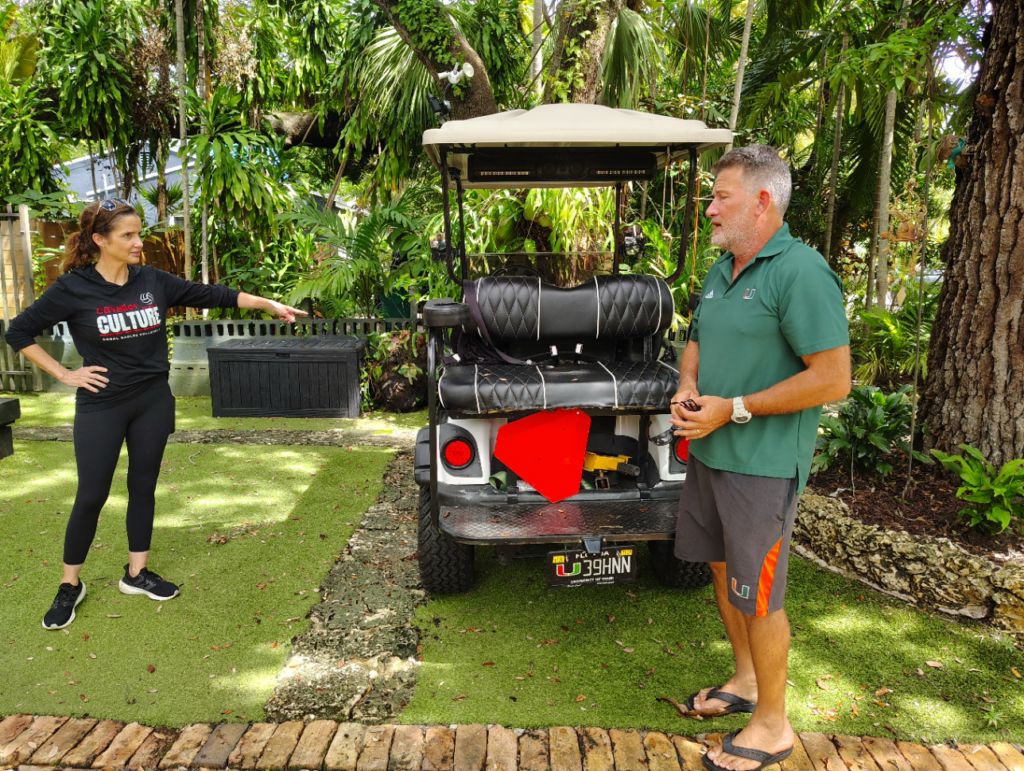
“I would see girls try out for their middle school or high school teams and come away disappointed because they didn’t make it,” D’Alemberte said. “I thought, if you trained for a year in beach volleyball, you’d come back stronger. That’s where the name Phoenix came from — rising out of the ashes after something doesn’t go your way.”
Over the past decade, Phoenix has expanded well beyond coaching and competition.
The organization helped advocate for improvements to public volleyball facilities, supported the construction of courts at Coral Gables High School, and played a role in broader efforts that helped beach volleyball become a sanctioned Florida high school sport, culminating in the inaugural FHSAA Beach Volleyball State Championships in 2022.
Central to that growth has been Kennedy Park itself.
The 20-acre waterfront park has long served as one of Coconut Grove’s great gathering places, attracting runners, dog walkers, families, fitness enthusiasts and volleyball players from across the county.
Read more: A Day in the Life of Kennedy Park
A major turning point came in 2019, when the City of Miami approved the installation of lighting around the volleyball courts after years of requests from players. The lights, which automatically shut off at 10 p.m., extended playing hours well beyond sunset and helped transform the courts into an evening destination.
While some nearby residents had opposed the installation, raising concerns about traffic, parking, noise and light pollution, city officials approved a compromise that limited nighttime activity to the southern portion of the park surrounding the volleyball courts.
“The lights transformed Kennedy Park and transformed the volleyball community down here,” D’Alemberte said. “When the city builds good facilities, people use them.”
For Angela Brown, who joined Phoenix as a coach and is now co-owner alongside D’Alemberte, the program’s mission has always extended beyond volleyball.
“Sports were one of my guiding forces growing up,” Brown said. “I realized that at an early age, and I wanted to continue providing that for other kids.”
Brown said Phoenix strives to provide a stable environment for young athletes at a time when youth sports have become increasingly competitive and expensive.
“We’re providing a stable place where kids can learn the game, grow, and meet people,” Brown said. “In some ways, we’re resisting some of the craziness in youth sports and focusing on what’s best for the kids.”
Phoenix now operates beach and indoor programs throughout Miami-Dade. The club runs an indoor league on Key Biscayne with roughly 168 participants and relies on about 10 active coaches, a number that has reached as high as 20 over the years.
One of them is Carlos Rodriguez, who first encountered Phoenix as an adult player at Kennedy Park before joining the coaching staff.
“It’s the community, really,” Rodriguez said. “The kids, the coaches, the families — it’s a tight-knit family. Even when people leave for other clubs or move on with their careers, they still stay connected and come back to help.”
Rodriguez has coached some athletes since elementary school and watched them grow into high school players.
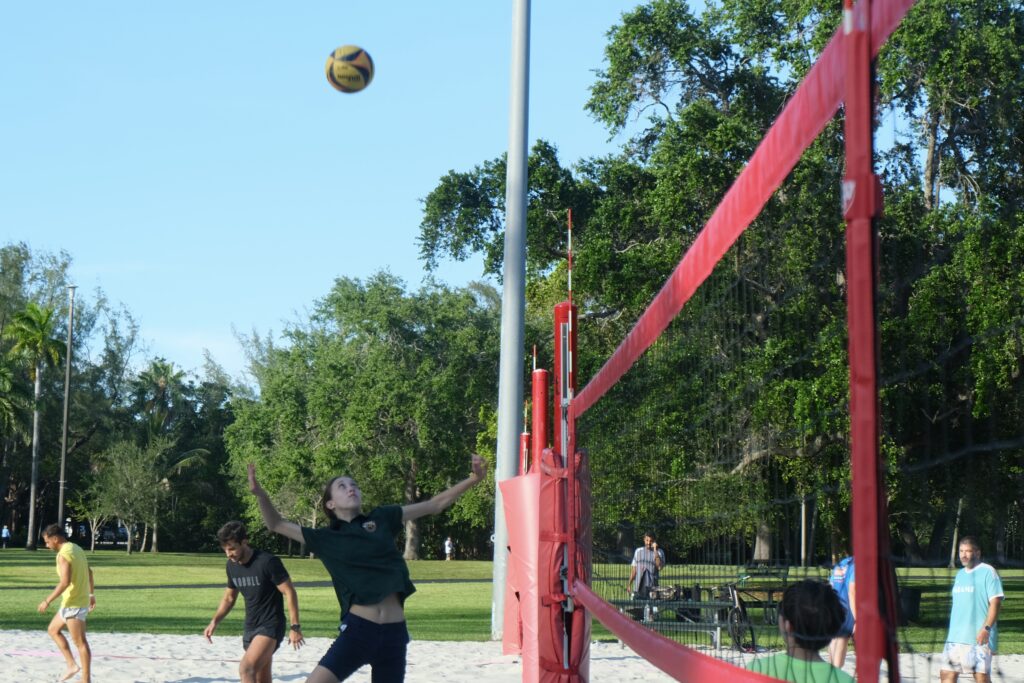
“One of the things we always preach is focusing on what you can control,” Rodriguez said. “In life, a lot of things won’t go your way, but you can always control your effort, your attitude, and your communication.”
For players, those lessons often extend beyond the court.
Adrian Figueroa joined Phoenix in sixth grade. Four years later, he now helps with camps for younger children while pursuing opportunities to play at a higher level.
“When I started, I was definitely quieter and more shy,” Figueroa said. “Playing with the team helped me become more outgoing and more of a leader.”
His mother, Monica Faust, said the program became an important part of her son’s life.
“When I think of Phoenix, the word family really captures the experience,” Faust said. “It’s beautiful to watch your child find something they truly love and pursue it on their own.”
Looking ahead, D’Alemberte and Brown hope to expand local leagues and reduce the travel demands that have made club volleyball increasingly expensive, helping keep the sport accessible to Miami families.
Ten years after Phoenix began, D’Alemberte sees evidence of the club’s impact almost every time he passes Kennedy Park.
“I have pride every time I drive by Kennedy Park and see people playing,” D’Alemberte said. “Phoenix had something to do with creating that culture.”















Great article, great SPOTLIGHT on a great program. Thanks for sharing.