

An urban planner who lives in Coconut Grove asks: How can the City of Miami better coordinate its regulations to protect the Grove’s unique character while allowing smart and sustainable growth?
George da Guia is an urban planner and a resident of Coconut Grove who has been working with the Miami’s Trees Matter Most coalition since 2023. He wrote this Community Voices piece for the Spotlight.
Editor’s Note: The fifth and final community workshop organized by the City of Miami and its Tree Ordinance Advisory Committee is scheduled for Thursday from 6 to 9 p.m. at the Hangar at Regatta Harbour, 3385 Pan American Drive in Coconut Grove.
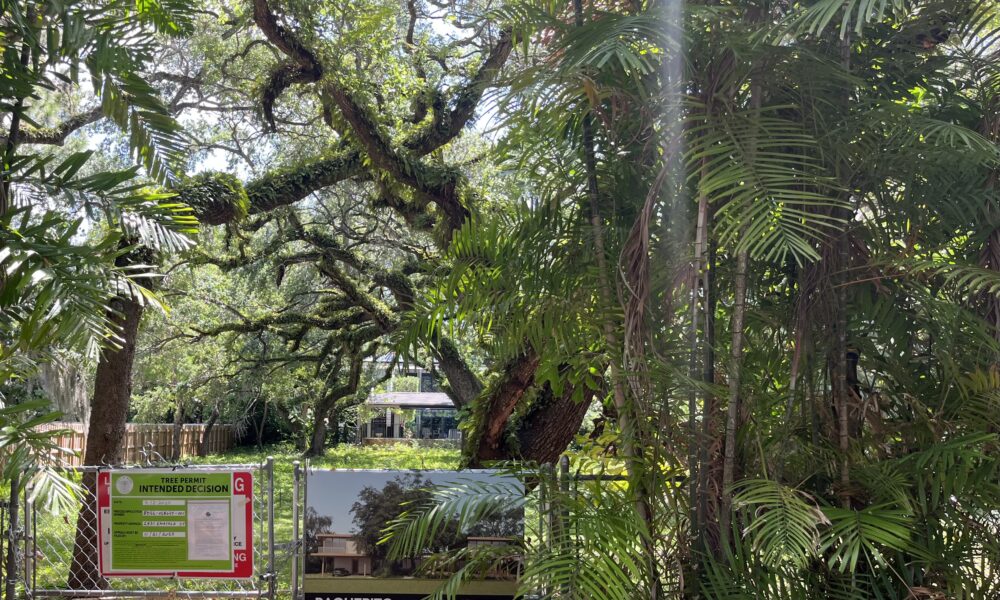
Stand at the corner of Linden Lane and Kumquat Avenue today and you will see a new house surrounded by concrete and very little shade. It does not feel like the Coconut Grove many residents recognize.
What you will not see is the 1924 bungalow that stood there, or the 26 trees that once shaded the property. Both disappeared within days of each other to make way for new construction.
That is not two separate losses. It is one loss, told twice.
The house and the canopy grew together for almost a century. Yet when redevelopment happens, the systems meant to protect that character do not always work together. Trees, zoning, historic preservation and environmental review move through different processes.
Coconut Grove does not lack regulations. What it lacks is a coherent system for making those regulations work together.
That helps explain recent tree fights in the Grove. On Irvington Avenue, arborist Chris Pruett and neighbors organized to save a mature oak in the footprint of a proposed new home.
On Grand Avenue, an appeal involving the removal of 57 trees for a temporary pickleball complex was dismissed on a procedural issue before the merits were considered.
On El Prado Boulevard and Swanson Avenue, the City of Miami’s Historic and Environmental Preservation Board reversed tree-removal permits after residents challenged them.
Each case may look like a fight over individual trees. Underneath is a larger question: How does Coconut Grove continue to grow without losing what makes it the Grove?
Protections on paper, losses on the ground
Coconut Grove is not starting from zero.
Neighborhood Conservation Districts (NCD) 2 and 3 already cover the neighborhood, adding place-specific rules to the city’s Miami 21 zoning code. Parts of the Grove also fall within Environmental Preservation Districts, or EPDs, which add protection for significant environmental resources.
NCD-3 is especially clear about its intent: preserve the Grove’s historic and heavily landscaped character, protect tree canopy and green space, and recognize the relationship among vegetation, public space and historic structures.
So, the problem is not that Miami never recognized the connection. The problem is governance.
The city’s own NCD webpage reflects community concerns about tree preservation, lot coverage and density. In 2018, the Planning Department was working on revisions to NCD-2 and NCD-3 and reviewed 281 residential building permits issued in the Grove since 2012. The public update trail on that work ends in February 2019.
There is also a revealing detail in the current NCD-3 appendix. It reaches a section titled “Coconut Grove NCD-3 Sub-District Architectural Guidelines.” The next page says: THIS PAGE LEFT INTENTIONALLY BLANK. It is a good symbol of unfinished work.
In Cube 3585 v. City of Miami, the courts rejected the use of NCD-3’s broad intent language as the standard for deciding a waiver. The city later proposed amendments intended to strengthen Miami 21’s intent provisions. The proposal failed to obtain the required supermajority at PZAB in 2021 and was ultimately withdrawn in 2022.
The intent remained. The question of how to translate that intent into consistent development decisions remained, too.
Meanwhile, Miami Canopy Watch, an independent dashboard using City permit records, lists 28 tree-removal records in Coconut Grove, more than any other neighborhood in its dataset.
That does not mean every removal was improper. But it raises a fair question: If a neighborhood with some of Miami’s strongest place-specific protections is also leading this tree-removal dataset, are those protections working as intended?
Growth and character are not opposites
This is not an argument for freezing Coconut Grove in time. A new house or a five-story building does not erase the Grove by itself. Cities change, and the Grove has changed many times.
But cumulative change matters.
A hundred individual decisions, each defensible when viewed only within one property line, can produce a very different neighborhood when considered together.
A new building can be designed around a mature tree rather than treating removal as the easiest solution. A renovation can keep an oak instead of cutting it down for a wider driveway. New housing and businesses can be added while respecting the landscape, streets and public spaces that make Coconut Grove recognizable.
Development should add another layer to the Grove, not gradually remove the layers already here. Growth and character are not opposites.
The West Grove shows why this matters beyond aesthetics
A 2016 FIU master’s research project by Mark Gazaleh examined vegetation across Coconut Grove using historical records, aerial photography and satellite imagery.
In his analysis of 2009 satellite data, an average 12.6 percent of West Grove block area met the study’s threshold for robust tree cover, compared with 23.8 percent across the rest of Coconut Grove. The strongest contrast was between the West Grove and South Grove.
Gazaleh did not attribute the difference to one cause, but to a combination of development, social and environmental conditions. The landscape also has a cultural history. Gazaleh documents how Bahamian settlers brought knowledge about cultivating Miami’s rocky soil and how early Black residents planted crotons, almond trees, sapodillas, sugar apples and other vegetation.
The canopy is not simply decoration around the historic neighborhood. In Coconut Grove, it is part of the neighborhood’s living history.
We also do not lack information. FIU’s Grove ReLeaf project has documented neighborhood trees and their benefits. Currently, residents are tracking permits and filing appeals. Miami Canopy Watch and tree permit tracking tools are making permit information easier to see.
What is missing is a stronger connection between information, regulation and outcomes.
Mature trees should enter the development conversation early enough that preserving them remains a real design option, not a discussion after the building footprint and driveway are already established.
Mitigation should mean more than mathematics on a permit. If replacement trees are required, the city should know whether they were planted and survived. Tree Trust Fund money should also be easier for the public to follow.
And the City should look at cumulative patterns, not only one permit or one folio at a time.
There is now an opportunity to do that. Miami’s Tree Ordinance Advisory Committee is reviewing the city’s tree preservation rules and permitting system, with public workshops underway.
That discussion should go beyond changing individual tree standards. It should ask a larger question: How do tree permitting, NCDs, EPDs, zoning, preservation, mitigation and enforcement work together before development decisions are made?
For the Grove, that means revisiting the unfinished NCD work, connecting tree and site review earlier in the process, making mitigation and Tree Trust Fund outcomes transparent, and measuring canopy change at the neighborhood level.
The Grove’s character is a form of living heritage. It exists not only in an individual historic building or an individual specimen tree, but in the relationship among homes, canopy, lots, streets, public spaces and cultural history.
Coconut Grove does not need to become a museum. It has always changed, and it will continue to change.
But change should understand the place it is changing.
Because once the bungalow is gone and the mature canopy beside it is gone too, replacing either one on paper does not bring the Grove back.







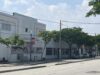
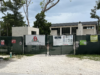
Amen – Wonderful piece. A drive down Historically-Designated Charles Avenue in the West Grove (one of the oldest streets in the City of Miami) illustrates the author’s point perfectly.
You will see 4-5 new lot-line-to-lot-line, massive, cube-layout, 2 story houses that do not match the “size, massing, and character” of the community’s majority single-story cottages and bungalows (as NCD-2 supposedly requires).
Besides resulting in the clear-cutting of all almost all trees from these lots, their $4+million price tags will only continue pushing historic residents out, and paving over one of Florida’s oldest communities of African-descent.
The NCD’s were written with an intent, and that needs to be enforced. We hope Commissioner Pardo will see this – the need to save the Grove – and will revise the NCDs to ensure they are better enforced, before it is too late.
Don’t vote for any politician that takes campaign contributions from developers, builders, realtors, or land-use attorneys no matter how many times they repeat the words ‘affordable housing’.
This is the lament of many neighborhoods in Miami. Lot line homes and building developments are stripping all vegetation existing on the property and the right of way. Sidewalks closed for years, pedestrians, including baby strollers, thrust into speeding traffic. Damian Pardo was elected because he promised to be an obstacle to these unwanted changes, yet it’s only been accelerated under his watch. The natural beauty that brings people to Coconut Grove is being commoditized at an unhealthy rate. I want development, but responsibly managed and constructed. What’s happening now is a death by a thousand cuts.