


BH Group’s offer — part of a wave of condo buyouts in South Florida — was shaped in part by a disputed $30 million repair estimate that ultimately proved far higher than the assessment owners faced.
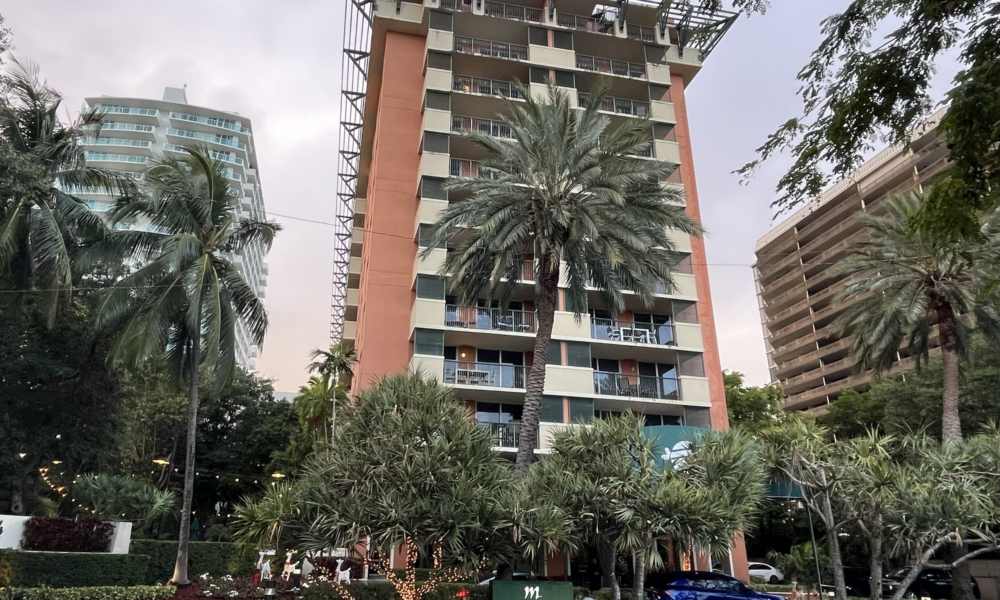
BH Group’s $160 million bid to buy the Mutiny, a landmark bayfront condominium in Coconut Grove, expired Sunday without enough owners agreeing to sell, ending — at least for now — the latest attempt to acquire the building.
Under Florida law, the sale required approval from 80% of the building’s owners, a threshold BH Group failed to reach before its self-imposed deadline.
The outcome gives residents a reprieve after the third attempt in less than two years to buy out owners of the 12-story building on South Bayshore Drive. The Mutiny previously received buyout offers from Miami-based DaGrosa Capital and New York-based Slate Property Group.
The Mutiny has long occupied an outsized place in Coconut Grove lore: Built in 1968 as the neighborhood’s first high-rise, it became a celebrity playground in the 1970s and ’80s and later gained notoriety as a gathering place for figures from Miami’s cocaine-cowboy era.
BH Group’s attempt to acquire the Mutiny is just one example of an increasingly common pattern of condominium buyouts in Coconut Grove, with deep-pocketed developers targeting aging buildings in the area.
Read more: Developers Target Aging Condos in Coconut Grove
Since last year, three low-rise condos built in the 1960s have changed hands, including Virginia Pointe Condo, Chateau Grove and The Bayshore Park, which BH Group bought earlier this year with Mast Capital.
For now, BH Group is “sitting on the sidelines” with the Mutiny, said Greg Greer, the sales agent representing the buyer, because the developer and owners had reached a standstill. BH Group would be willing to revive the deal if the owners decided they were interested in selling, Greer said.
“Until then,” he said, “it’s completely up to the owners to decide if it’s a good deal for them or not.”
“So, you know, we’d love to buy the property,” he continued, “but the offer that we made was more than what the land was really worth for us in today’s market.”
Greer said the offer stalled in part because owners ultimately faced a far smaller repair assessment than BH Group had initially anticipated.
BH Group had been told to expect a roughly $30 million special assessment for the nearly 60-year-old building, Greer said, which he estimated would amount to about $130,000 in repair expenses per unit.
A special assessment that large could have given owners an added incentive to accept BH Group’s offer rather than shoulder the cost of the repairs themselves.
But Greer said a more recent estimate put the assessment at “much less,” reducing that financial pressure on owners and, in his view, making BH Group’s buyout less compelling.
The condo association’s president, however, disputes that the $30 million figure ever came from the building.
“We have no idea where they got that number from,” Mayra Gomez, president of the Mutiny’s condo association board, wrote in response to the Spotlight’s questions. “It was never ever talked about. BH Group came up with that outrageous figure. Maybe to scare owners into selling.”
One condo owner, architect and urban planner Alyn Pruett, said the prospect of such a large assessment sent ripples of anxiety through resident group chats in the months leading up to the deal’s expiration date. Neighbors shared messages worrying that their share of the cost would be impossible to afford.
Those owners were relieved when the condo board shared a much lower special assessment number last month, Pruett said. Many of the building repairs listed in the assessment amount to minor exterior fixes, he said, including painting and resealing doors and windows.
“The special assessment came out much less than BH Group was trying to convince people of, and I think everybody, at least the people I’ve talked to, all feel like the assessment is very minimal,” he said.
Sabrina Wilkinson, a real estate broker who has owned her unit at the Mutiny for four years, said the high costs floated by BH Group felt like an attempt to “fear-monger” owners into selling.
Despite that pressure, Wilkinson said the vast majority of owners in the building have not been moved to sell. With the Mutiny’s “spectacular” ocean views, coveted center Grove location, resort facilities and rich history, Wilkinson said Mutiny units would be difficult to put a price on.
“Another developer will have to know that they need to make an offer a good bit higher,” she said. “It’s just going to take a whole lot more money to talk us out of our residences.”
Greer told the Spotlight that BH Group offered “the maximum amount that the land was worth.”
He called BH Group’s offer “generous,” estimating that the offers presented to individual owners amounted to “somewhere between 70 and 100 percent over” market value, based on the last closed sale.
Pruett, who bought his second-floor unit in 2023, said BH Group offered a “pretty good price” based on the current market. But after looking at other available properties in the Grove, Pruett said the proceeds from the sale would allow him to buy “little, if anything” in the area.
Rising housing costs in the Grove and the Mutiny’s relative affordability played a major role in many owners’ decision not to sell, Pruett said.
“That’s the talk I’ve heard from a lot of residents: ‘We just can’t afford to live here if we don’t stay here in the Mutiny,'” he said. “So you’re evaluating not just the sale, but, ‘Gosh, am I going to have to move to Oklahoma?'”
After weathering their third buyout proposal since 2024, Mutiny neighbors shared a renewed sense of solidarity, Pruett said. Having heard “horror stories” of other buyouts forcing residents out of the Grove entirely, Pruett said BH Group’s withdrawal means Mutiny residents can breathe easy for now.
“We feel like we have a stronger grip on our building, our home, and that it’s going to stay our home for some time,” he said. “So I think it’s been a good thing for those of us who want to stay in the building.”
Based on her experience working in Miami real estate, Wilkinson said the Mutiny owners’ resistance could send a signal to developers about the limits of the condo-buyout boom in Coconut Grove.
“I think that solidarity that we’ve shown in not taking that $160 million, and the fact that there was so low participation, I think that speaks volumes to the developers out there,” she said.
On a personal note, Wilkinson said the pause in buyout proposals has finally made her feel comfortable making some long-needed repairs to her unit, which she had put off out of concern that a buyer would eventually demolish the building. A cracked countertop, a broken microwave handle and a faulty faucet are at the top of her to-do list.
“For me personally, I’m ready to breathe easy and make my place exactly what I want it to be,” she said.
Sinclair Holian is a Spotlight reporter and Report for America corps member covering gentrification and development in Coconut Grove. She joins us through our partnership with Report for America, a national organization that places journalists in local newsrooms across the United States.

















Sinclair is a journalist with following. I became a fan when she was in Roanoke, Virginia.