

Real estate investors and developers are acquiring older condominium buildings in Coconut Grove, fueling fears about the pace, price and scale of neighborhood redevelopment. “The Grove doesn’t need to be another Brickell,” one resident said.
Krystyna Keller moved to Coconut Grove for its bohemian charm almost a year ago.
Now, a developer’s purchase of the Chateau Grove building next door to where she lives on Virginia Street has Keller wondering how long she can stay.
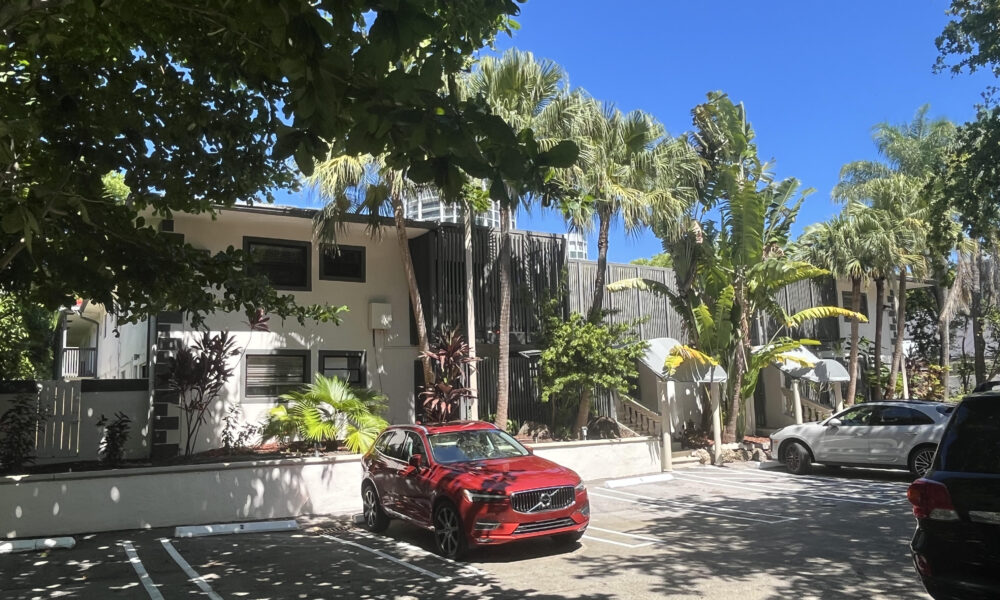
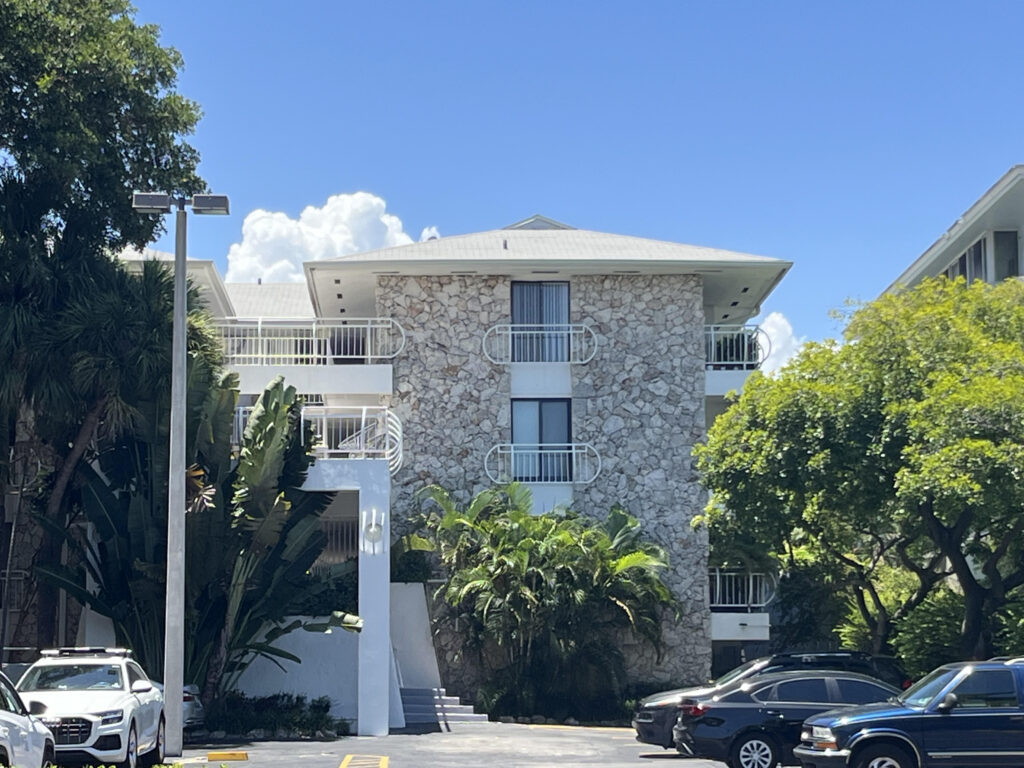
In April, El-Ad National Properties paid $45.5 million to acquire Chateau Grove – nearly three times what the Canero Group had paid a year earlier to buyout the two-story, 25-unit condominium and convert the building into a rental property.
Canero paid $17.3 million to assume control of the aging property in 2025 by going through the long, often contentious process of buying out the building’s individual condominium owners.
Boca Raton-based El-Ad, an affiliate of the New York-headquartered Elad Group, hasn’t announced its plans for the 1963 building at 3265 Virginia St., but the steep markup has fueled speculation about the developer’s intent.
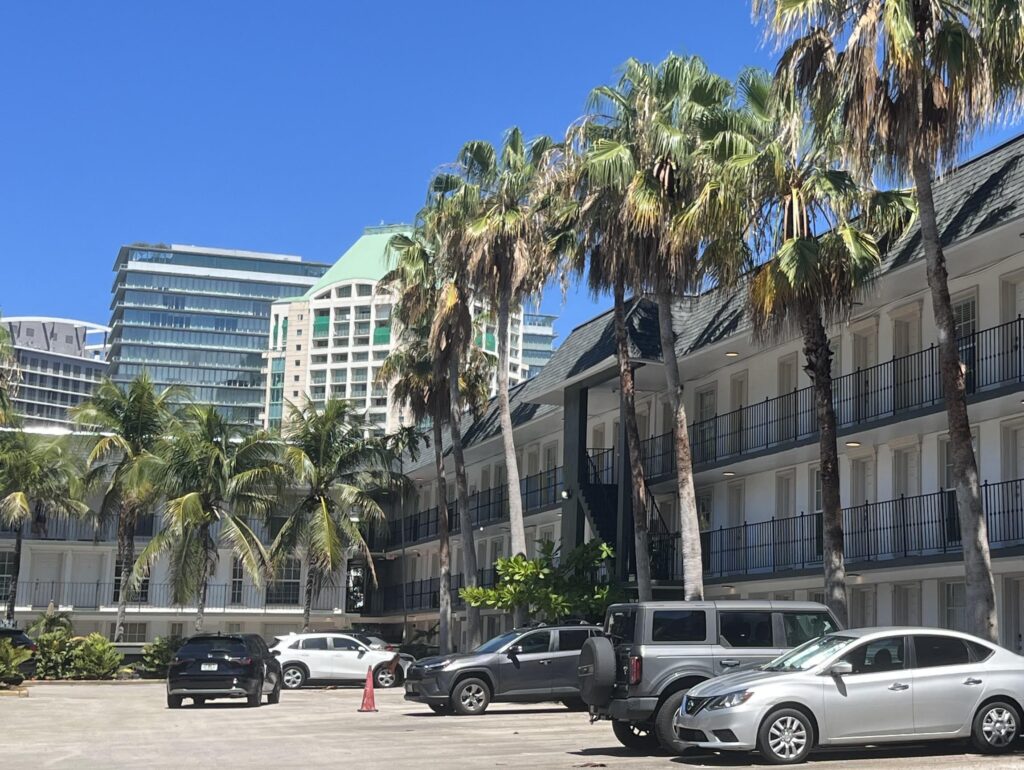
Condominium buyouts – a real estate play that often pits divided owners against deep-pocketed investors – are an increasingly common scenario in Coconut Grove.
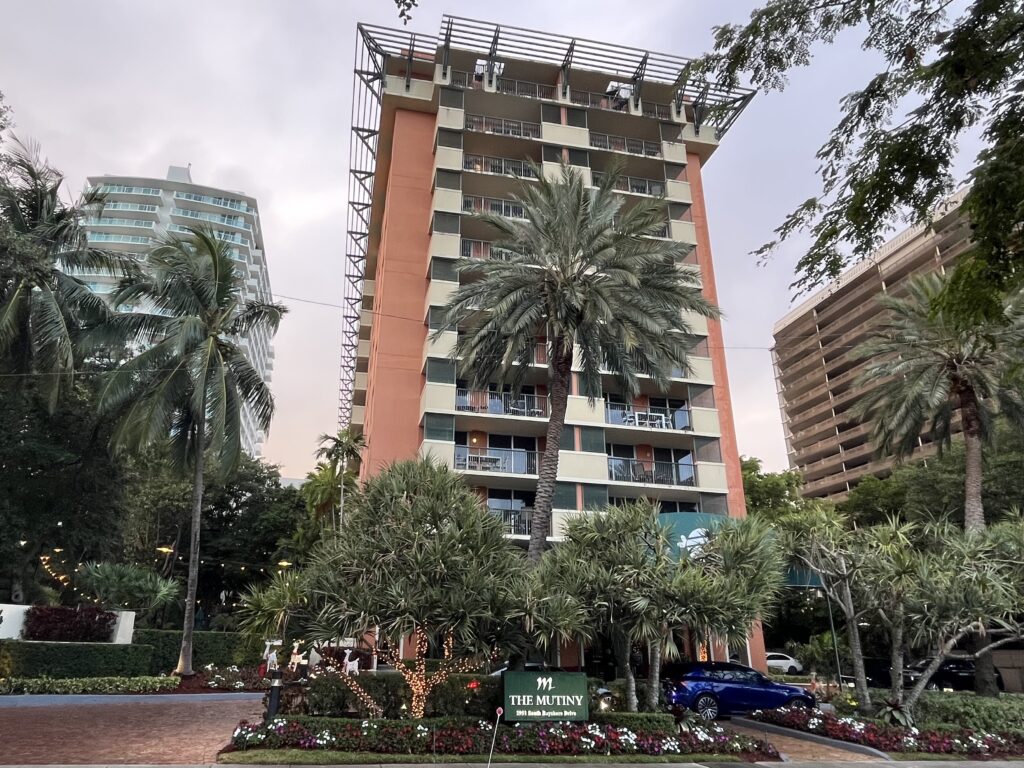
Since last year, three low-rise condominiums built in the 1960s have changed hands and a fourth building – the 12-story Mutiny on South Bayshore Drive – is in play.
Read more: The Mutiny: A $160 Million Buyout Proposal Inches Forward
Real estate professionals say these older buildings have become more attractive to development investors because of rising real estate values and zoning changes that give developers new options for increasing the size and density of new construction.
“The underlying real estate values in Coconut Grove are continuing to trend up. It makes economic sense for some of these older condominium buildings to sell because the land values have surpassed the improvement values of the existing buildings. I think it’s something that we’ll see more and more of in Coconut Grove,” said Spencer Morris of Allen Morris Company, developer of Ziggurat, a mixed-use project on Grand Avenue.
In the case of Chateau Grove, the property’s T4-L zoning would allow for a three-story building, but a developer could build something taller – and denser – by tapping into development incentives offered by the City of Miami or the state’s Live Local Act.
“With a condo buyout of a two-story building, I don’t think it would make economic sense to build another two-story (building) on that site. You would have to dramatically densify the site in order for the economics to make sense,” Morris said.
In other words, at a time when the cost of land, construction materials, and labor is rising, adding more residences can turn a financially risky project into a safer bet.
Keller, who rents a unit in the Virginia Pointe condo building next door to Chateau Grove, worries about how those economics will play out in Coconut Grove.
“I’m confident that a buyout will mean that bigger, better buildings will go up and I won’t be able to afford to live in the Grove,” she said. “It’s kind of scary.”
Statewide condominium reforms have also made older condos more vulnerable.
After the 2021 collapse of Champlain Towers South in Surfside, which killed 98 people, lawmakers passed the Florida Building Safety Act. The law increased reserve requirements and mandated more frequent structural integrity studies.
While intended to prevent another tragedy, the changes have added financial pressure for many condo owners, particularly in Miami-Dade County, where housing costs far outpace incomes. For some condo associations, buyouts have become a last resort for escaping a financial crisis.
Buyer demand is another factor in the equation. South Florida continues to draw an influx of people relocating from New York, Illinois, and California, said real estate analyst and Miami Condo Investing Club Founder Peter Zalewski.
Whether a newcomer or native, buyers often drop millions to live in Coconut Grove. The median sales price for all homes in the Grove hovers at $2.475 million, up about 45% from last May, based on data from the Multiple Listing Service.
In addition to demand, developers see an easier path to condo terminations given the relatively small size of the Grove’s older buildings, Zalewski said.
“The thing that the Grove has going for it from a developer perspective is simply that the unit count is so small,” Zalewski said, adding the average unit count hovers at around 17 in the Grove.
“The difficult part about doing a condo termination is getting everybody to agree. Think about going to your Thanksgiving celebration (and) getting anybody at the table to agree. When you got fewer people who basically own units, it becomes much easier than maybe going to a place like on Brickell Avenue.”
Other recent condo buyouts in the Grove include:
- The Bayshore Park at 2545 South Bayshore Drive. Built in 1964, the three-story building has 39 units. The Aventura-headquartered firm BH Group and the Coconut Grove-firm Mast Capital bought it for $28 million last summer. BH Group and Mast Capital plan to replace the existing building with a 10-story luxury condominium with 35 units.
- Virginia Pointe Condo at 3245 Virginia St., next door to Chateau Grove. Built in 1966, the three-story building has 66 units. The Coral Gables-headquartered firm Canero Group and 8K Capital bought out 59 of the units for $27.7 million this spring but have yet to share next steps.
The Mutiny, a 12-story condo-hotel at 2951 South Bayshore Drive, is facing its third buyout attempt in recent years. BH Group offered its 170 residences a $160 million buyout. Redevelopment of the 1968 building would bring an end to the once go-to place for cocaine-fueled parties among Hollywood elite, narcos, and hitmen during the 1970s, as recounted in Roben Farzad’s “Hotel Scarface.”
The possible loss of older buildings like the Mutiny troubles 40-year-old writer Jacqueline Coleman, a recent transplant from Brickell.
Coleman and her husband own a condo adjacent to the future home of The WELL, an 8-story development with 194 residences at 2835 Tigertail Avenue. Terra and AB Asset Management partnered to redevelop a former five-story Residence Inn by Marriott Miami Coconut Grove.
“It’s a shame to see some of these buildings be under threat of buyouts and a tear down,” Coleman said. “The reason why we chose the Grove is because it has its own personality. When you start taking pieces of that personality away, what does it become? It changes the entire ethos of the neighborhood and it becomes something completely different.”
A fourth-generation Miamian, Coleman long aspired to live in the Grove. She had convinced her husband to trade life in the city’s financial district for the charm of their current neighborhood. She said she wants to see the area stay the same.
“The Grove doesn’t need to be another Brickell,” she said.
The Spotlight contacted each development team involved in the recent rash of condo buyouts. Canero Group could not comment in time of publication, and the rest did not respond to multiple requests for comment.
At the time the firm closed on Chateau Grove, Matthew Jeffries, CEO of El-Ad National Properties, said in a statement, “Coconut Grove continues to stand out as one of Miami’s most established and sought-after neighborhoods, making it a natural fit for El-Ad National Properties as we continue expanding throughout South Florida. We remain focused on identifying distinctive opportunities in premier locations that align with our long-term vision and development strategy across the region.”
Morris, the developer behind Ziggurat, a mixed-use office and residential complex at 3133 Grand Avenue, said there are other development sites his firm is pursuing in the area, but condo terminations are out of the question for now.
For residents like Keller, the best game plan involves a day-to-day strategy. She planned to renew her annual lease on her 2-bedroom, 1-bath apartment in May. New ownership wanted a $400 increase in rent. After some negotiation, Keller got the rent to stay flat, but agreed to a month-to-month deal.
For now, Keller soaks in the community. She knows this moment is fleeting.
“It does make me sad,” Keller said. “I along with my neighbors would have to move if they redid the building or changed the building into something really nice. If it’s happening all over the Grove, we won’t have any options.”
Editor’s Note: An earlier version of this story misstated where Krystyna Keller lives. She resides at Virginia Pointe Condo at 3245 Virginia St.














When are we going to stop pretending the money used to buy and build these things is real? These are international conglomerates strip-mining our neighborhoods for development dollars. In the meantime, they’re killing our city. Literally burying it in debt, concrete, glass and marble.
This wave of buyouts exposes a major gap in our defenses. Our Neighborhood Conservation District (NCD) code was designed to protect the Grove’s character, but it cannot stop the raw financial math driving these acquisitions. Following the 2016/2017 federal crackdowns on anonymous cash and the tightening of cheap foreign capital, development financing shifted heavily to high-interest private credit funds and institutional equity syndications. This “expensive money” requires massive profit margins to pay off. When combined with the heavy financial burdens placed on older associations by the post-Surfside Florida Building Safety Act, low-unit buildings like Chateau Grove become easy targets. Developers aren’t buying these properties to build within our NCD guidelines; they are banking on using state density incentives to completely bypass local scale. If we want to save the Grove, our local leaders must implement structural, systemic policies that disrupt this corporate capital pipeline:
Committed in next comment…
Establish a Mandatory Transfer of Development Rights (TDR) Bank for Natural Capital: We must pass an ordinance that legally binds the Grove’s old-growth canopy directly to the land. If an institutional developer wants to build a hyper-dense project, they should be barred from clear-cutting. Instead, they must be forced to legally purchase and transfer “canopy development rights” from protected legacy lots elsewhere in the Grove, making the destruction of existing green space financially unviable.
Enact High-Threshold Natural Infrastructure Impact Fees: We need to enact aggressive, dedicated Development Impact Fees earmarked specifically for natural capital, tree canopy restoration, and open space preservation—similar to the conservation impact fees successfully implemented by St. Johns County, FL. If corporate capital is going to exploit our neighborhoods, they must be legally forced to fund the permanent protection of our natural environment.
Legally Challenge State Preemptions: The City of Miami Commission must aggressively fund and pursue direct legal challenges against the preemptive overreach of the Live Local Act. I was happy to see Commissioner Pardo’s resolution for Thursday’s meeting. Let’s hope the dais takes this seriously.
Zoning alone is no longer a shield. If our decision-makers do not aggressively penalize the financial mechanisms of these mega-funds, the unique character of Coconut Grove will be completely hollowed out.
THANK YOU, Katrina! We need to be slapped with these scary facts.
Yeah… I’ve had family in Miam, since 39′ (old Coral Gables) myself, used to live on Mary st, had a one bedroom/bath, sold it in 09′, since the monthly HOF kept going up each year, significantly.