



The Planning, Zoning and Appeals Board deadlocked after a marathon meeting that featured hours of public testimony – a major setback for Miami-Dade County and its plans to reopen the Coconut Grove Playhouse in time for its 100th anniversary in 2027.
Miami-Dade County ran into a wall of opposition this week on a return visit to Miami’s Planning, Zoning and Appeals Board when a small phalanx of neighbors objected to the county’s plan to rebuild the Coconut Grove Playhouse without a wall to protect them.
Board members rejected the plan after hours of public testimony by residents who oppose the county’s plan to buttress the playhouse with retail shops, a restaurant, and office space that would connect to their historic West Grove neighborhood.
Preserve the West Grove, an organization that represents homeowners living within 500 feet of the playhouse on Charles, William and Thomas Avenues, wants the county to erect a barrier to prevent traffic and commercial activity from spilling onto their streets.
Together with three other West Grove organizations, they are also asking the county to develop a traffic mitigation plan, provide job opportunities and youth programming, and showcase the history of their historically Black neighborhood as part of the project.
Read more: Playhouse Neighbors Reject County’s Plan for Inclusion
Planning board members were sympathetic to those concerns but couldn’t agree on how to address them. County officials expressed a willingness to rethink their approach, but residents were skeptical.
Neighbors asked for an ironclad commitment, but the board deadlocked late Wednesday night after two failed attempts to find a way forward, effectively denying the county the approval it needed to move forward with its playhouse plan.
Read more: Another Bite at the Playhouse Apple
The decision represents a major setback for the county and leaves the fate of the historic playhouse in limbo yet again. In addition to the neighborhood concerns, several board members expressed discomfort over the size and scope of the project.
“If we have to build a wall, clearly this is not the right use for the property,” said board member Maria Paula De Carolis.
The county can appeal the board’s decision to the City Commission, which is what happened in 2019 when another city board – the Historic and Environmental Preservation Board – rejected the county’s plan.
The county appealed that decision and prevailed, but the project has been beset by years of litigation since. The playhouse, which is owned by the state of Florida and leased to the county, has been shuttered since 2006.
Last year, the county demolished the playhouse’s rear auditorium despite stiff resistance by local preservationists.
County officials are now seeking city approval to restore the playhouse’s historic façade at Main Highway and Charles Avenue, build a new 310-seat theater behind it, and add a parking garage immediately to the north.
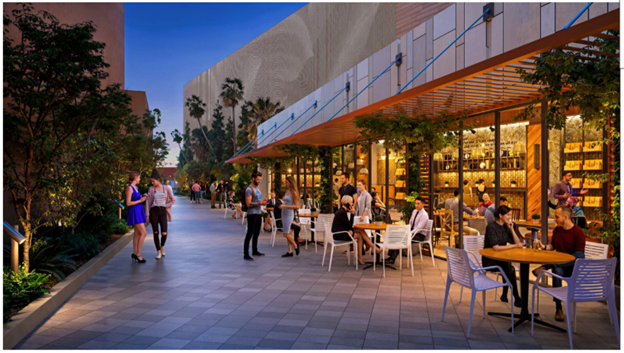
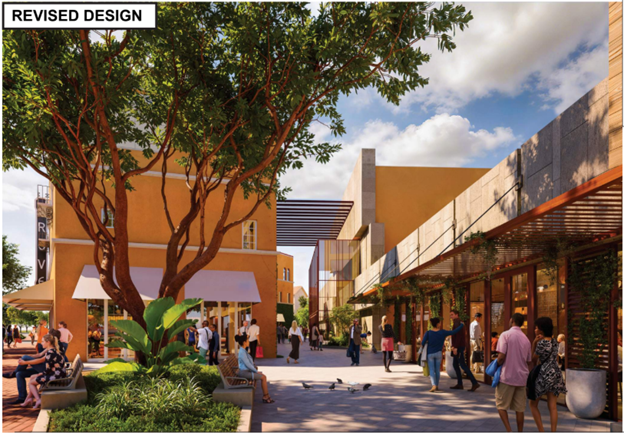
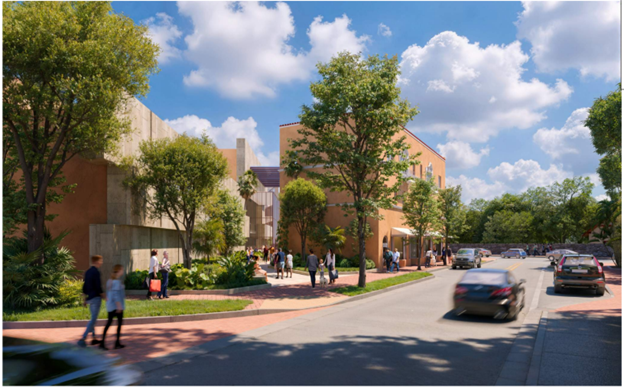
The campus-style design, with open-air plazas and pedestrian promenades, would include 2,600 square feet of retail space, 3,800 square feet for food and beverage service, and 30,600 square feet of office space.
The campus would be open to the formerly segregated Black neighborhood behind the playhouse – a design element that county officials say is needed to address past discrimination but that nearby residents fear will overwhelm their quiet neighborhood.
County officials have not said whether they plan to appeal Wednesday’s decision. In response to a Spotlight inquiry, the county shared the following statement after this story was first published:
“Miami-Dade County remains steadfast in its commitment to bring theater back to Coconut Grove. Phase 1 of the project continues, which includes the rehabilitation of the Historic Gateway Building. In regard to the exceptions and waivers requests from City of Miami Planning, Zoning and Appeals Board, the County intends to explore the appeal process and will continue to actively engage with the community at large throughout this process to provide up to date information on the progress of the project.”


















Great reporting by Spotlight. Here’s my take on where we are.
1. We could now be tied up in appeals for many more years.
2. This two-decade debacle has been the result of (a) zealotry on the part of some preservationists who insisted upon completely restoring the 1,100 seat Playhouse (based on the entire building being designated “historic” in 2005), but mostly because of (b) the County’s arrogance in trying to ram their “Plan” down the citizenry’s throats with little meaningful public discourse.
3. Thanks to the diligence of West Grove adjoining neighbors who don’t want Ubers, Lyfts and service trucks zooming through their residential streets at all hours, we can still make decent lemonade out of rotting lemons.
If the County is willing to forego strong-arming the City Commission on appeal from PZAB’s denial, THEN: The County sends their Plan “as-is” back to the Historic and Environmental Preservation Board that is composed primarily of experienced architects who are neither stupid nor impractical. They know only the Playhouse “façade” remains. After a lot of discussion and some reasonable “tweaks,” the majority approves the Certificate of Appropriateness (CofA) that has always been required by City code Chapter 62-28 (3). Then it’s Game Over. The Commission unanimously approves the revised County Plan, and everyone says “This lemonade could taste a lot worse.”
Andy, I’m surprised that you are laying the blame on the preservationists. The County set this entire thing into motion by setting their sights on the land for a massive commercial development with a tiny theater thrown in, obviously just to get the bond money and satisfy the lease. If neither the bond or the lease stipulations existed, do you think they would have put a theater there? They have been strong-arming this thing the entire time, never wavering from their initial plans. They tore the theater down almost maliciously, without any attempt to preserve or salvage any of the interior. Their words ring hollow. They do not care about the community. In fact, I would submit that the whole thing was probably planned by Art Noriega when the City allowed the Parking Authority to sell the Grove’s public garage to Terra Group. A public garage that was easily accessible off of 27th avenue at the edge of the Grove, rather than in a bottleneck area that will be impossible to get to. Of course they have to go through the neighborhood! Again, I see short-sighted, hubris-filled decisions being made here. Please don’t blame preservationists for demanding a public asset be public-benefit-forward.
What’s the future for our beloved Playhouse, now that 80% has been demolished? What if the remaining façade falls or gets blown down and no theater at all is built?
Miami 21 Code provides:
“Sec. 5.7.2.6 In the event that a Civic Institution Zone (CI) ceases to be used for Civic Institution Uses, it shall be developed either in accordance with the regulations of the most restrictive Abutting Transect Zone or by process of rezoning, subject to the limitations of the Comprehensive Plan.”
That means to T4 General Urban which can be both residential and commercial with 40 ft max height. (The Playhouse has T3 Sub-urban residential 2-story zoning on the Charles Avenue side, and T5 Suburban Center mixed-use commercial 5-story zoning on the Commodore Plaza side.) T4 might be Ok, maybe.
It’s also possible the CI zoning could be converted to Civic Space (CS) which is “A zone with mainly outdoor area dedicated for functioning for community purposes.” That might be Ok, too, if lots of big trees get planted.
Both the City and the County say they need new Bond money (City $450 Million and County “in the billions”). What are the chances $50 Million—and maybe twice that—would be allocated to building a new Playhouse?
I believe our best bet is get the flawed “County Plan” before our Historic Preservation Board (HEPB) and let the architects there have a chance to improve it, as much as they can, given the reality of the situation.
Thanks for your logic, Andy. To quote Churchill, “Perfection is the enemy of progress.” This playhouse debacle has gone on too long, 24 years since the original Miami Dade County bond was approved by voters for cultural expenditures, not all of which was relegated to the playhouse.
I was struck by 3 things:
1) PZAB, with the exception of Paul Mann, refused to give the residents within 500 feet of the playhouse (and attorney David Winker) “Intervener Status”. Shame.
2) The neighbors, through Winker, want a binding agreement on reasonable points, including a buffer wall with trees, no reduction in green space and a legitimate traffic study be completed to prevent Village West becoming a parking lot of Uber drives and people cutting through to the facility.
3) The county, with support from GableStage, continues to insist this is a just a playhouse project, not a commercial open-air mall. Rubbish. Call it what it is and stop insisting the neighbors have no rights to object to commercial intrusion into their residential neighborhood.
Meet with the neighbors, sign a binding agreement and get this over with. Put this whole thing to bed. If the 300-seat playhouse needs commercial support to thrive, then admit it and get this over with.
This has gone on too long. Finish the project with requested revisions. Put us out of our misery.
The Grove Playhouse reminds me of a Greek Tragedy. Mittelman and the Board were the first dagger. Joe Adler and Arquitectonica were the second dagger. The construction firm that could not even support the walls was the coup de grace. Many iconic European buildings were totally rebuilt after WW II. Even Notre Dame was totally restored after the fire. It’s just shameful that MDC and the City of Miami preferred Demolition By Neglect, rather than Full Restoration of our beloved Playhouse. We thought that Historic Registration would protect it. We hoped that our County and City Representatives would protect us. Needless to say, we are most disappointed. It’s time to consider Total Restoration and holding those that have failed us, Totally Accountable.