


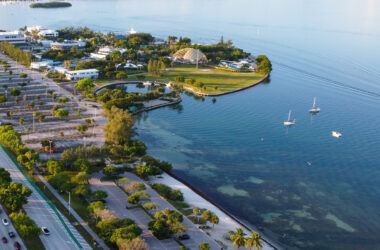
After months of discussion, committee members are rallying around stronger protections for mature trees and incentives to preserve them, while weighing changes to enforcement, permitting and appeals.
Miami’s Tree Ordinance Advisory Committee is signaling strong support for two changes to the city’s tree protection laws: making it more costly to remove mature trees while giving property owners greater flexibility to build around them.
At Monday’s meeting, all seven committee members present expressed wholehearted support for both proposals in the panel’s first informal assessment of potential reforms. The ratings are not binding, but they offer the clearest indication yet of where the committee may be heading.
“If we want to improve the tree canopy, we can’t make it easier to take out trees than to preserve trees,” said committee member Chris Baraloto, director of Florida International University’s International Center for Tropical Botany.
The committee, created by the City Commission amid mounting disputes over tree removals and enforcement, began its review in July. Since then, members have gathered public input and considered a range of possible reforms, from tougher penalties for illegal removals to greater incentives for homeowners.
Monday’s ratings marked a new stage in that process. But no recommendations have been formally adopted. The committee is expected to submit its proposals to the City Commission by March, following another round of public input.
Read more: Miami Begins Review of Tree Rules as Removal Battles Intensify
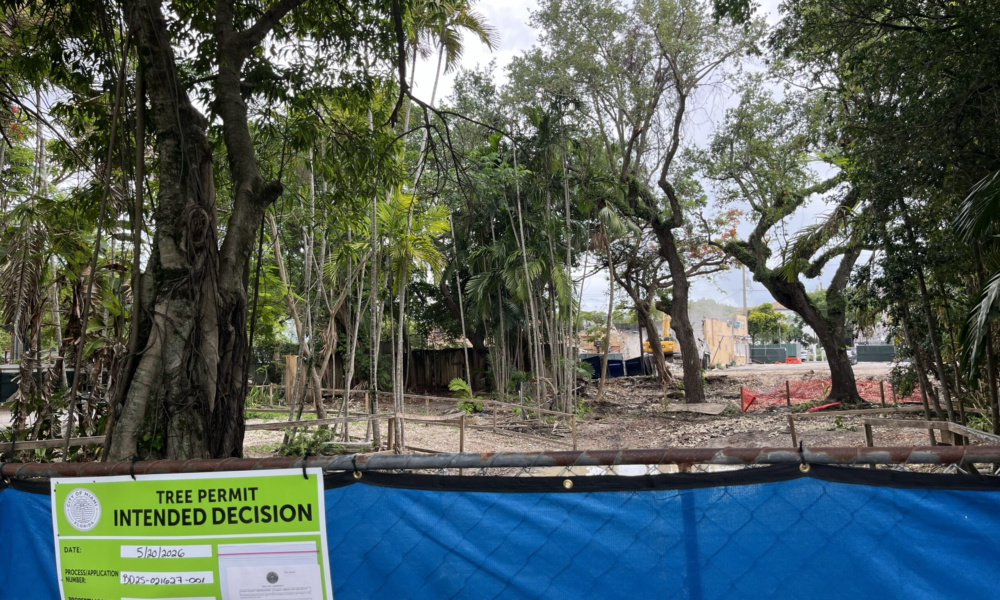
The review comes amid a surge in appeals of tree-removal permits, as residents challenge city decisions allowing mature trees to be cut down for construction. Critics have also questioned whether existing fines and replacement requirements do enough to discourage illegal removals.
One of the proposals attracting the strongest support would change how Miami calculates the environmental cost of removing a tree.
Under the current ordinance, replacement requirements are based largely on trunk diameter. Property owners generally must plant a specified number of replacement trees or contribute money to the city’s Tree Trust Fund.
Baraloto argues that the formula undervalues mature trees because it fails to adequately account for their height and canopy.
His proposed Ecological Benefit Index would assign 50% of a tree’s value to its canopy, 25% to its diameter and 25% to its height.
“Diameter just doesn’t work,” Baraloto said. “The diameter tables allow us to legally remove 95% of the benefits, which are volume-based.”
To illustrate the difference, Baraloto cited a 30-inch live oak. Under the city’s current requirements, it could be replaced with 10 trees measuring just two inches in diameter.
But Baraloto estimated those replacement trees would restore only about 20% of the original oak’s ecological benefits.
Alternatively, the city would require a $10,000 Tree Trust Fund contribution. Baraloto estimated the cost of replacing the oak’s ecological value at $23,540 — more than twice the required payment.
The committee has not settled on a new replacement schedule or fee structure, but members expressed strong support for using a more comprehensive measure of a tree’s value.
“This is great as a stand-alone policy, I don’t know that we need to add much to it,” said committee member Avra Jain. “I think this is…the furthest along idea we have.”
Read more: Higher Fines, New Incentives? Tree Committee Explores Canopy Protections
The second proposal attracting unanimous support among those present would give developers and property owners more flexibility to preserve trees without sacrificing allowable building space.
Committee member Aaron DeMayo has proposed legislation called FLORA that would give developers and property owners greater flexibility when building new single-family or duplex homes in the city’s T3 zoning districts. Rather than cutting down mature trees to make room for construction, builders could shift allowable square footage to upper floors or build closer to property lines, preserving the trees without sacrificing as much living space.
Under current zoning rules, building around a mature tree can mean giving up hundreds of square feet of otherwise allowable construction — a potentially costly sacrifice for property owners and developers.
DeMayo’s proposal would offer an alternative: Preserve the tree while retaining more of the building space permitted on the property.
Committee members also discussed other incentives, including expedited permitting, which Jain suggested could be especially attractive to developers.

“[Developers] want the clarity more than anything,” Jain said. “People would be surprised how much more valuable time is [to developers].”
The committee also returned to another contentious issue: Miami’s appeals process for tree-removal permits.
Residents have filed at least 22 appeals this year, compared with just one during all of 2025. At public workshops and appeal hearings, residents have complained that they often learn about proposed removals too late to negotiate alternatives with property owners.
Read more: Too Little, Too Late? City Notifies Neighbors After Deciding Trees Can Go
DeMayo suggested expanding notifications beyond the physical notices posted on properties and information available through the city’s website by allowing residents to sign up for email or telephone alerts.
Members also discussed evaluating existing trees earlier in the building-permit process, when changes to construction plans might still be possible.
Jain, meanwhile, cautioned against appeals that do not identify specific problems with a permit approval.
“When you appeal I think you should be specific about what you’re appealing about,” she said.
Committee members expressed some support, though with reservations, for two additional proposals: increasing penalties for illegal tree removals and reducing paperwork for residents seeking permits on their own homes.
Several members also suggested that regulations should distinguish between developers building for profit and homeowners maintaining their primary residences.
How far the city can go remains uncertain. State and county laws impose limits on some local tree regulations, and committee members have raised questions about whether proposed changes would conflict with those restrictions.
The panel is scheduled to meet again November 9 at 2 p.m. at Miami City Hall to review revised proposals and discuss how they might be implemented.
Another round of public input is expected before the committee submits its recommendations to the City Commission by March. Commissioners would then decide which, if any, changes to pursue.
Anita Li is a Spotlight reporter and Report for America corps member covering government accountability in Coconut Grove and Miami City Hall. She joins us through our partnership with Report for America, a national organization that places journalists in local newsrooms across the United States.