



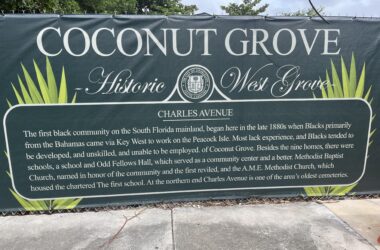

With a key hearing on a possible Grove carveout last week canceled, Miami’s density transfer proposal is back on track in its original form — renewing concerns that units tied to affordable housing could fuel luxury developments in Coconut Grove.
A controversial proposal to expand a program that allows developers in Miami to transfer unused affordable housing density to market-rate and luxury projects elsewhere in the city is moving forward without revisions that would have excluded Coconut Grove from some of its provisions.
A scheduled April 1 hearing before the city’s Planning, Zoning and Appeals Board (PZAB) — where an amended version of the proposal, backed by District 2 Commissioner Damian Pardo, was expected to be considered — was canceled for lack of a quorum, leaving roughly 75 residents and stakeholders unable to speak on the measure.
With that hearing scrapped, the earlier version of the ordinance — already deferred once amid public backlash — is set to appear Thursday before the City Commission without the proposed revisions.
The ordinance would expand an existing program that incentivizes affordable housing in lower-income areas by allowing developers to build fewer units than zoning permits and sell the unused density. At so-called “receiving sites” that purchase those credits, developers can increase unit counts by up to 50% above base zoning — without being required to include affordable housing in the additional units.

Read more: City to Vote on Shifting Housing Density From Affordable Projects
The proposal has drawn growing opposition in Coconut Grove, where civic groups argue it could result in fewer affordable units while accelerating overdevelopment in a neighborhood already strained by rising traffic and infrastructure demands. That concern helped drive turnout for the April 1 PZAB meeting, where dozens had planned to weigh in before the session was abruptly canceled.
The density transfer item was one of two closely watched proposals on the agenda that night, alongside a separate measure that would allow developers to build taller and denser projects near designated bike trails, or “greenways,” including the Commodore Trail and the Underline.
Read More: City Proposes Pay-to-Play Building Bonuses Near Bike Trails
Together, the proposals have become a focal point of broader anxiety in the Grove about the pace and scale of development — and whether existing planning rules are being stretched to accommodate it.
That tension intensified last month when city officials backed away from a proposed Coconut Grove carve-out of the affordable housing density transfer measure, citing a largely untested 2025 state law — Senate Bill 180 — that limits the ability of local governments to adopt land-use rules deemed more restrictive or burdensome to development.
Adopted in the wake of hurricane recovery efforts but interpreted broadly by development interests, the law has been invoked as a potential barrier to even targeted zoning changes. City officials have argued that exempting Coconut Grove from the program could expose Miami to legal challenges, though some question that reading, noting the carve-out would not have reduced base zoning, only access to a voluntary bonus program.
Read more: City Drops Coconut Grove Carve-Out from Density Transfer Program
In response to those concerns, Pardo advanced a modified version of the ordinance aimed at narrowing its scope in Coconut Grove. The revised proposal would have retained the core framework of the program while adjusting eligibility thresholds and refining how it applies across different parts of the city.
But because that amended version was never heard by PZAB, it has not advanced procedurally — leaving the original proposal, backed by the city administration, as the version still in play.
Under the current draft, projects within Opportunity Zones or newly added Neighborhood Development Zones — areas targeted for economic revitalization — would qualify as “sending sites” with as few as 70 affordable or mixed-income units, a significant reduction from the 200-unit threshold required in Community Redevelopment Areas.
Those projects could then sell their unused density to receiving sites — regardless of their target buyer markets — where builders could exceed base zoning limits. The program under consideration Thursday would also allow those additional units to be exempt from parking minimums, making them particularly attractive in higher-density areas like Coconut Grove.
City officials argue the program is needed to create additional revenue streams for developers considering affordable housing projects, which typically have lower profit margins than market-rate or luxury developments.
Under the proposal, a portion of each density transfer transaction — between 15% and 25% — would be directed to the city’s Affordable Housing Trust Fund or a Community Redevelopment Agency.
The most likely beneficiaries of the program, as receiving sites, may be projects that have already been granted approval to build above base zoning under a since-rescinded provision for developments near Metrorail stations and other transit hubs — and are now seeking to fill that added height with additional housing units.
One of those projects, The WELL Coconut Grove, declared its intent in 2024 to purchase density transfer credits to increase its luxury condo unit count by 50%, or an additional 65 units.
City records do not specify whether the project’s developer, Coconut Grove-based Terra Group, plans to purchase credits from the city’s affordable housing density transfer program or a separate mechanism involving density transfer tied to historic properties.
City officials have declined multiple requests from the Spotlight to clarify the status of The WELL’s density transfer application. Terra Group attorney Iris Escarra, who is overseeing the project’s zoning application, did not respond to an email seeking comment.
















Once again, the City of Miami shows it’s all about pleasing the developers, regardless of how it harms our quality of life or burdens our infrastructure.
If the City wants to support affordable housing, there are already laws on the books, like tax credits, tax exemptions and to some extent, section 8 vouchers.
The City of Miami is already zoned to allow the construction of 8 times more housing units than were counted in the 2010 census. Yes, it’s that crazy.
If commissioners vote on this measure – moving the unit requirements amounts from 200 to 70 – without the amendment being heard by PZAB, it will be confirmation that the system is broken. Procedures are in place for a reason; I’m hoping it’s to protect citizens from pernicious developers. The voters are watching what happens.