


For 60 years, The Villagers, an all-volunteer organization, has helped to preserve historic landmarks in Coral Gables, Coconut Grove and beyond.
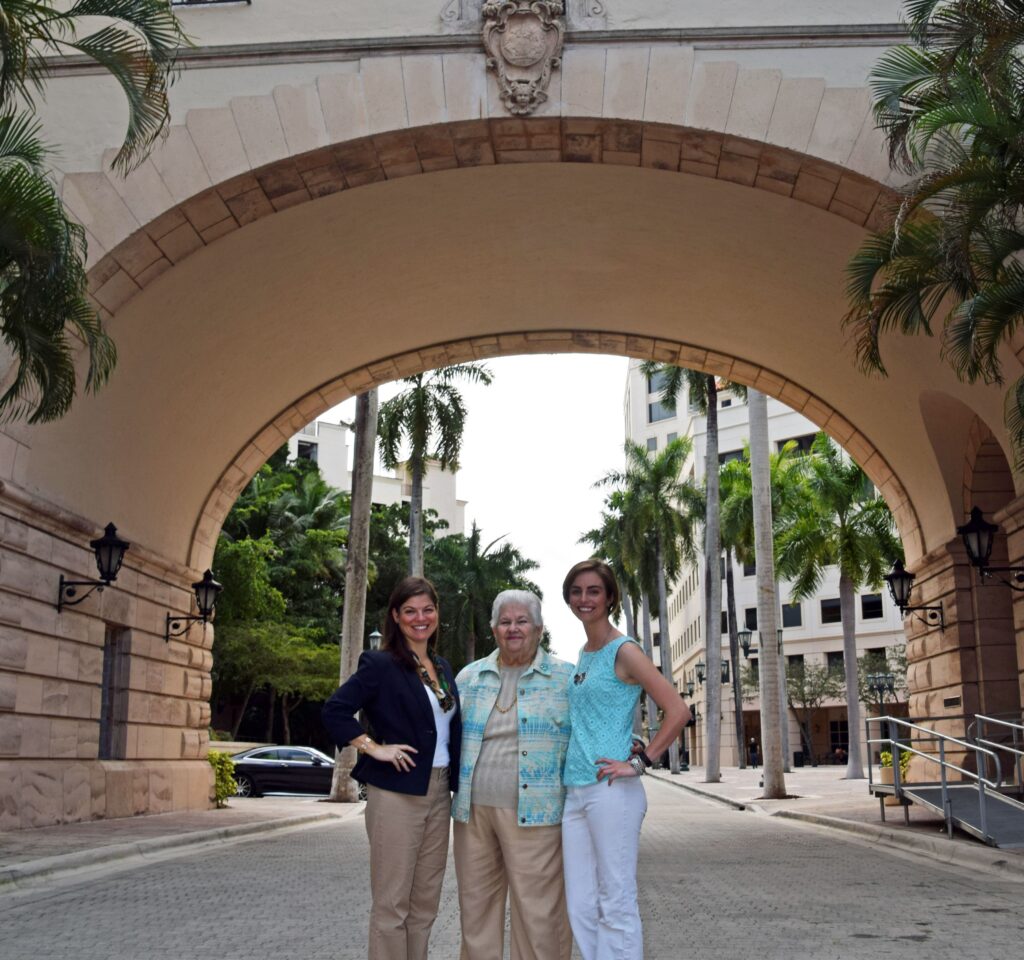
In 1966, a bunch of women, mostly architects’ wives, got together to clean up the decaying Puerta del Sol entrance to Coral Gables at Douglas Road and Tamiami Trail.
They scraped, they painted, they chased pigeons from the rafters. They named themselves The Villagers. Sixty years later, the all-volunteer group is still thriving, the oldest historic preservation organization in the county.
Altogether, they’ve approved more than 280 grants worth at least $1.7 million and awarded more than 200 scholarships to students interested in historic preservation.
In Coconut Grove alone, The Villagers has been responsible for preservation projects at The Barnacle and Vizcaya, as well as work at The Kampong, the Old School House, Plymouth Congregational Church and other places.
Last year, The Villagers’ tour of Coconut Grove houses brought in $58,000. A garden tour raised an additional $33,000.
“It’s a very simple concept,” said Kelley Schild, a former president. “We do two or three fund-raisers a year and all the money goes for grants. We have no paid staff, no building. I think (the organization’s) simplicity is why it’s survived for as long as it has.”
Over the years, The Villagers’ influence has spread. Leaders of the organization started Dade Heritage Trust and were among the founders of the Florida Trust for Historic Preservation.
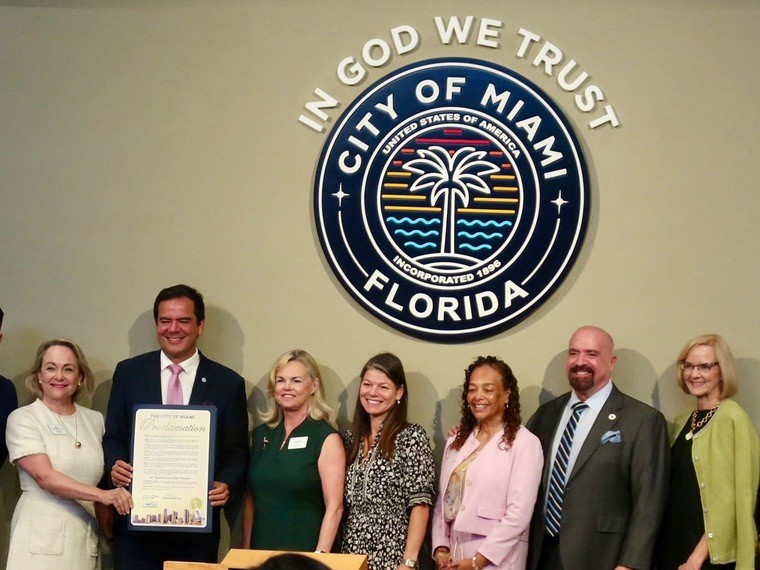
A proclamation issued last month by the City of Miami commended the group for its “60 years of dedicated service, advocacy and leadership in preserving the cultural, architectural and historic heritage of our community.”
The Villagers has been remarkably stable. The organization has about 180 members, said former president Gina Guilford – the same as in 1998, according to the Miami Herald.
Still, Guilford, 66, and her sister, Schild, 63, are among the younger members, Guilford noted. These days, women tend to join later in life, sometimes after they retire from careers, Schild said.
Dolly MacIntyre and the Douglas Entrance
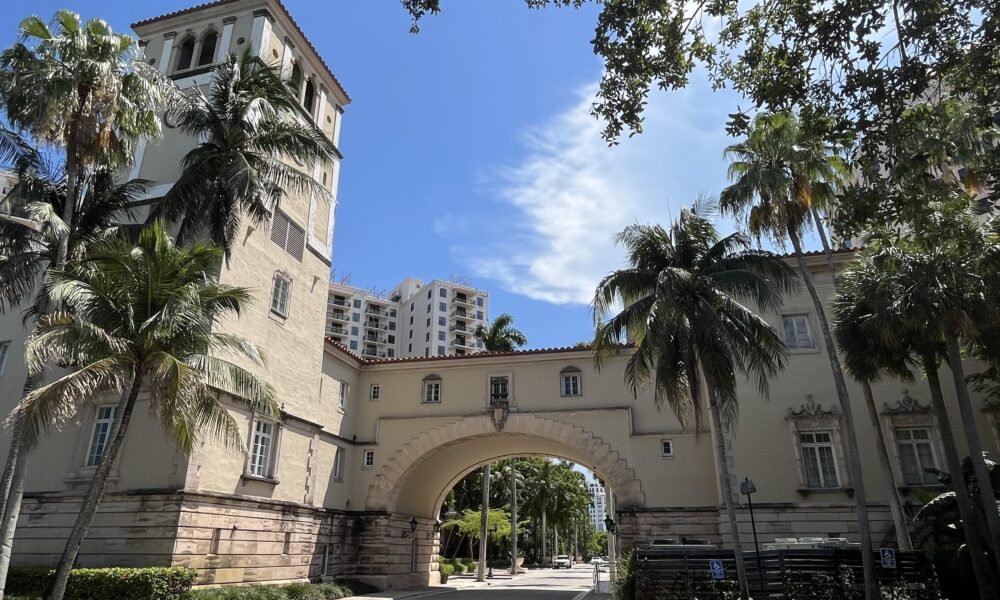
The women who founded The Villagers originally set out to save the Douglas Entrance, the grand arched Puerta del Sol entrance built in the 1920s by George Merrick, who founded the city of Coral Gables.
By the mid-1960s, it was in disrepair. The Food Fair chain wanted to tear it down and build a supermarket and parking lot. Architect James Deen persuaded 60 colleagues to buy the property, which was 10 acres that included shops and apartments.
The clean-up effort was first led by Deen’s wife, Pat, but very quickly a preservation enthusiast, Dolly MacIntyre, became involved and was at the forefront of much of the Douglas Entrance work.
“The members scrubbed and painted bathrooms and refurbished the elegant ballroom as well as raised money,” wrote MacIntyre, who died last year.
“I don’t know how she got involved with it,” said MacIntyre’s daughter, Sheffield Bessellieu, “but she was up there on the ladder and everything.”
MacIntyre’s father was a career Navy officer, and she had grown up everywhere at bases around the world. “She never really had roots, and when she came to Miami, that got her to thinking how important preserving history could be,” Bessellieu said.
A Miami News society columnist praised The Villagers as a “get-things-done-and-social club.”
Eventually, the architects sold the land to a developer who agreed to preserve the entrance and create buildings that would blend in with it.
The Villagers next aimed their attention at Vizcaya in Coconut Grove, the winter retreat built by industrialist James Deering on Biscayne Bay. They cleaned walls and woodwork, polished floors and restored a fireplace.
“Some of us remember teetering on the top of 12-foot ladders with Spic n Span running down our arms as we stretched to reach the ceiling,” MacIntyre wrote. They also raised money to restore the Casino on the Mound in the Vizcaya Gardens.
In the early 1970s, MacIntyre explored the possibility of expanding preservation efforts to the rest of the state by starting a Florida organization. After being advised that it might be better to start with a countywide structure, she and another Villager, Sallye Jude, became founding members of the Dade Heritage Trust in 1972.
While The Villagers focus on fund-raising and restoration, the trust is much more engaged in advocacy work, said executive director Christine Rupp. “We present programs. We work with governments, lobby for historic designations. We’re very politically active, and we do have paid staff,” she said.
In 1976, when the Florida Trust for Historic Preservation began, MacIntyre and Jude were listed as founders.
Over time, The Villagers dropped their roles of hands-on renovation and became strictly a fund-raising organization.
In Coconut Grove, they’ve taken on several projects at The Barnacle over the decades, said Marlin Ebbert, who joined The Villagers in 1989 and is a past president of The Barnacle Society. That included rebuilding the foundation of the boat house and the roof of the carriage house.
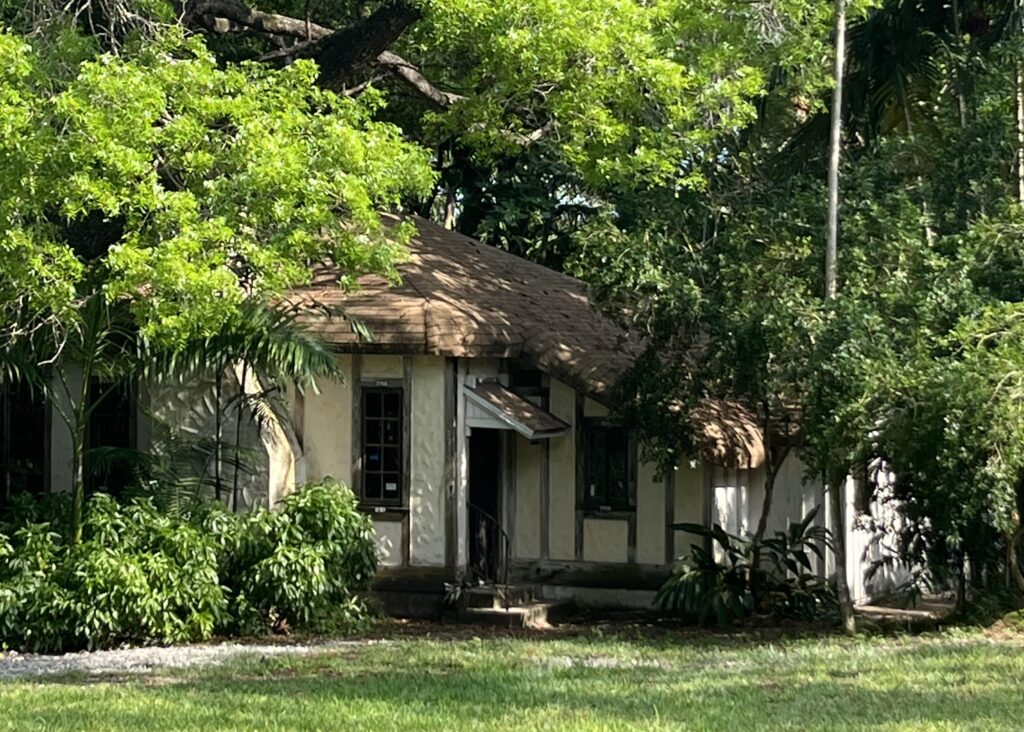
At The Kampong, The Villagers supported refurbishing the study of famed botanist David Fairchild as well as the stables and office of Miami’s first female physician, Eleanor Galt Simmons. They’ve also backed preservation efforts at El Jardin (home to Carrollton School of the Sacred Heart), the Women’s Club of Coconut Grove and the Marjorie Stoneman Douglas house.
Their house tours tend to be highly organized affairs, with shuttle buses taking people around to various sites. For the Grove tour last December, The Villagers showed five private homes plus historic sites like the Old School House.
Some of their donations have been substantial – such as the $60,000 to renovate the lighthouse keeper’s cottage on Key Biscayne, but others have been relatively small, like the check they wrote in April for $1,981 to the Coconut Grove Sailing Club for two signs explaining the club’s history.
They have also supported many efforts in Coral Gables. They were early leaders advocating the resurrection of the Biltmore Hotel, and they contributed to refurbishing the Merrick House. They’ve also spread to historically black areas, including the Hampton House and the Black Precinct and Courthouse Museum.
The Villagers’ work “is not really about the past,” Schild said. “It’s about the future. Our goal is to see that buildings get used, not necessarily for the original purpose, but are used.”
Most of the time, the group doesn’t get involved in political fights, but members have stood up in support of renovating long-vacant structures like the Marine Stadium and the Coconut Grove Playhouse.
With the playhouse, Schild said, “we don’t care what you do. Just do it. The West Grove fight is understandable, but the more people fight, the less gets done. At some point, it just becomes obstructionist.”
The same goes for the Olympia Theater.
“These places need to be occupied,” Schild said.
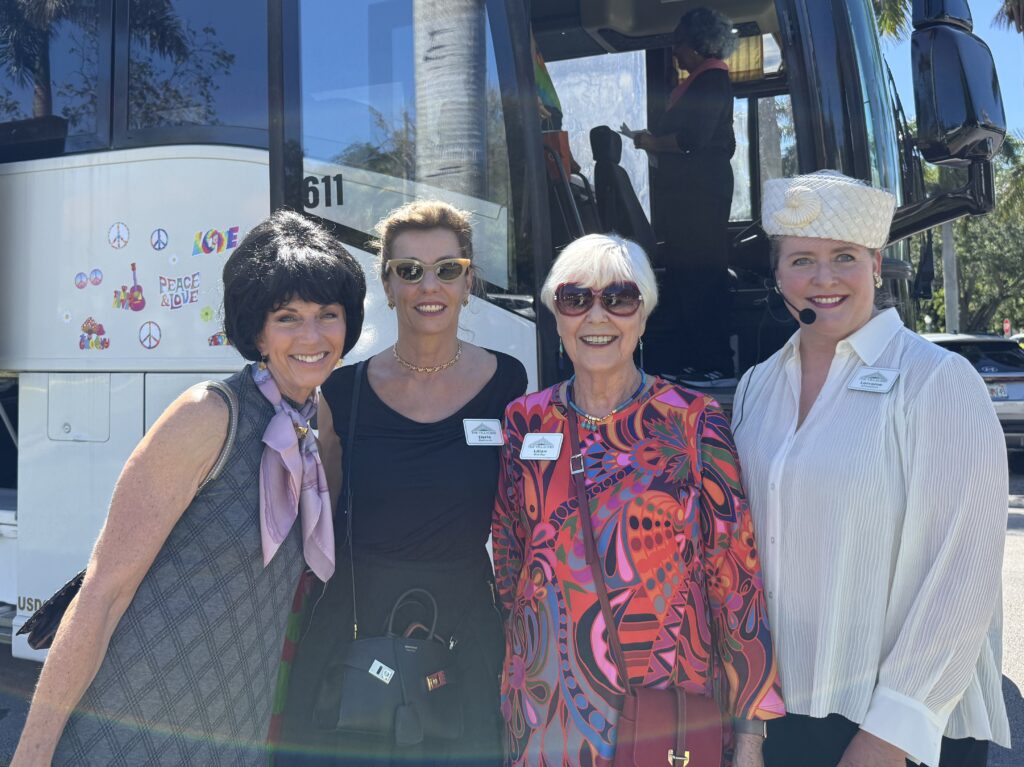
In April, the group celebrated its 60th with a Magical History Bus Tour, visiting 35 sites that The Villagers had helped fund, including the Douglas Entrance and the Black Precinct Museum, using a script first developed by MacIntyre. “We gave out goody bags to bus goers that had one of Dolly’s favorite snacks — Bugles Chips,” Guilford wrote.
Bus riders were encouraged to wear 1960s clothing, and many did. The bus ride was followed by a party with music, food and – of course – auctions.
As part of the 60th celebration, the group formed a Rebranding Committee to consider a name change. Guilford said. While they officially remain The Villagers, they are now the Miami Villagers on social media, and they’re considering whether to make that their formal name, in part to distinguish themselves from the residents of The Villages, the massive retirement development in Central Florida.
Annual dues are about $100 to $120 a year, depending on how long one has been a member. It used to be that a new member had to be sponsored by two active members, but in recent years, said Guilford, that has changed and potential members can apply online.
The key is that they must be dedicated to historic preservation, Guilford said. Members need to participate – working a shift at the house and garden tours – and showing up at least two general meetings.
As the society columnist noted decades ago, they’re still a “get-things-done” club.
For more information about The Villagers, visit www.thevillagersinc.org