
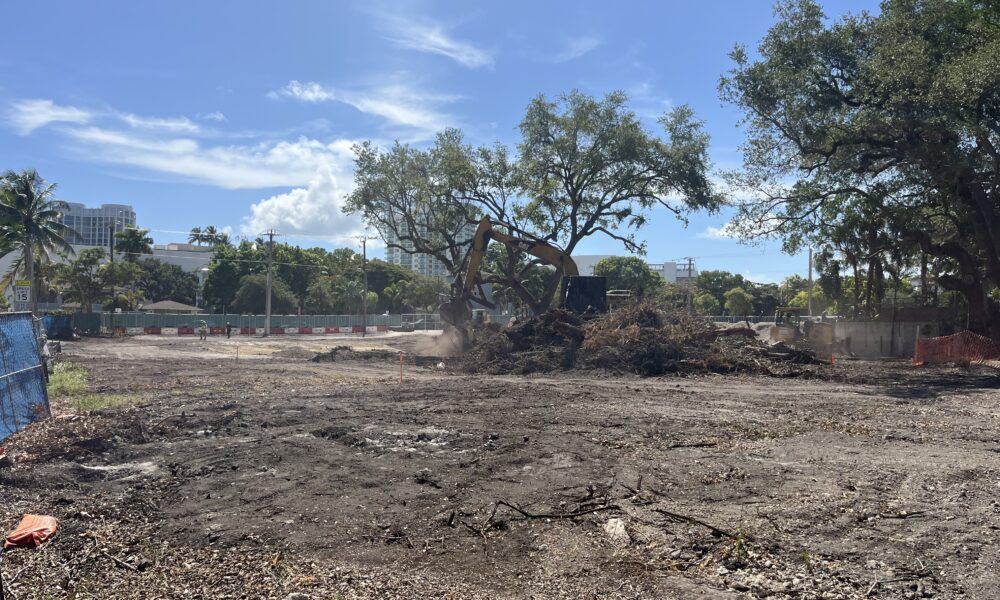


Newly released records show millions collected and thousands of trees planted through Miami’s tree-mitigation system. But money remains unspent despite an annual spending requirement — just as the city considers rewriting the rules governing the fund.
As Miami’s tree canopy shrinks, its coffers swell.
Over the past decade, the city has collected nearly $17 million from developers and property owners to help replace trees lost to development and new construction.
But millions of those dollars — collected to mitigate canopy loss when development sites cannot accommodate enough replacement trees — have remained unspent from year to year.
Newly released records show Miami’s Tree Trust Fund held $2.26 million as of Aug. 4, despite a city law requiring at least 80% of the fund to be spent each fiscal year on tree replacement and restoration or enhancement of the city’s tree canopy.
The city has not released annual financial reports required by the same ordinance that could provide a fuller accounting of how the fund has been managed. Nor has it provided records showing whether the city manager or a designee made the determinations required under city law to carry money into subsequent fiscal years.
The Spotlight has requested both sets of records for fiscal years 2020 through 2025.
The records arrive as Miami is again developing proposals for a major rewrite of its tree-protection ordinance. Among the issues likely to resurface is what happens to the millions collected to mitigate tree loss.
That question was a flashpoint during the city’s last attempt at a rewrite.
In October 2024, the City Commission considered a sweeping overhaul that would have loosened restrictions on Tree Trust Fund spending, shifted greater control over the money to the city administration and transferred half of the fund’s existing balance into a new operating account with broader permissible uses.
The proposal also would have changed the requirement that at least 80% of the fund be spent annually on tree replacement or canopy enhancement. Most notably, the proposed language did not require that a specified share of mitigation money actually be used to plant new trees.
The proposal was deferred amid strong public opposition, leading to the creation last year of the Tree Ordinance Advisory Committee, a citizen advisory board charged with helping develop recommendations for a renewed rewrite of the city’s tree-protection ordinance.
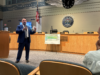
To support that effort, city officials earlier this month organized five community workshops — one in each commission district — to solicit residents’ feedback on the existing ordinance and ideas for how it should be changed.
Read more: Miami Begins Review of Tree Rules as Removal Battles Intensify
This time, the debate comes with a more detailed accounting of how the Tree Trust Fund has operated.
Since fiscal 2015, Miami has collected $16.95 million, according to financial records recently posted on a legislative website created by District 2 Commissioner Damian Pardo’s office. Collections exceeded $1 million in all but two of the completed fiscal years covered by the records and topped $2 million in fiscal 2022.
A 2024 Spotlight investigation found nearly $3 million flowed into the fund through 670 payments during the preceding two years, from major developers as well as homeowners and builders clearing residential lots.
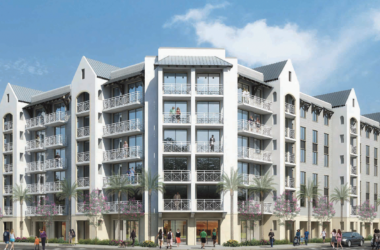
At Elemi at Grove Village on Thomas Avenue in Coconut Grove, for example, city officials permitted the removal of 55 trees, including mature oaks, royal poincianas, mahoganies and other hardwoods.
The developer planted 73 mostly smaller replacement trees and paid about $120,000 into the Tree Trust Fund to satisfy replacement requirements that could not be met on site.
Read more: Shady Dealings: For the City of Miami, Tree Removal is a Lucrative Business
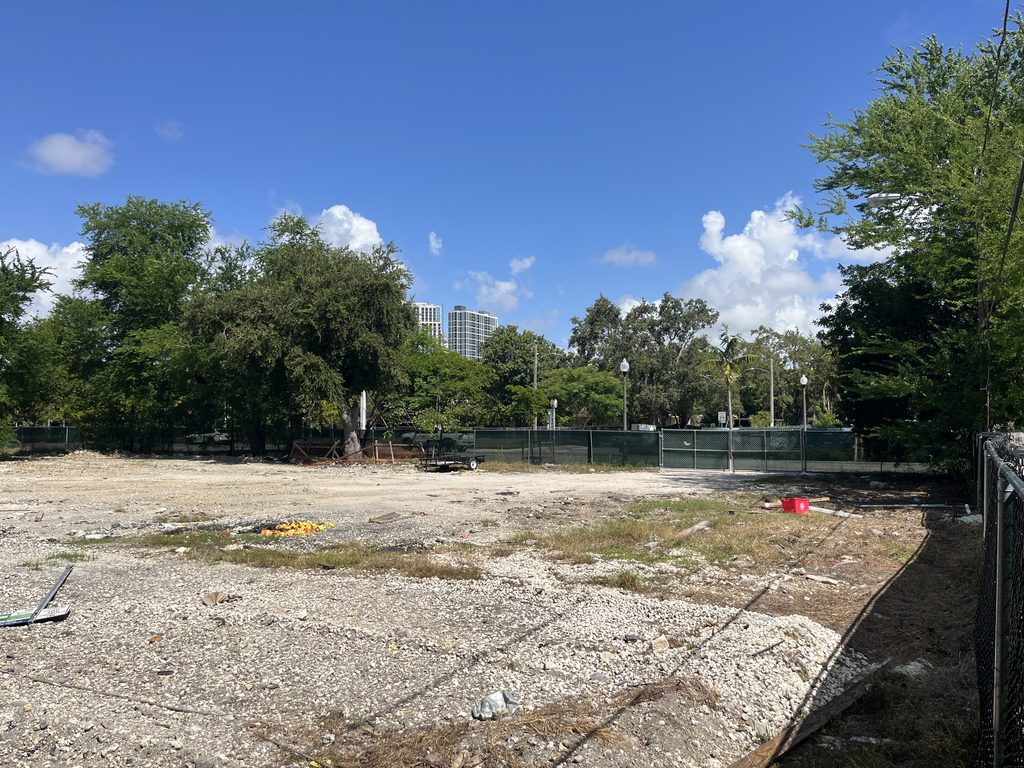
And earlier this year, the same developer, Coconut Grove-based Silver Bluff, agreed to pay $119,000 into the fund as part of a deal to remove 57 trees — including 15 that had already been cut down without a permit — for a temporary racquet sports complex on Grand Avenue.
Read more: Tree Removals Challenged for “Temporary” Grand Avenue Project
The newly released records show millions of Tree Trust Fund dollars flowing into an account linked to the city’s tree-planting program.
More than $8 million has been transferred from the fund to a separate Citywide Tree Planting capital project since fiscal 2023 — $4.48 million in 2023, $500,000 in 2024, $2.31 million in 2025 and $746,000 during the current fiscal year.
A separate July report from the Department of Resilience and Public Works says the planting program has planted 12,233 trees since fiscal 2018 while recording approximately $13.2 million in expenditures from Tree Trust Fund money and other funding sources.
That amounts to an average program expenditure of about $1,080 for each tree reported planted, although those expenditures can include costs beyond purchasing and planting trees.
The city also maintains a geographic database showing individual tree plantings, including species, dates and locations. But the records released so far do not identify which individual trees were financed with Tree Trust Fund dollars or provide a neighborhood-by-neighborhood accounting of where those mitigation dollars were spent.
The city also has not released records requested by the Spotlight identifying Tree Trust Fund-financed plantings during the past two fiscal years, including the number and location of trees, who performed the work and how much the plantings cost.
Other expenditures are less clear.
Tree Trust Fund records show $456,000 transferred to the Shenandoah Park Pool Renovation project in fiscal 2021 and a combined $1.8 million to Citywide Beautification in fiscal 2018 and 2019. The records do not explain what the money paid for within those projects.
The records also show substantial balances remaining in the Tree Trust Fund from one fiscal year to the next.
Section 62-303 of the City Code says “not less than 80 percent of the trust fund” must be spent each fiscal year on tree replacement and restoration or enhancement of Miami’s tree canopy.
Another 10% can be spent on related work such as surveys, site analysis, landscape design and inspections, while up to 10% can be used for inspector training and certain administrative expenses.
The ordinance allows money to be carried into the following fiscal year if the city manager or a designee determines there are insufficient reserves to implement a viable tree-replacement program.
The newly released records do not indicate whether such determinations were made.
The city’s Communications Office did not respond to a list of detailed questions from the Spotlight, including whether the city has complied with the 80% annual spending requirement, whether the required determinations were made to carry money forward and whether the annual Tree Trust Fund reports required by city code have been prepared and presented to the City Commission.
Questions about the fund’s administration are not new.
A 2021 audit by Miami’s Independent Auditor General found that from 2015 through 2019, just 21% of Tree Trust Fund revenues had been spent on tree planting and maintenance.
Auditors also identified unauthorized expenditures and criticized the city’s lack of adequate policies and procedures governing the fund.
“The lack of policies and procedures creates an environment in which there is an increased risk of fraud, waste, or abuse,” auditors wrote.
The ordinance review will continue into next year. The Tree Ordinance Advisory Committee is expected to meet through the fall, with another round of five community workshops — one in each commission district — potentially to follow.
The committee is scheduled to present its findings and recommendations for a new tree ordinance to the City Commission by March.










Thank you for doing this research. Residents and voters have noticed that trees are being killed at an alarming rate. Residents and voters would like to see trees protected.