

Months after the Spotlight found unpermitted seating on the pedestrian street, city records and a resident’s complaint are raising new questions about permits, enforcement and public access.
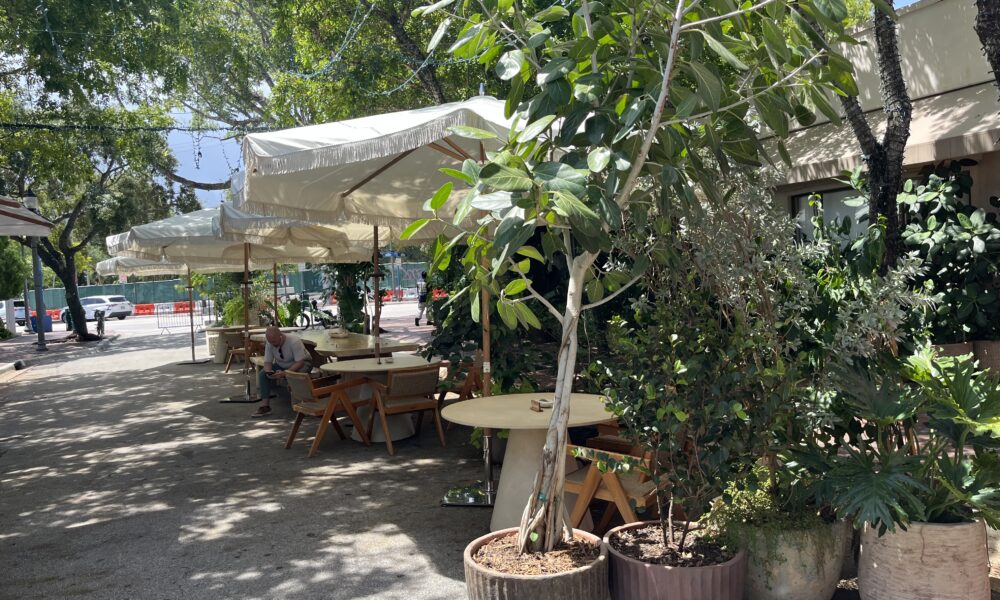
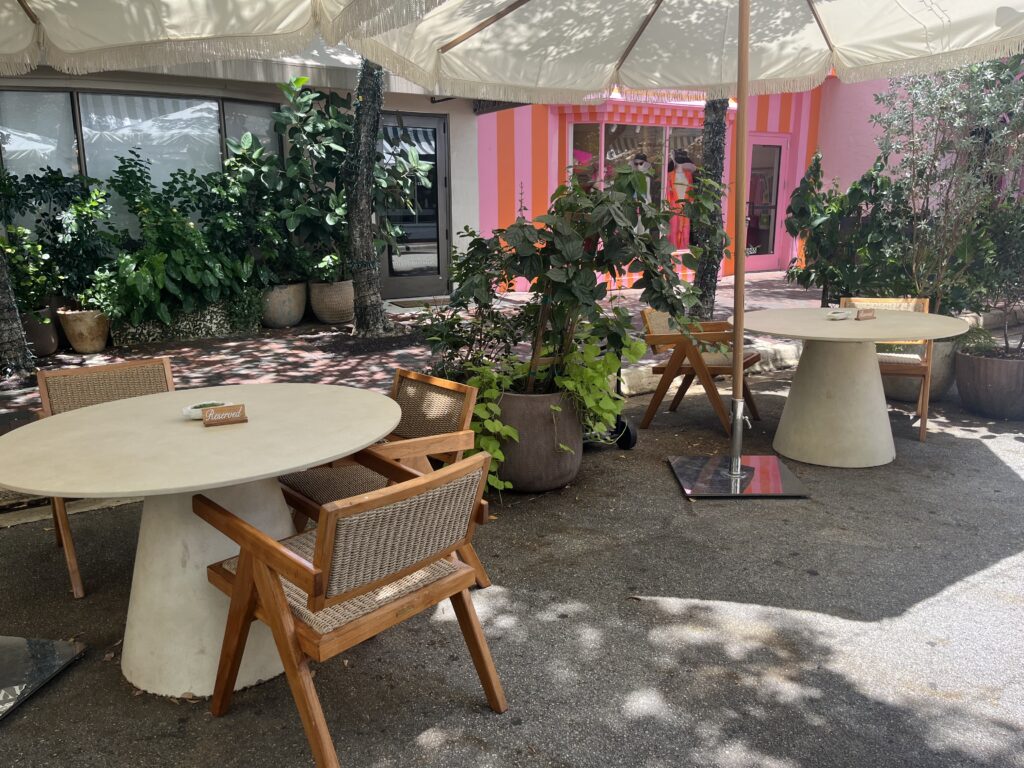
When Carlo Ricordi recently noticed “Reserved” signs on tables outside the upscale sandwich shop Ziggurat x Chèvre on Fuller Street in Coconut Grove’s village center, he wondered why a private business appeared to be claiming exclusive use of seating in the public right of way.
It wasn’t the first time questions had been raised about the tables.
A Spotlight investigation in March found that Ziggurat x Chèvre was operating outdoor seating on pedestrian-only Fuller Street without a city permit. Even so, its tables were routinely adorned with “Reserved” signs discouraging noncustomers from using them — despite city rules expressly requiring such seating to remain available to the public, regardless of whether they patronize the business.
After the Spotlight’s report, the tables disappeared.
Then they came back.
And when Ricordi complained to City Hall this month, he learned that the permitting process still wasn’t complete.
According to emails reviewed by the Spotlight, as recently as Aug. 11, an application for outdoor seating at 3065 Fuller St. had been approved but was awaiting an $8,680 payment before the permit could be issued. That finding was reinforced by a separate Spotlight public records request that found no active permit linked to the location.
“The tables and chairs cannot be used for anything at this stage since they have not finished the process,” Code Compliance Field Supervisor Luis Gomez wrote in response to Ricordi’s complaint.
Asked in July about the tables and chairs, Allen Morris Company President Spencer Morris told the Spotlight he was unaware of the permitting issue, saying responsibility for the outdoor seating rested with the owner of Chèvre, which operates under contract with Allen Morris out of the Ziggurat sales center. Multiple calls to Chèvre seeking comment were not returned.
The permit has since been issued — but only after months of operating without one.
City officials told the Spotlight on Monday that the permit was approved Friday, Aug. 14, three days after officials said the application remained incomplete because an $8,680 payment was still outstanding. The approval also came after Ricordi’s complaint and renewed inquiries from the Spotlight about the status of the seating.
The city did not explain what prompted the application to be completed after months without a valid permit.
For Ricordi, the dispute is about more than whether a business has the proper paperwork. It’s about whether Fuller Street remains a public gathering place as restaurants occupy more of the pedestrian boulevard and a major makeover promises to reshape it.
“This is one of our few ‘third places’ in the Grove, where you can gather and not have to pay to exist,” said Ricordi, who has lived in Coconut Grove for 25 years, referring to the urban planning concept of public gathering spaces outside the home and workplace.
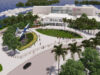
The question is taking on added significance as plans move forward for a $5 million redesign of Fuller Street and neighboring Kirk Munroe Park, being led by Allen Morris Company, developer of the Ziggurat mixed-use project under construction on Grand Avenue.
The Miami City Commission approved the final designs in June, and the Coconut Grove Business Improvement District gave its required approval to the Fuller Street improvements last month.
The redesign calls for raising the former roadway to sidewalk level, replacing the asphalt with stone pavers and adding new trees and landscaping.
City officials have said outdoor seating will remain a key part of Fuller Street after the redesign. But its growing presence has also fueled concerns about whether the area will retain the laid-back, open-to-everyone character that has developed since the narrow roadway was converted to a pedestrian street about five years ago.
How the city regulates outdoor seating — and how it enforces its own rules — could help determine the answer.
Miami allows restaurants and other food establishments to obtain permits to place tables and chairs in the public right of way. But those permits don’t bestow exclusive control over the seating.
A permitted sidewalk or street cafe “shall be opened for use by the general public,” the city code says, and its use “shall not be restricted to patrons of the permittee.”
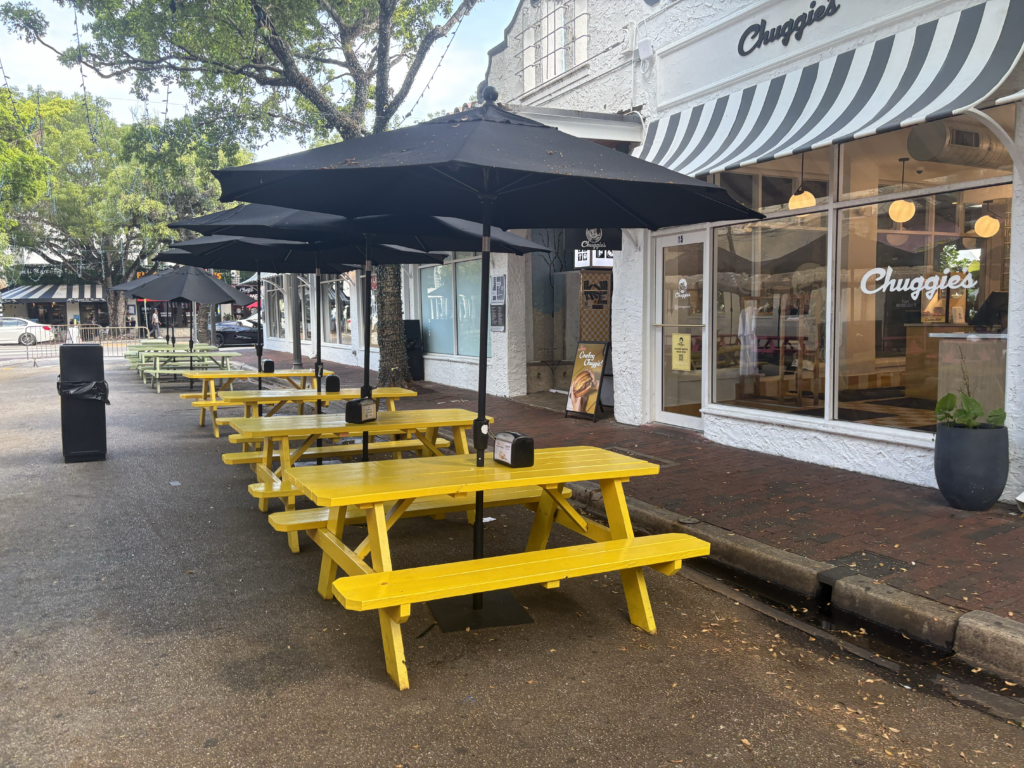
Yet the Spotlight has repeatedly documented “Reserved” signs on tables outside Ziggurat x Chèvre since it began operating from the Ziggurat sales center early this year. Similar signs were photographed as recently as last month on tables outside Grove Grocer on the opposite side of Fuller Street, although they were gone during a more recent Spotlight visit.
Ricordi, who lives near Fuller Street and walks through it almost daily, said the signs caught his attention. So did covers placed over the Ziggurat x Chèvre tables when the business was closed, effectively making them unavailable to the public.
“I really felt like they weren’t playing by the rules, and especially they’re taking over such a critical piece of the public right of way in Fuller Street,” Ricordi said. “To me, that’s really become the heart of the Grove, ever since they closed the street down to be pedestrian only.”
In an email exchange last week, city officials explained to Ricordi that because Ziggurat x Chèvre lacked a valid permit, the tables and chairs could remain on Fuller Street only if they were covered and not used by patrons.
But on Aug. 13, two days after city officials reiterated that restriction, a Spotlight reporter visited Fuller Street and found the tables and chairs uncovered.
The city’s permit records raise questions about seating elsewhere on the block as well.
City records identify two valid permits for outdoor seating on Fuller Street: one associated with Barracuda Taphouse & Grill and another for Grove Grocer at 3098 Fuller St., issued under the name Alto Consulting LLC.
The Grove Grocer permit authorizes 16 tables and 32 chairs occupying 270 square feet of the public right of way.
But a Spotlight inspection found outdoor seating spread along the storefronts occupied by Grove Grocer, Chug’s Diner and Chuggie’s on that side of Fuller Street. It is unclear whether all of that seating is covered by the Alto permit.
The permit requires the tables and chairs to remain at locations shown on an approved site plan. City code also says a street cafe permit is personal to the permit holder and cannot be transferred.
Expanded outdoor seating on Fuller Street has also left less room for other uses. Last December, organizers of the GroveHouseArtists ArtWalk ended their monthly gatherings along the street, saying there was no longer enough space to stage the event.
Now, with millions of dollars in public and private investment flowing into Fuller Street and its neighboring park, Ricordi said enforcing the rules governing the public space has become even more important.
“If they want to be a part of the community like they say they do, then they have to abide by the rules,” he said. “I’m asking for basic accountability. If you want to put tables on Fuller Street, that’s fine. Apply for the permit and pay your bills.”
Anita Li is a Spotlight reporter and Report for America corps member covering government accountability in Coconut Grove and Miami City Hall. She joins us through our partnership with Report for America, a national organization that places journalists in local newsrooms across the United States.








Your article should be more transparent and factual explain that he exact same City of Miami sidewalk café ordinance (Chapter 54, Article VI) applies to any sidewalk permit: Greenstree, Crema, Farinelli, Meraki, Los Felix, etc. so rather than honing in on Fuller, why don’t you take it up the all of the City of Miami sidewalk cafes?
Permits are issued so businesses can place tables and chairs in the public right-of-way “for use by the general public.”
Explicit condition of every permit:
“The sidewalk and/or street cafe shall be opened for use by the general public and such use shall not be restricted to patrons of the permittee.”
So whether it’s Fuller Street or Commodore Plaza or Main Highway, if the tables are on city sidewalk / right-of-way under a sidewalk café permit, the city code requires them to remain available to the general public and not restricted to paying customers. “Reserved” signs or other barriers that effectively privatize the seating conflict with the permit conditions in both locations.