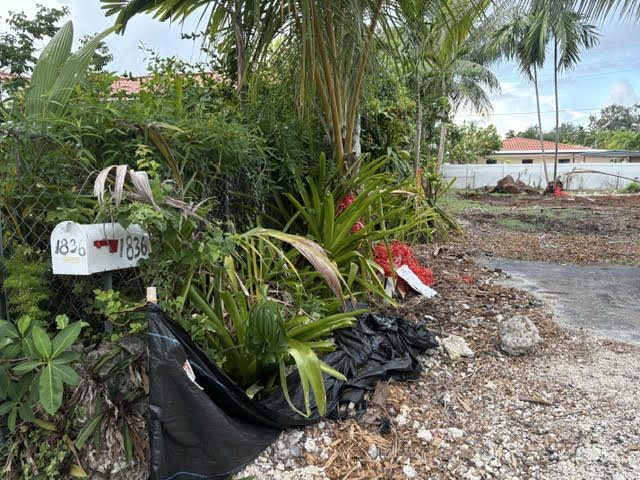




As city officials debate changes to Miami’s tree-protection laws, they may want to consider the case of an oak tree — by some estimates approaching three centuries old — that was removed without a permit from a property slated for development.
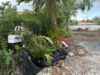
For decades, Ellen Kanner, a resident of Miami’s Silver Bluff neighborhood, could look out her window and see what she called a “beautiful green umbrella” — a giant live oak on the lot across the street.
Then, on Aug. 1, she saw a crew begin cutting it down.
Kanner rushed over and asked to see a permit. A worker told her the crew had one, she said, but never showed it. Kanner called 311 and the City of Miami’s Code Compliance Department, but no one answered.
Kanner also sent an email and the message got through. Five days later, the property was cited for illegally removing the tree without a permit.
The property owner, Epic Investments, was issued a $1,000 fine. The city also ordered the company to obtain an after-the-fact permit for the removal.
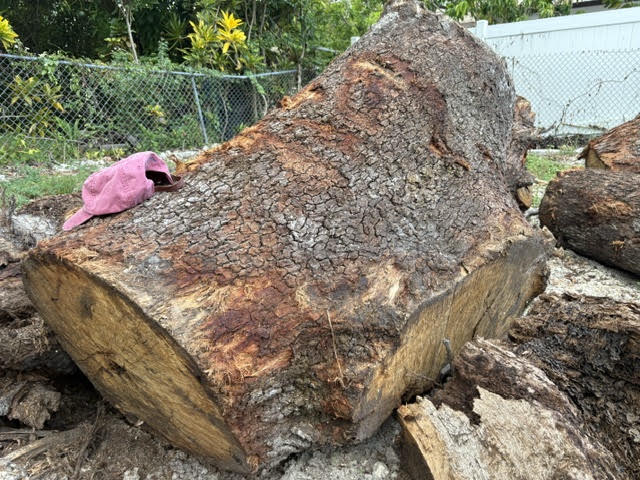
The live oak measured 63 inches in diameter, city records show. Based on an online tree-age calculator, that would put its estimated age at about 284 years — although estimating the age of a living tree from its diameter is imprecise.
Ron von Paulus, a licensed arborist who works extensively throughout the City of Miami, said trees that large have become exceedingly rare in Miami-Dade.
“That’s a tree our great-grandparents could have played underneath, easily,” von Paulus said. “The fines should be in the hundreds of thousands.”
The case illustrates an issue that has emerged as Miami residents, city officials and the newly appointed Tree Ordinance Advisory Committee rethink the rules protecting the city’s tree canopy: whether the cost of illegally removing a protected tree is enough to deter a developer who might otherwise have to seek a permit that could be denied or require changes to a development plan.
Critics have long complained that some builders make precisely that calculation — weighing the cost of violating the ordinance against the potential benefit of removing a tree and treating the resulting penalties as a cost of development.
When the Tree Ordinance Advisory Committee began its work in July, the Spotlight reported that preventing such abuses was one of the central issues confronting the panel.
Read more: Miami Begins Review of Tree Rules as Removal Battles Intensify
The committee, which is scheduled to meet again Oct. 2, is reviewing the city’s tree-protection policies, including penalties and enforcement, and is expected to make recommendations by March.
The review comes amid increasingly contentious battles over tree removals and the city’s permitting process. Tree-removal appeals have surged this year, while residents at city workshops have complained about disappearing tree canopy and weak enforcement. At the same time, some homeowners and development interests say the existing permitting process is cumbersome and costly.
Read more: As Miami Rethinks Its Tree Rules, Residents Have Plenty to Say
The Silver Bluff case offers a striking example of how the current system works after a tree is removed without permission.
Under Miami’s existing ordinance, removing a tree without a permit is considered “tree abuse.” For a non-homestead property, like the one in Silver Bluff, the fine is $1,000 per tree — whether the tree is a few inches in diameter or, as in this case, more than five feet across.
The fine is only one potential consequence. The city also requires mitigation based on the size of the tree. Under the city’s tree ordinance, the removal of a 63-inch tree without a permit requires the property owner to plant 42 two-inch-diameter trees, 21 four-inch-diameter trees or pay $42,000 into the city’s Tree Trust Fund.
The property owner may appeal the citation. The city’s records show that the case remains open and the violation is listed as not complied with.
The city has other enforcement tools as well. It can issue stop-work orders for construction or other permitted activity, and withhold building permits or approval needed for a certificate of occupancy until violations are corrected. Properties that have been fined for another tree violation within the previous five years can face enhanced penalties of as much as $5,000 per day per violation.
City records show that Epic Investments has submitted plans for a three-story, 5,620-square-foot home and a separate 375-square-foot cabana on the property. The city’s code-enforcement records also show new-construction permits associated with the property.
Christopher Rodriguez, Epic Investments’ registered agent and principal, did not respond to repeated requests for comment from the Spotlight.
City officials declined to answer questions about the violation, saying only through a spokesperson, “The City of Miami takes unauthorized tree removal seriously and continues to enforce its tree protection regulations to preserve the urban tree canopy.”
Von Paulus argues that the existing consequences may not be enough to deter developers when removing a tree makes a property easier or more valuable to develop.
“I’ve seen it happen way too many times,” von Paulus said. “It’s different rules when [developers are] building it trying to make money … it doesn’t really scare away your rich and your super rich.”
State law limits some of what Miami can do about the problem.
Florida provides exemptions from local tree-removal ordinances for trees on single-family residential properties that are deemed dangerous by a qualified professional. State law also generally bars cities from licensing tree-removal contractors, limiting one potential enforcement tool.
Von Paulus said licensing could help hold tree-removal companies — not just property owners — accountable.
“If you make removing trees illegally a stupid business decision, people aren’t going to do it,” he said.
But the $1,000 fine imposed in the Silver Bluff case is not a limit set by Tallahassee. It is established by Miami’s own tree ordinance.
Florida law gives larger cities the option of adopting greater code-enforcement penalties, including fines of as much as $15,000 for violations found to be irreparable or irreversible — a category that could potentially include the removal of a centuries-old tree.
Miami does not appear to have adopted that option for illegal tree removals, instead setting the fine at $1,000 per tree while providing substantially greater penalties for repeat violators.
The size of those fines is already drawing attention. At a Coconut Grove town hall this week, Commissioner Damian Pardo said he supports increasing penalties for illegal tree removals.
The issue could become significant as the advisory committee considers changes to the ordinance. State law has taken some tree-regulation tools away from Miami, but it appears to leave the city room to consider stronger penalties for illegally removing a tree.
Arborist Chris Pruett, who grew up and lives in the South Grove, said the city’s “math problem” approach to replacing trees fails to account for something that cannot quickly be replaced: time.
“Once you cut them down, they’re gone,” he said. “It’ll come back in 80 years, maybe.”
Kanner makes much the same point about the oak that once stood across the street from her home.
“A little sapling is a wonderful thing, but it’s not going to give you shade, it’s not going to be a habitat for birds or other things for years,” she said.