



In response to public safety concerns and some cases of property damage, the City of Miami is seeking to enforce a citywide ban on e-bikes in public parks, with limited success.
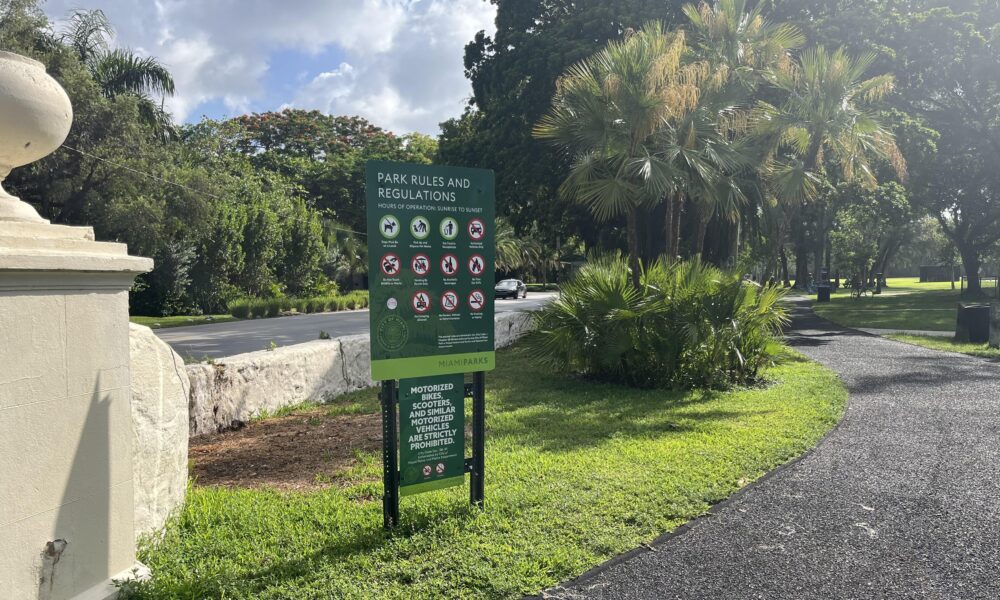
The Miami Parks and Recreation Department wants you to know it’s illegal to ride an electric bike in any one of the city’s 150 or so public parks, including Kennedy Park in Coconut Grove.
The city has been posting signs to that effect – to protect pedestrians and prevent property damage – but is having trouble enforcing the law.
The reason: the folks who are riding those e-bikes won’t slow down.
“We want to protect people” from e-bike riders, Chuck Ellis, the city’s parks director, said in an interview last week. But, he added, “you have to catch them first.” And that is easier said than done. “They are flying past you, and they don’t want to stop.”
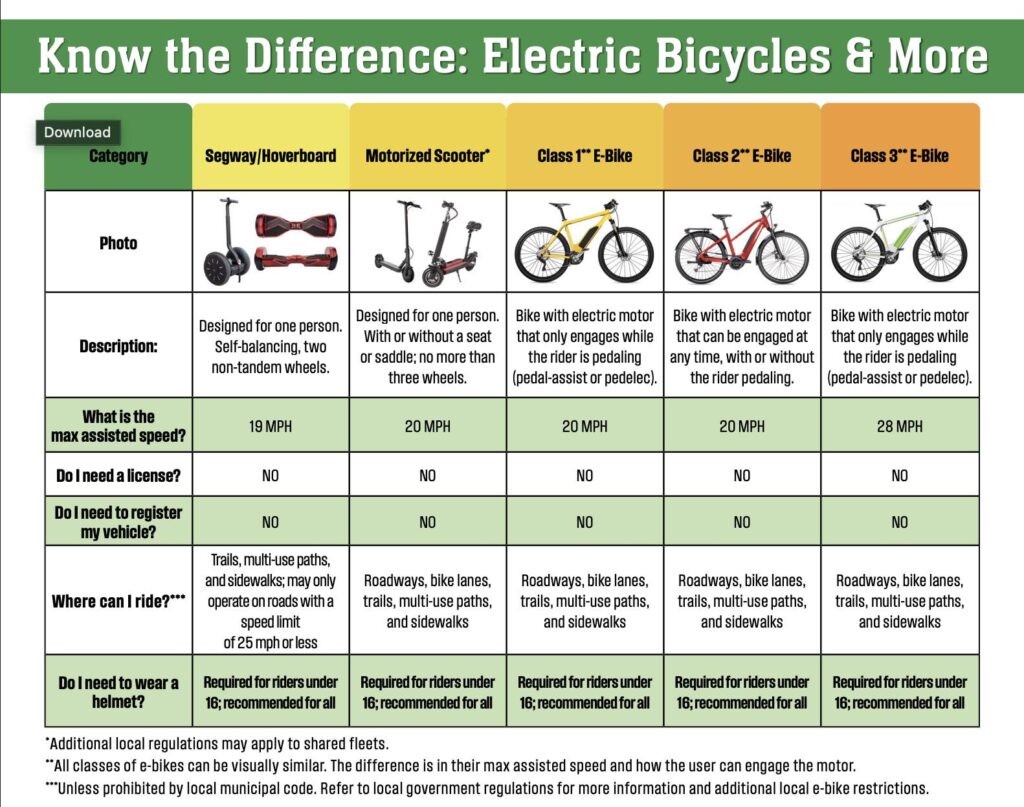
The issue of pedestrian safety has become a flashpoint in public spaces where people on foot share a path or a sidewalk with e-bikes, which can reach speeds of 28 mph, or electric dirt bikes, which are more powerful.
A Coconut Grove couple was hospitalized in January when a 15-year-old boy lost control of his electric dirt bike near Kennedy Park and struck them from behind, knocking both to the ground. Another man was killed the previous August on the Rickenbacker Causeway when struck by a 14-year-old on an electric dirt bike.
Read more: Safety Concerns Grow After Couple Struck by Dirt Bike
A handful of local municipalities – Key Biscayne, Miami Beach, and, most recently, Pinecrest – have adopted new rules that limit how and where e-bikes can be ridden.
The Pinecrest Village Council voted unanimously on May 5 to impose strict speed limits on e-bikes and e-scooters when ridden on village paths and sidewalks, and to require anyone under the age of 16 (and their parent) to attend a safety training class before operating a Class 2 e-bike (e-bikes with a throttle that don’t require the rider to pedal).
In Miami, e-bikes can be ridden on sidewalks, according to information provided by Miami Police, but not in public parks (except on the paved park roads used by cars, trucks and buses).
Asked if that prohibition applied to all three classes of e-bikes, Ellis said yes.
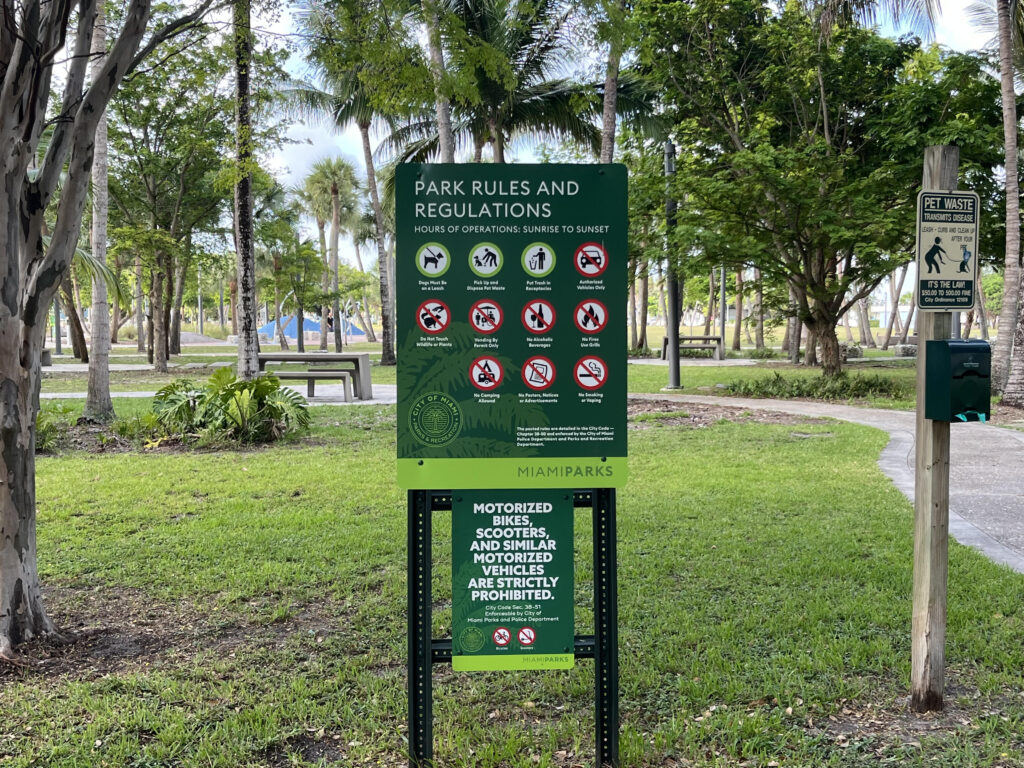
The city has posted signs to that effect in Kennedy and Regatta Park, citing section 38-51 of the City Code. “Motorized bikes, scooters, and similar motorized vehicles are strictly prohibited,” the signs say.
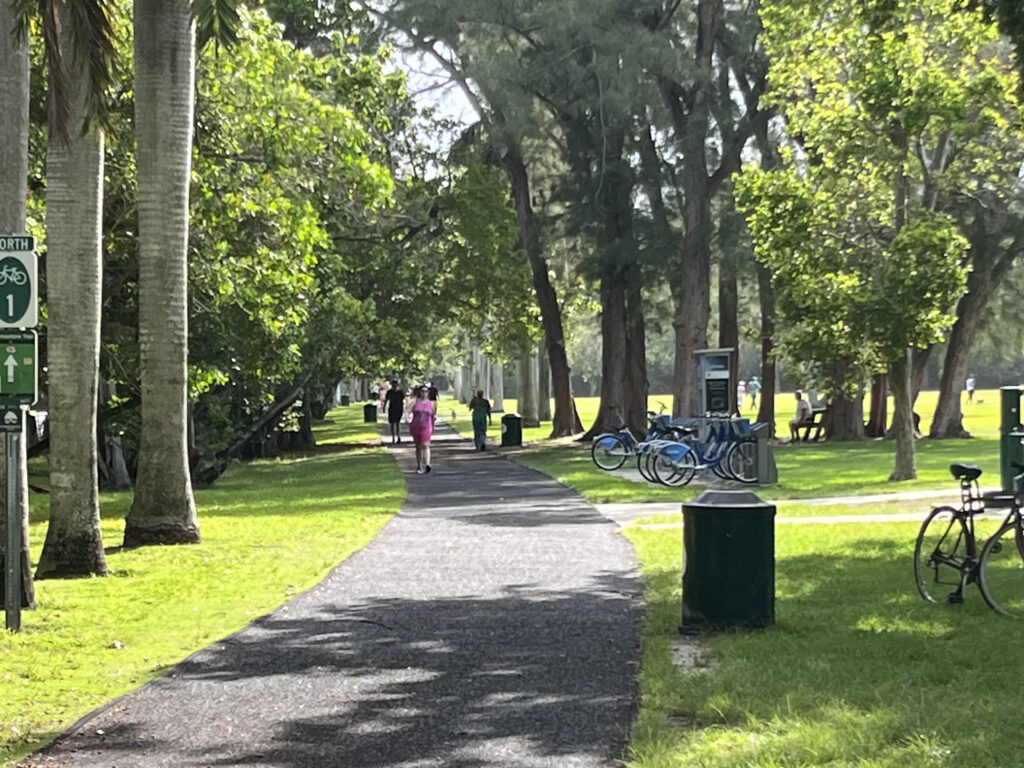
Both parks border South Bayshore Drive and the Commodore Trail – a popular five-mile route for runners, walkers and bike riders that cuts through Kennedy Park.
Mel Meinhardt, chairman of the Friends of the Commodore Trail (and publisher of the Spotlight) said he was not aware that the park ban on “motorized bikes” applied to e-bikes – a fact that underscores the confusion over where e-bikes can be ridden.
When asked how e-bike riders should navigate the portion of the Commodore Trail inside Kennedy Park, Ellis said those riders should dismount and walk their bikes through the park – a work-around that’s spelled out in section 38-51 of the city code.
Ellis said park employees are making an effort to enforce the rules citywide, but the problem persists. In some cases, offenders have damaged park facilities by turning “doughnuts” on playing fields, he said.
“I think the law covers it adequately. I think it’s just getting the word out there to folks, and then try to get people to comply,” Ellis said.
“Of course, our rangers report it too because they see someone, then they try to approach them. The big issue is they are usually going so fast, we can’t stop them to tell them what the problem is, or they don’t want to stop for us,” Ellis said.
“Sometimes they are going slower and we can say, hey, you can’t be in the park, and people comply, but I would say most of them are going pretty fast and don’t want to stop for you,” he added.
The Miami parks department has a staff of rangers who are tasked with enforcing park rules, but they aren’t assigned to specific parks, and they cannot make arrests.
“I wish I had enough rangers to assign them to individual parks, but I don’t yet. Maybe we’ll get there some day,” Ellis said. In the meantime, Ellis said his department is responding to localized hot spots and working more closely with police.
“I know our park patrol, even the last probably eight months, they have really been working much closer, not just on this issue, but on other issues, with the police department. They have even done some training with them.”
In Pinecrest, the police department is coordinating the e-bike safety classes for children and parents. Under the new rules, e-bikes and e-scooters are subject to a 10-mph speed limit on village sidewalks, and a 15-mph speed limit on shared pathways. The limits apply to regular bikes as well.
Offenders can be fined $250 for a first offense, and $500 for a repeat violation.
Pinecrest Police Chief Jason Cohen said the new rules weren’t triggered by any specific incident, but rather a general awareness of growing public safety concerns countywide – concerns that include the relative youth of some riders.
Cohen said the village’s safety classes, now under development, may begin in July.
In Miami, a state law passed earlier this year may help to slow e-bikes in the city. Under the new statewide law, anyone riding an e-bike on a sidewalk or shared pathway would have to slow to 10 mph or less when a pedestrian was within 50 feet.
Read more: Pedestrian Safety in the Age of E-Bikes: Much Concern, Little Action


















Since it is pretty clear we can not rely on the riders to be responsible (I see them doing wheelies down the road all the time) it is time they are registered as motor cycles and therefore require a drivers license to operate. If the vehicle can do more then 19 mph unassisted it should require a license to operate on the road. I am well aware I sound like the old man screaming to get off my grass, but pedestrians are getting killed (this article did not mention Megan Andrews from Key Biscayne).
I think this is completely unfair and unconstitutional! Not all E bike Riders are reckless and don’t obey the law, just like people who drive cars where there’s accidents every day. Its unfortunate that there are irresponsible E bike riders, but all of them shouldn’t be punished because of those who are. In so many parts of the world E bikes are a main part of their transportation, except they have proper E bike paths and roadways to keep everyone safe, which is something MIAMI has not done. We’re still waiting for this Commodore bike path to become a reality which will keep everybody safer. And if you’re gonna single out E bike riders, then you need to single out all bike riders and skateboards and scooters and everything with wheels. And while you’re at it cars with no drivers! There’s no substitute for a human being who drives any sort of vehicle safely and within the law! Look at the great job they did on the Causeway to Key biscayne now for bike riders. Maybe you should take a lesson from them. Make no mistake E Bikes are here to stay and changes should be made to adapt to this new means of transportation to keep everyone safe! Try riding your E bike on Bayshore Drive, you take your life in your hands, but nobody cares about that! Because a couple of underage reckless kids spoiled it for the whole bunch! James Russo
So if the problem is under age kids, having too much power on an electric bike, raise the age for use of electric bikes! You have to be a certain age to get a drivers license. It should be the same thing with an electric bike because it has become mainstream transportation.. raise the age to an age where they’re gonna be responsible riding the bike and obey the laws !