

For years, Miami has encouraged more development around transit stations and corridors. Along one Coconut Grove gateway, the effects of those policies are beginning to come into view.
For years, Miami has rewritten its development rules to encourage more housing near Metrorail and other transit corridors, allowing developers in some areas to build higher and denser than base zoning would otherwise permit.
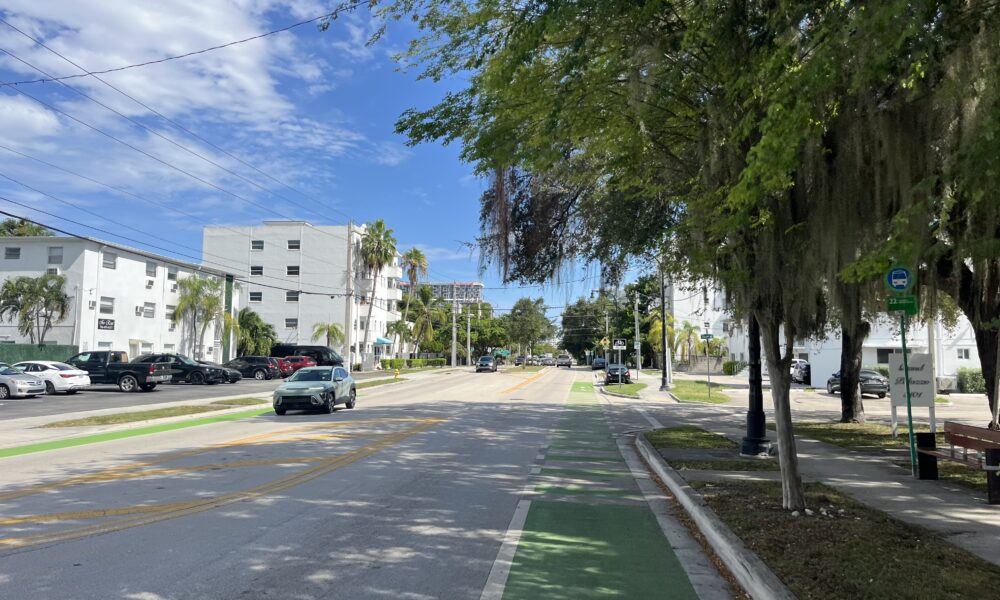
Along Southwest 27th Avenue in Coconut Grove, the results are beginning to come into view.
In barely a mile between U.S. 1 and Biscayne Bay, luxury condominium projects are rising, moving through permitting or being planned, bringing hundreds of new residences to one of the Grove’s traditional gateways.
Some are relatively modest by Miami standards. Others have taken advantage of city programs allowing additional height, density or both. Several of those approvals are being challenged in court.
Together, the projects have made the 27th Avenue corridor a case study in Miami’s efforts to encourage greater development around transit — and perhaps a glimpse of what other parts of the city could experience as Miami continues to pursue policies designed to accommodate more people and development.
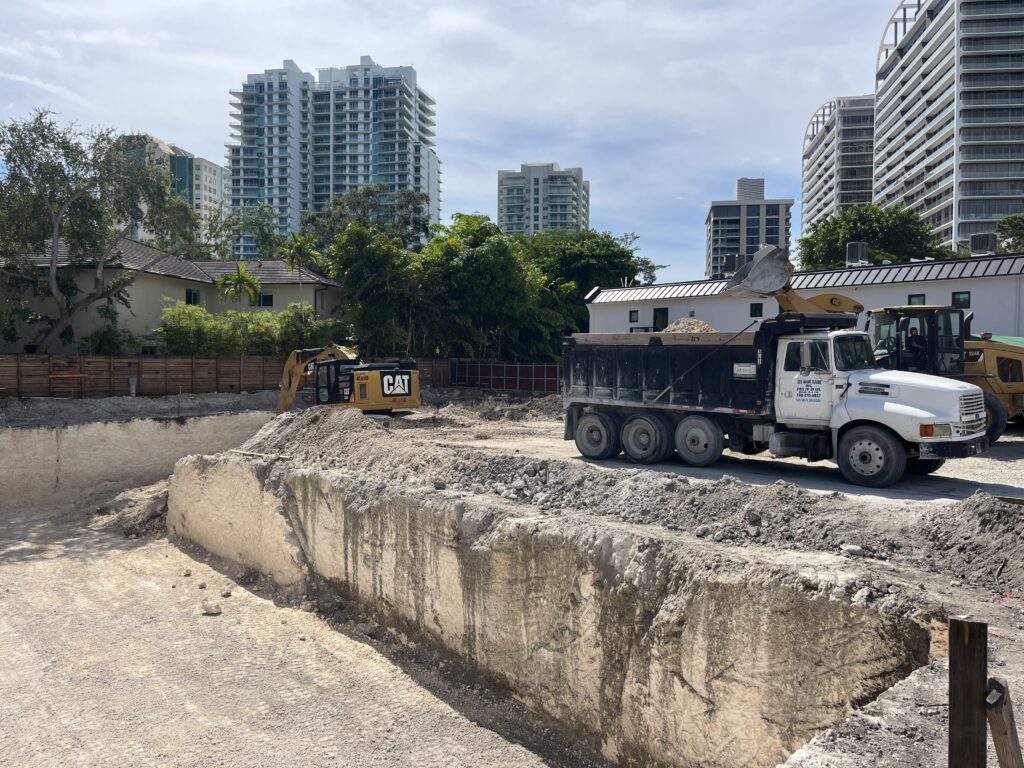
To Tony Recio, a land-use attorney representing the developers of The Lincoln, a proposed eight-story development just north of Tigertail Avenue, the forces driving the change are straightforward: Coconut Grove has become increasingly desirable, while redevelopment around the Coconut Grove Metrorail station is pulling development toward the neighborhood’s western edge.
“As the Grove has gotten more national recognition as one of the more desirable neighborhoods in Miami, development has extended outward,” Recio said. “At the same time, the long-awaited development of the Coconut Grove Metrorail station into a mixed-use destination has provided a link between the Grove and the Metrorail.”
Elizabeth Plater-Zyberk, an architect and urban planner who was a principal author of Miami 21, the city’s zoning code, said 27th Avenue has long occupied an important place in the Grove, connecting the neighborhood’s waterfront and commercial center with U.S. 1 and, later, Metrorail.
“It’s always been an important entry into the Grove and down to the waterfront,” she said. “It has always played an important role.”
Running roughly 1.2 miles from U.S. 1 near the Coconut Grove Metrorail station to South Bayshore Drive near Regatta Park, 27th Avenue has historically been lined by a mix of gas stations, fast-food restaurants, family businesses and relatively modest residential and commercial development.
That mix is changing.
The Lincoln’s 48 condominiums start at about $1.5 million for a one-bedroom residence.
Nearby, The WELL, at Tigertail Avenue and Mary Street, is planned as an eight-story luxury development, with preconstruction prices ranging from $1.4 million to $8 million.
Opus, at 3137 SW 27th Ave., is a six-story condominium with just 14 residences, with remaining, unsold units starting at about $3.1 million.
Farther east, Four Seasons Private Residences is under construction at 2699 South Bayshore Drive. The 20-story project will contain 70 residences, with its smallest layout — a roughly 2,000-square-foot two-bedroom — priced at just under $6 million.
The Ritz-Carlton site at 3300 SW 27th Ave. is also planned for a new eight-story residential development.
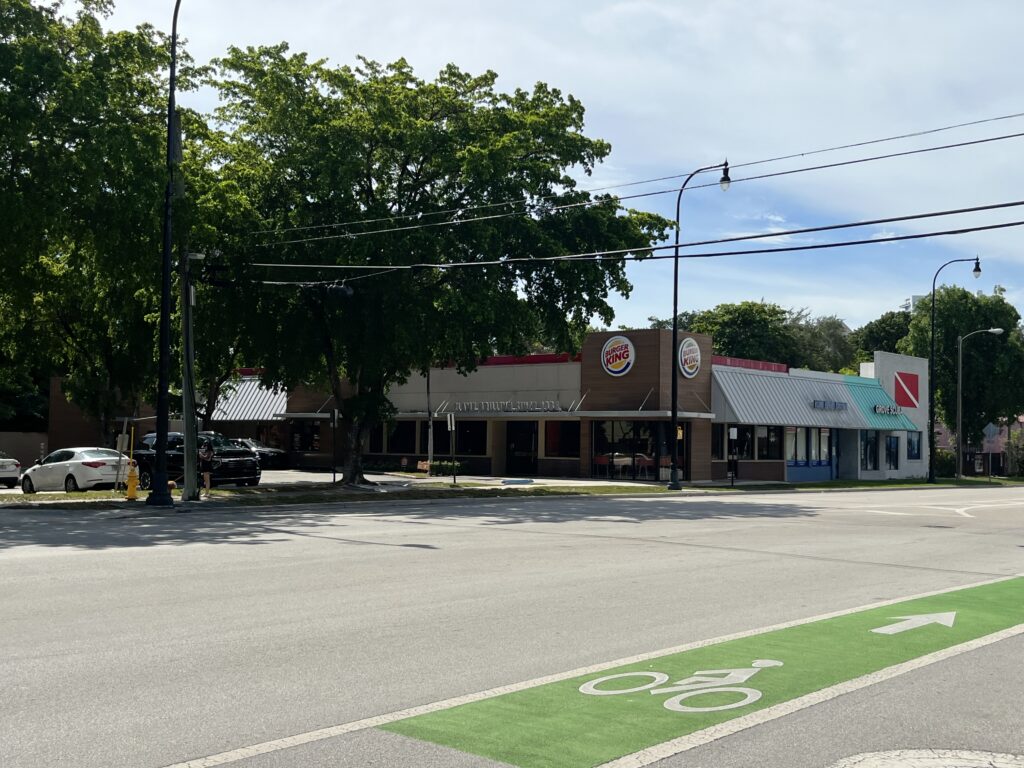
And more may be coming. Miami-based B Developments paid $10.6 million last fall for the Burger King property just east of U.S. 1. The company did not respond to requests for comment about its plans for the site.
Coconut Grove’s growing desirability and demand for luxury housing help explain the surge of development along 27th Avenue. But city policy helps explain the size and density of some of the projects taking shape there.
Over much of the past decade, Miami has adopted or interpreted a series of development rules intended to accommodate more housing and concentrate growth around transit.
In 2018, commissioners expanded eligibility for development bonuses to certain properties within three-quarters of a mile of a Metrorail station.
Among the beneficiaries was Mr. C Residences on South Bayshore Drive, just east of 27th Avenue.
Base zoning on the property allowed 12 stories and 160 units per acre. The completed development consists of twin 21-story towers containing more than seven times the square footage of the seven-story apartment building they replaced.
Read more: Whose Benefit? How Mr. C Got So Big
Then came another change.
In 2023 the city commission approved a zoning provision allowing some properties otherwise limited to five stories to rise as high as eight if they were within walking or biking distance of a transit hub.
Coconut Grove was initially exempted from the provision. But just before the Commission’s final vote, city officials altered the language of the zoning change, allowing the additional height along many of Coconut Grove’s major corridors. Commissioners approved the change without discussion.
The Commission repealed the provision in 2025, but city officials subsequently ruled that the bonus-height rights had already vested for The WELL, The Lincoln, The Lennox and a portion of the Ritz-Carlton Coconut Grove property, allowing those projects to continue claiming the additional three stories. Several of those determinations are now being challenged in court.
Read more: The WELL: How 5 Became 8
The WELL has benefited from another city development mechanism as well.
Last year, city officials reassigned 66 units of unused development density originally purchased for Mr. C Residences to The WELL, another Terra Group project, allowing the planned development to increase from 130 to 196 residences.
The Spotlight reported in May that the original city documents assigned the density to Mr. C years before Terra acquired The WELL property. City officials said the reassignment corrected a clerical error.
Read more: The WELL, Mr. C and a Density Shell Game
Attorney David Winker, who represents residents challenging the bonus-height approvals for The WELL, The Lincoln and The Lennox, sees the resulting concentration of larger buildings as evidence of how seemingly technical zoning changes can alter a neighborhood.
“We’re talking about (adding) three stories to five stories, but it matters to these people. It matters to their neighborhood. They don’t want these big buildings in the neighborhood,” Winker said. “Do we really need to make the Grove look like Brickell? I think that’s the biggest concern.”
The debate extends well beyond Coconut Grove.
Miami planners have continued to pursue policies intended to accommodate substantially more housing and development around transit.
Last year, city officials advanced a package of changes creating new transit-oriented land-use and zoning designations around fixed-rail stations. The city described the strategy as an effort to concentrate population near transit, encourage walkable neighborhoods and reduce automobile dependence.
The city’s own planning documents contemplate substantially greater development capacity in some of those areas, with density increasing closer to fixed-rail stations.
Read more: Miami Poised to Approve Sweeping Zoning Overhaul
And the push has continued.
Last month, city planners recommended another large-scale upzoning that would affect hundreds of properties in and around Little Havana. At maximum development, the proposed land-use changes could accommodate nearly 20,000 additional residents, according to the city’s analysis.
Planning staff described the proposal as part of ongoing efforts to increase development density and intensity, particularly along transportation corridors.
Read more: Miami Eyes Another Major Upzoning, This Time West of Downtown
Back on 27th Avenue, the transformation is already well underway.
Juan Mullerat, an architect, urban designer and founder of Miami-based planning firm Plusurbia Design, sees what is happening along the corridor as part of a longer evolution of one of the Grove’s traditional gateways.
The street itself has changed, he said, with bicycle lanes and parallel parking reshaping the corridor. At the same time, redevelopment around the Coconut Grove Metrorail station and growing demand for property in the Grove have brought new development to both ends of the avenue.
“Development follows the market,” Mullerat said. “This avenue has changed.”