
The Scavenger 2000 marine vessel travels the length of Miami’s coastline, collecting debris, killing harmful bacteria and pumping oxygen into bay waters.
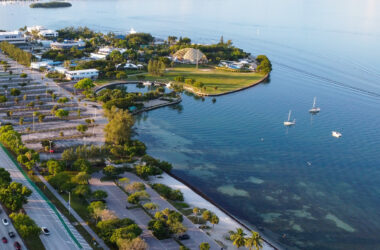
Once a week the Scavenger 2000 marine vessel visits Dinner Key Marina in Coconut Grove, the southernmost stop along its route through Miami’s coastal waters.
Like its distant cousin, the street sweeper, the Scavenger 2000 has a job to do – and a work load that never seems to lessen.
Once in place, the boat starts grooming the waters in and around Dinner Key, sweeping up marine debris, scrubbing nasty bacteria from the water, and injecting oxygen into Biscayne Bay.

The City of Miami pays for these weekly scrubbings under a three-year contract that keeps the boat afloat along much of Miami’s coastline. The City Commission approved a sole source contract in March after city staff touted the boat’s innovative technology.
The Scavenger 2000 decontaminates water at a rate of 10,000 gallons per minute, ridding it of harmful bacteria while injecting 150,000 liters of oxygen into the water an hour, essentially breathing life into Miami’s waterways.
The water treatment system, first tested on the Miami River more than 20 years ago, “has proven to be beneficial to all navigable waterways by providing deep injections of pure oxygen,” according to a Miami City Commission briefing memo.
The technology behind the boat – patented, of course – is the brainchild of a father-daughter team who were living together in 1995 on a sailboat in Fort Lauderdale when they first developed the concept.
“The water was always so contaminated, smelled bad, and (was) full of debris,” Sophie Mastriano, the daughter, says today. “So, we were like, we’ve got to do something.”
Still a teenager at the time, Mastriano built the first prototype alongside her late father, Jacques des Aulniers, who had a background in environmental innovation.
The technology was tested by Nova Southeastern University and found to be effective in reducing algae, fecal matter and other harmful bacteria in bay waters, Mastriano said.

At around the same time, in January 1998, the Miami River Study Commission issued a call to action to clean up the Miami River. Mastriano saw an opportunity to put the new technology to work, so she approached the Miami River Commission.
“They pitched it to me, and I said, man, we have got to have this thing on the river,” said Brett Bibeau, the river commission’s managing director.
The MRC and the City of Miami agreed to back a demonstration project in 2002, and the technology has been in use on Miami waterways ever since.
How does it work?
The Scavenger 2000 functions like a vacuum, sucking up 10,000 gallons of water a minute and pushing it into a decontamination chamber where it’s treated with ozone that eliminates bacteria and is converted to oxygen that fish can breathe.
The cleansed water is then pushed as deep as 30 feet back into the waterway, creating a current that pushes untreated water up to the boat.
While water is moving through the system, trash is also sucked in along the bow where it is collected and dumped into a large bin.
The Scavenger 2000 can handle anything from plastic bottles to major debris. Mastriano says the crew has picked up nearly everything you could imagine, from tires to couches.
What sounds like a relatively disruptive process is actually quite calm. There’s no wake created by the vacuum process, just a steady flow of water, and Mastriano says boat operators are careful not to disturb wildlife.
One Boat, Lots of Trash
Last year the boat picked up 194 tons of trash (388,000 pounds) and treated 1.085 billion gallons of water under contract with the City of Miami and Miami-Dade County.
Proponents like Bibeau say the Scavenger 2000 can help to prevent the kind of fish kills that happen when an abundance of algae lowers the level of dissolved oxygen in the water, creating dead zones where marine life cannot survive. In the past, when a fish kill has occurred, the boat has been sent to the scene to help re-oxygenate the water.
For boaters and others who come into contact with Miami’s waters, the boat’s ability to neutralize harmful bacteria is just as critical. “The Scavenger water decontamination vessel is among one of the things that we are the most proud of,” Bibeau said.
Unlike the Seine River in Paris, the Miami River might not be safe for swimming just yet, but Bibeau says the river smells better these days, and has more wildlife.
The Scavenger 2000 is helping, he says, and other cities and agencies are taking note, according to Mastriano. Her company – Water Management Technologies – manages the Miami boat and markets the patented technology to other operators.
“We were ahead of our time and, you know what, cities weren’t ready to spend money. Now they are,” Mastriano said. She declined to say how many boats like the Scavenger 2000 are in operation elsewhere.
As effective as proponents say the Scavenger 2000 is, it’s just one boat, with lots of coastline to cover under contract with the city, from Little River in the north to Coconut Grove in the south, with a stretch of the Miami River in between.
“We have a huge territory,” says Marc Mastriano, who works alongside his wife.
The boat’s contract with the city is capped at 30 hours of work per week, at a maximum cost of $300,000 per year, according to a contract summary.
Mastriano and her husband say they can only imagine how much more effective the technology would be if there were more boats deployed along Miami’s coastline.
And yet, even a fleet of Scavenger 2000 boats wouldn’t fix the root cause of the problem – the overwhelming amount of waste that finds its way into Biscayne Bay.
“You always want to search for, hopefully find and eliminate sources of pollution,” Bibeau readily admits. “But while you do that, you must address the pollution that you know is already there. The Scavenger is the most efficient, effective way to do that.”