


A new “Resilience Trust Fund” proposal heading to the City Commission on Thursday would let developers double project density by paying into a fund for flood and climate-resilience upgrades — a plan that could significantly alter the scale of new construction across Miami.
The Miami City Commission on Thursday will consider creating a new “Resilience Trust Fund” that would let developers pay into a city-run account to finance flood-control and climate projects – and, in return, build twice as much as current zoning allows.
The measure would establish a system where developers in designated “Resilience Fund Areas” — high-demand neighborhoods that often overlap with coastal and storm-surge zones — could build up to 100 percent more housing than currently permitted.
In exchange, they would contribute to a city-run fund earmarked for projects like pump stations, elevated roadways, seawalls, rain gardens, and native tree plantings.
City officials frame the plan as a two-for-one solution to Miami’s housing shortage and growing climate risks. The proposal cites the city’s “known affordability crisis” alongside its vulnerability to rising seas, arguing that linking denser development to resilience upgrades can add housing without worsening flooding.
“Targeting these high-demand, high-density areas will avoid encroaching on less dense residential neighborhoods,” the ordinance states.
Developers’ payments would be based on a contribution schedule set by the city’s Planning Department, reflecting the average cost of recent resilience projects multiplied by the number of new units built.

Funds would have to stay within the same “Resilience Fund Area” where they were collected — though some flexibility would allow money to spill over into adjacent zones.
Projects costing more than $100,000 would need commission approval, and developers could earn up to a 15 percent discount if they directly fund approved resilience work such as green infrastructure or floodproofing upgrades.
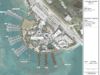
As of now, only two “Resilience Fund Areas” have been delineated, both in the Edgewater area. If approved, the two RFAs would stretch from the Julia Tuttle Causeway south to Northeast 8th Street and include Watson Island.
But the legislation allows for additional RFAs to be created or the current ones expanded by way of ordinance. The city has been known to stagger the roll out of new zoning programs, one geographical area at a time, as it did last summer with its Transit Oriented Nodes land-use designation.
Miami District 2 Commissioner Damian Pardo, who is sponsoring the legislation, declined to comment on the proposal.
However, a statement prepared for a D2 newsletter said the ordinance would be restricted to a portion of Edgewater, despite the potential for more RFAs.
The proposal is the latest in a series of measures to dramatically expand development capacity across Miami. Earlier this year, commissioners approved a package of controversial zoning changes – including new Transit Oriented Development overlays – that permit significantly taller and denser buildings around rail stations, major corridors, and other transit-connected areas.
Together, those changes and the new trust fund could unlock sweeping increases in allowable housing density throughout much of the city.
Coconut Grove resident Tatiana Oystacher is concerned about the open-ended nature of where the trust fund will apply. She worries that the ordinance could set the stage for significant density increases that spill over into zones dedicated to single family homes.
“Let’s say, if this ordinance gets adopted and the language is vague, could developers use it later on to claim that this is a loophole in the law to start increasing density in other areas as well?” she asked.
The legislation cleared the Planning, Zoning and Appeals Board last month.
Supporters say it offers a pragmatic way to finance climate resilience as Miami runs out of dry land and federal funding lags.
Critics, however, warn that doubling density could overwhelm aging infrastructure and accelerate gentrification in already flood-prone neighborhoods.
Aaron DeMayo, the chairman of the city’s Climate Resilience Committee, expressed support for the initiative earlier this month, despite reservations, saying the proposal represents a creative funding mechanism to bring much needed resiliency projects to some of the city’s most populated neighborhoods.
“Even though in general I really highly support this, I find it somewhat ironic that we’re incentivizing additional development capacity in an area that obviously is already flooding significantly,” DeMayo said during a committee meeting this month.
The committee ultimately supported the item.
If approved on first reading this week by the City Commission, the proposed ordinance will return for a second reading and a final commission vote.
















DOUBLING density???
WTF?!?!?
Commissioner Damian Pardo’s latest brainchild is a horrible idea, showing how far he has fallen in his ongoing efforts to please developers at the expense of our quality of life.
Edgewater, originally built for single family homes but now filled with high-rise condos, already has far too much density. Biscayne Boulevard is clogged at rush hour, rated “F” by FDOT (beyond capacity) for over twenty years.
It’s Commissioner Damian Pardo’s proposal, but he wouldn’t talk about it to the Coconut Grove Spotlight? What does that tell you?
“Resilience”? That’s just the latest political camouflage buzz word, along with “Affordable Housing”, “Workforce Housing”, “Transportation Corridors” and “Rapid Transit Zoning”, all being used as cover stories to please developers and their insatiable profit motivations because, after all, they’re the ones who give campaign contributions.
Have you noticed that most every zoning law the City of Miami passes results in larger, denser buildings that benefit developers?
The unspoken goal of the City (and County and State) is infinite growth, regardless of how it affects our quality of life, regardless of traffic, harm to neighborhood character and scale, sewage treatment capacity, garbage disposal capacity, hurricane evacuation time, potable water supply, acres of park land per thousand residents and so on.
We have government of developers, for developers, by developers. Anyone who doubts that is invited to look at the list of campaign contributors to our elected officials.
It’s another reason why I don’t trust the City of Miami.
Elvis Cruz
Morningside
Spot-on, Elvis Cruz! I am mentioning you by name, even though mentioning by name any of our commissioners at our supposedly public forum known as The City Commission will get your two minutes at the mike cut off by Chairwoman Christine King (oops)…I suppose so no commissioner’s tender feelings get hurt.
Elvis and I agree on Miami’s present status as bought and paid for by developer campaign financing. Where we disagree is on the need to increase the number of commissioners from 5 to 9. We now have half the number of commissioners as almost every other city our size in the country.
While the increase could mean we end up with 9 developer lackeys, my 8 year service on Miami’s Planning and Zoning and Appeals Board (PZAB) has convinced me that it will be “harder to count to 5 than just to 3” to get a majority vote, and that each commissioner will have to protect his/her own district’s interest while cooperating with at least 4 others on city-wide issues. No more “Three Amigos” perversion of democracy.
Check out StrongerMiami.org and then sign the referendum petition for the increase to 9 commissioners. “The solution to pollution is dilution.”
Really! Let’s develop areas of our city that are at risk because of Global Warming and sea levels rising and in exchange some mysterious pot of money is going to be used for what? To buy gondolas and kayaks and paddle boards for the residents? Of all the ideas this city could come up with, this is the one Pardo thought was a good shot? I look around my North Grove neighborhood and all I see are concrete blocks with no green space whatsoever and instead of trying to address this travesty, let’s create more housing in what is essentially Miami’s Ninth Ward! Brilliant! The C students have taken over the world and even a few of the D’s.