

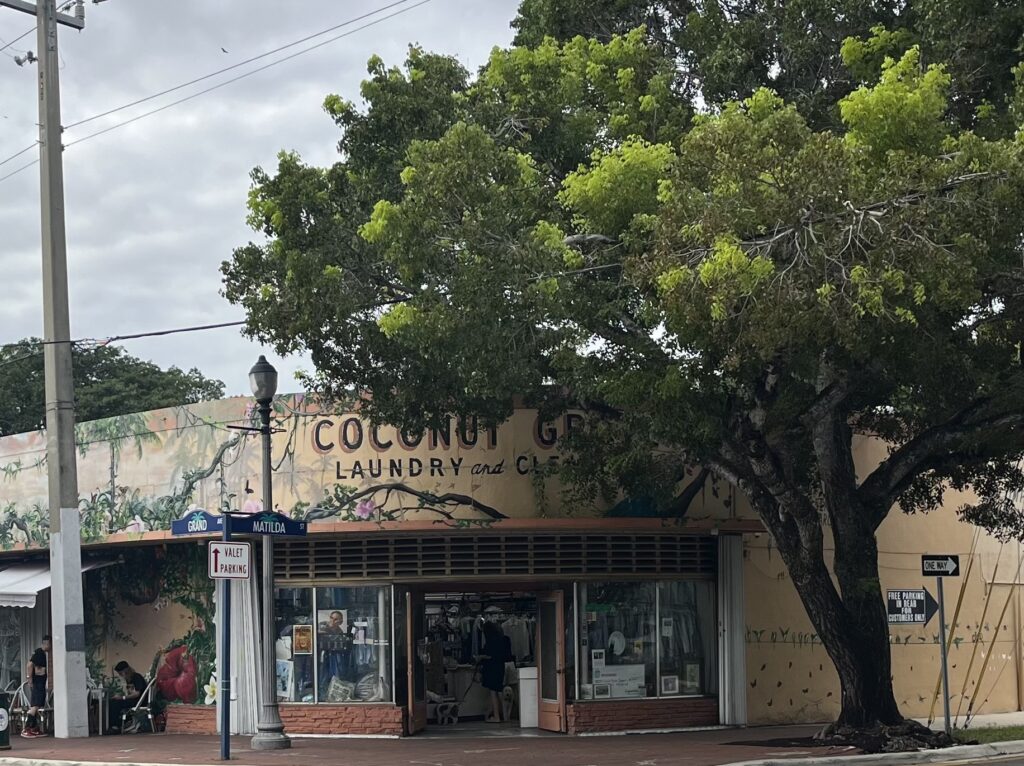
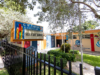
When excavators arrive this month to knock down the former home of the Coconut Grove Laundry & Cleaners, the neighborhood will lose one of its best-known storefront buildings – and the captivating art that adorns its walls.
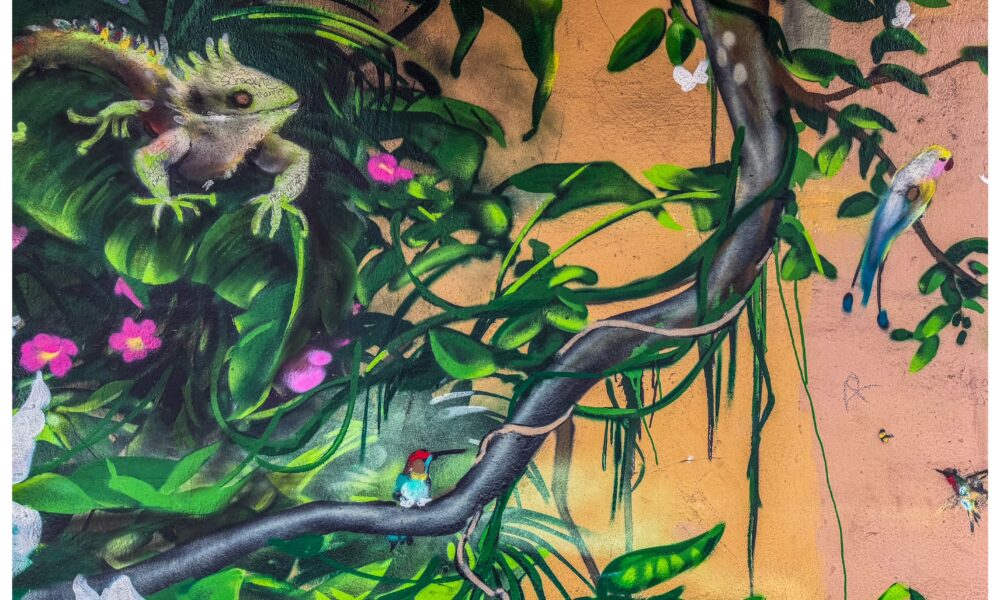
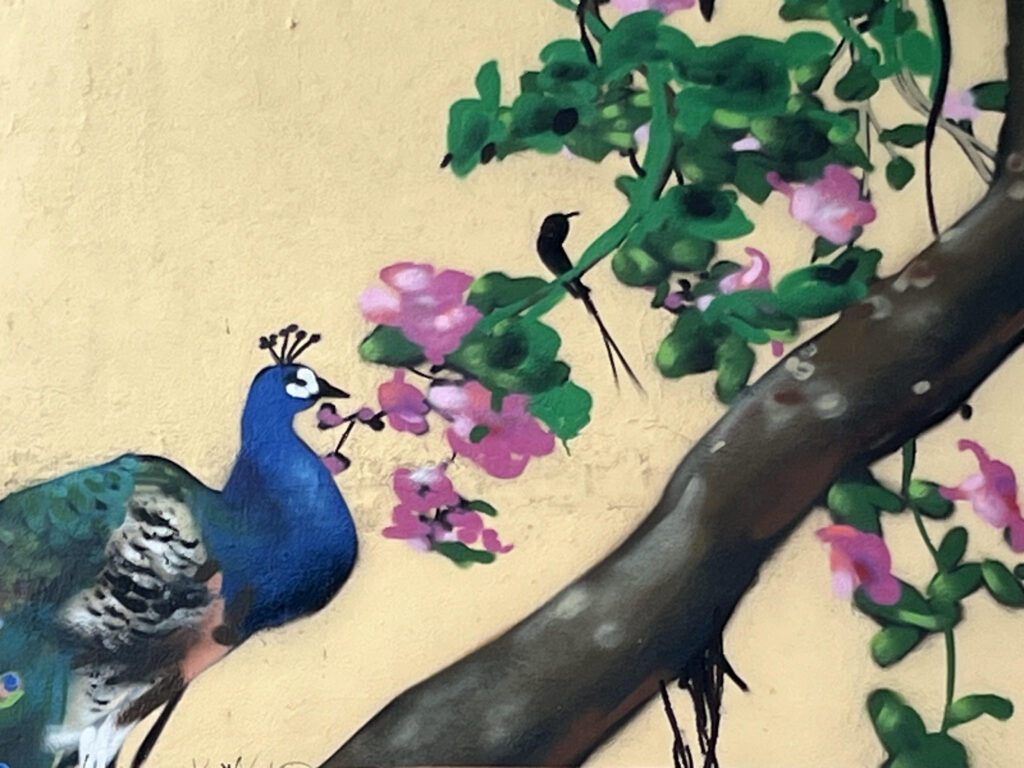
Perched above the entrance to the Coconut Grove Laundry & Cleaners at Grand Avenue and Matilda Street, a royal blue peacock stands tall, watching over the steady stream of pedestrians who pass beneath its perch every day.
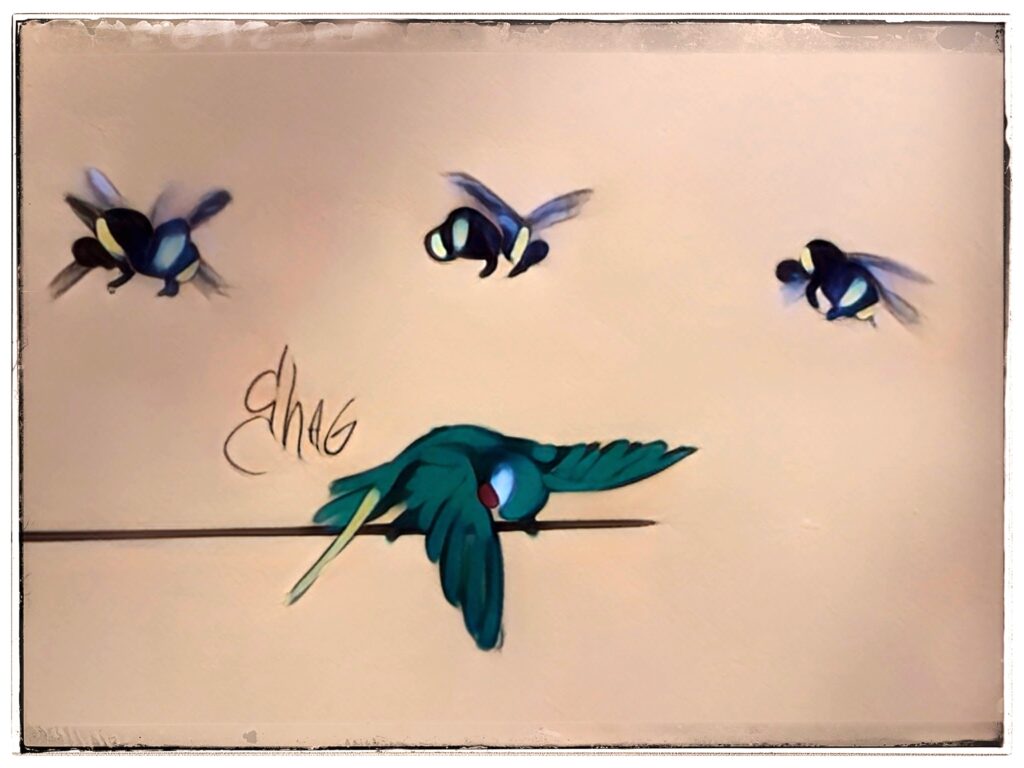
To the right, a small colony of parrots populate a thin wire, with bumble bees above and butterflies below. To the left, a curious iguana emerges from a tangle of vines, and a ruby red hibiscus flower bursts into bloom.
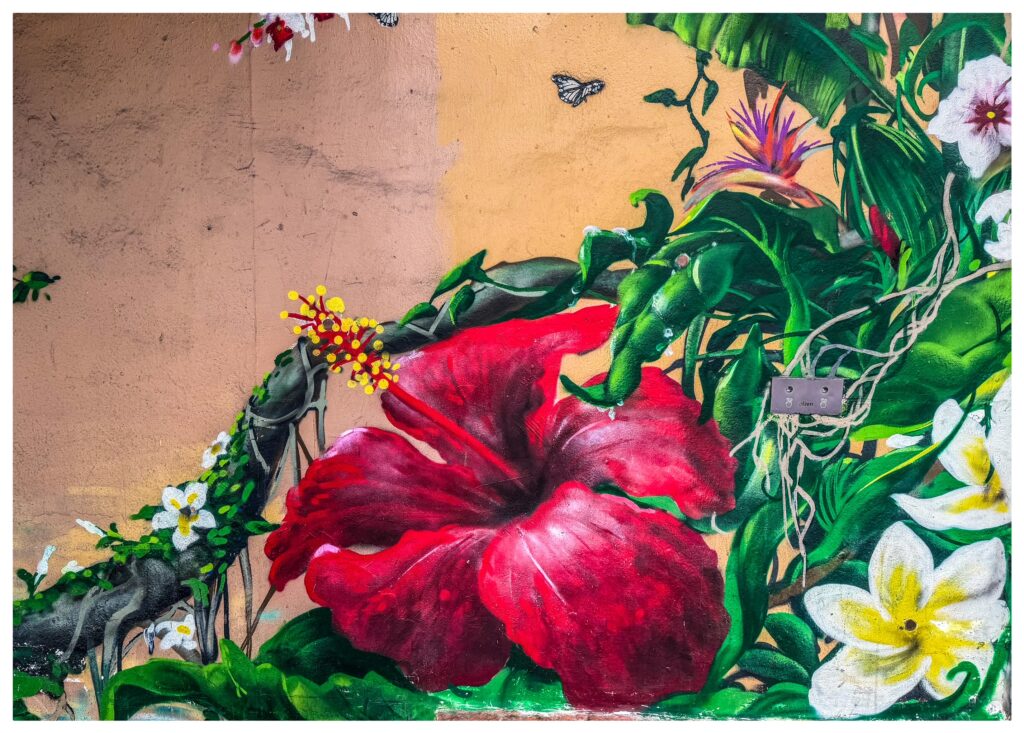
Wild and untamed, the painted scene draped across the yellow storefront is a tribute to the Grove’s natural beauty, a garden of art stretched across the exterior of one the neighborhood’s best-known family businesses.
The tableau has graced the busy corner for years, but its days are numbered.
The Grove Laundry has moved, and the building will soon be demolished to make way for new development. When it falls, the peacock, the parrots, the iguana, and the lush hibiscus will be gone with it, compounding the neighborhood’s sense of loss.
“I will miss the Coconut Grove Laundry mural wall so much,” said Maria Freed, who runs the Facebook page Old Coconut Grove Houses. “The tree and parrots on that wall are like jewelry. It dressed up a well-traveled street and lifted spirits.”
The reaction of Freed and others to the loss of the mural highlights the role public art has come to play in Coconut Grove, transforming otherwise blank walls into colorful expressions of local culture and identity.
“The Grove is a little bit different from every other area, a little creative, a little kooky sometimes, very artistic, and they (the murals) embrace that,” Marshall Steingold, the founder of Miami Maps, said.
Outdoor murals like the one at Grand and Matilda add beauty – and a sense of surprise – to the urban landscape, said Grove artist Eileen Seitz, even if their survival can’t be guaranteed in an age of rampant development.
“It invites people to walk in the Grove – art on the walls,” Seitz says. “If you really wanted to go explore the Grove, you would go this way, and you would go that way. And then if you come upon a mural, how exciting!”
While not as celebrated or concentrated as the street art that put Wynwood on the map, the Grove’s handful of murals can make an afternoon stroll feel a bit like a tour through an open-air art gallery.
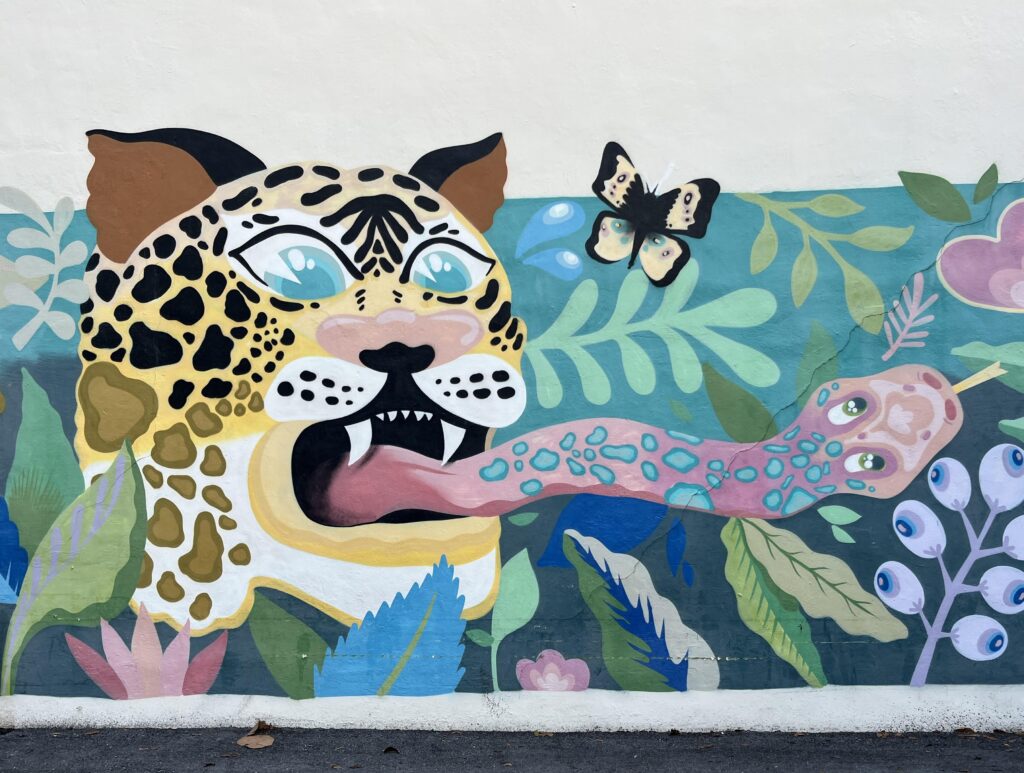
Just a half block up the street from the Grove Laundry, a butterfly, a jaguar and a snake decorate the outside wall of Jaguar restaurant. Across the street, a massive manatee spices up the back wall of Florentine Plaza.
Even a routine run to the bank can become a colorful detour, with a 2,000-square-foot scene of sea grapes and ocean at Grove Bank & Trust – a 2018 addition to the building painted by Grove artist Lisa Remeny.
“Painted walls in a community say to me art belongs to you and me, and isn’t that fabulous. We don’t need a museum,” said Freed.
In the Grove, murals are often a reflection of the community itself.
The Children’s Mosaic Mural – a marine-themed installation at the corner of Grand Avenue and McDonald Street – was added to the side of the local post office in 2011.
Crafted with the help of more than 100 volunteers and inspired by the drawings of 80 children, the mosaic has become a touchstone in time.
“My kids can still point to the part of the mosaic they worked on,” said Grove resident Jennifer White. Her children, only a few years old when the project began, are now in their early 20s.
Those connections make it all the harder to say goodbye when public art is lost.
“ Nothing has been as memorable, nothing has had as much character that feels like it relates to the Grove” as the Grove Laundry mural, said photographer Alexandra Fisher, a former resident. “There’s just something about it. It has some kind of magic.”
For Seitz, that magic has a lot to do with the Grove Laundry itself, and the community of customers that patronized the family business.
“It’s more than just that mural, it’s really about everything inside,” she said.
That’s why James Brazil, who created the tableau in 2019 with local artist Xenz, chose the building as his canvas. “It was important to me that we chose a point which is the most informal community center of Coconut Grove,” he said. For inspiration, he looked to The Kampong, the national botanical garden on Douglas Road.
Parting with a work he spent months creating is something Brazil said he’s used to as a public artist. Another one of his murals was lost in September 2024 when the former home of the Tikki Club on Grand Avenue near Douglas Road was demolished.
“Once it’s out in the world you don’t have any control over it anymore,” Brazil said. “It’s always temporal with this type of work, but its permanence is its effect on the community.”
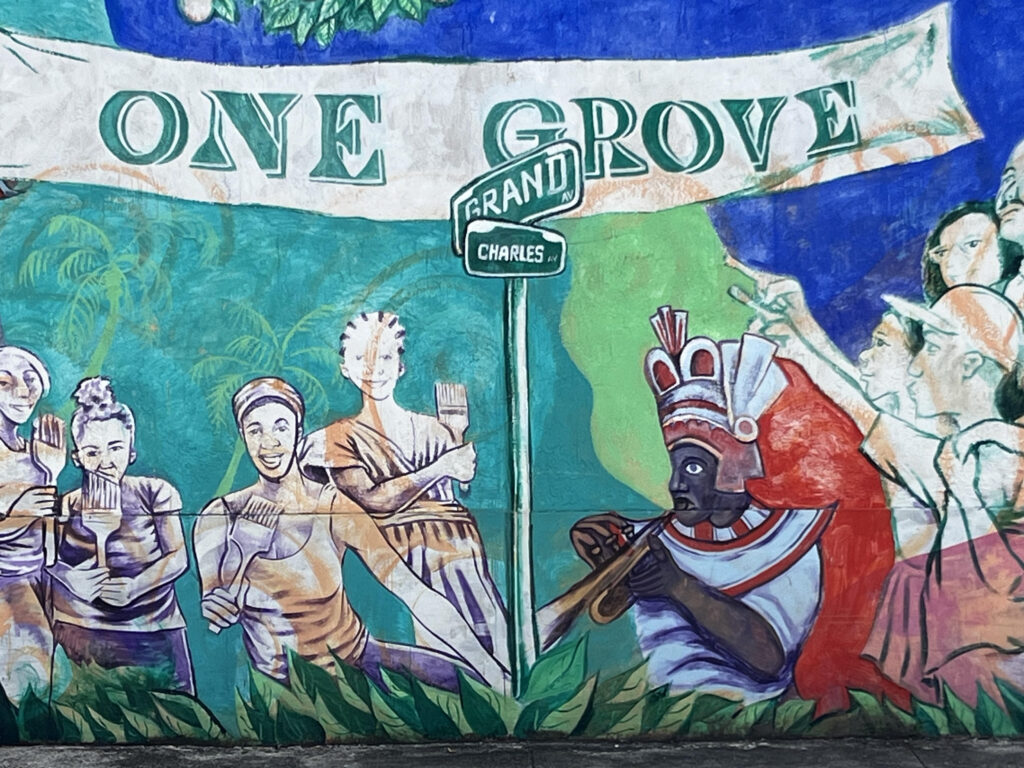
Kyle Holbrook, the artist behind the “One Grove” mural at the corner of Douglas Road and Frow Avenue, has witnessed first-hand how meaningful the impact of murals can be – particularly when they reflect the community around them.
“Those are the types of things that you can’t measure, the inspiration, the feeling of being seen, of your culture being reflected on the wall,” he said. “The pride in one’s own community and also the perception from people driving through the community can change.”
Holbrook replaced a graffitied wall in 2013 with the “One Grove” mural. The mural still stands today, untouched by graffiti.
“It’s a testament to the work, because it was done with the community, for the community,” he said. “It’s humbling and it really feels great to have that still standing as some of the community is changing.”
In the Grove, where development is happening at a rapid pace, the loss of murals like the one at Grove Laundry can add to the neighborhood’s sense of impermanence.
But perhaps that impermanence is part of a mural’s charm.
Brazil embraces that philosophy.
“I think if it were permanent, it would have less of an effect,” he said.









It would be so easy for the developers to photograph the mural, and then have it printed on the fence that will surround the Ziggurat project! Call Bruno at Metro Wrapz – (954) 553-7181. The developers can also make a commitment to have the artist repaint a similar mural on the pavilion they plan to have at Kirk Munroe Park! And thanks to the Spotlight for writing about this Grove treasure!!!