Developers are seeking to take control of older condominium buildings in Coconut Grove, forcing unit owners to consider a move some are reluctant to make.
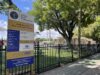
Coconut Grove resident Oscar Larrieu has called Bayshore Park condominium his home for more than two decades.
He remembers when Hurricane Katrina knocked out power to the building, he and his neighbors collected food from their refrigerators and then gathered around a few tailgating grills, hosting a cookout in the waterlogged community.
That was August 2005, when Larrieu says residents had a sense of community that made the place feel like a small-town apartment building in a bustling city.
In the years since, most of the units at 2545 South Bayshore Drive across from Monty’s Raw Bar have been bought by developers eyeing a potential redevelopment of the property.

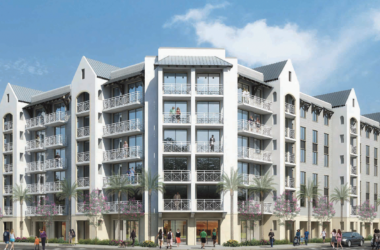
It’s part of a wave of Miami condo acquisitions in which well-capitalized development companies are looking to reshape the skyline by razing aging buildings and replacing them with high-priced luxury complexes.
From Bayshore Park to the storied Mutiny on the Bay resort down the street, Coconut Grove has been a hotspot in the string of redevelopment campaigns.
Larrieu claims the developers that now own at least 30 units in his 39-unit building are putting more pressure on the remaining residents to sell. He feels he’s being bullied out of the condominium where he has lived for 25 years.
Larrieu, a building plan reviewer and architect by trade, says he reached out to the Florida Department of Business and Professional Regulation, the office of Miami District 2 Commissioner Damian Pardo, Miami-Dade County Commissioner Raquel Regalado, and others in an effort to challenge the proposed buyout.
So far, he’s gained little traction
“I would just like to believe that the American Dream – where you work hard, follow the rules, do everything right – that the system is set up to protect you from injustice,” Larrieu told the Spotlight.
“If I have just one wish? It would be to be left alone in peace and quiet in my little condo across from Monty’s. If that is impossible, then at least I would like to be compensated enough to remain with the same or better quality of life than what I have,” he added.
The costs of repairing older condominiums – combined with inspection and reserve requirements enacted in the wake of the Champlain Towers South collapse in 2021 – have put many South Florida condo owners in financial quicksand, leaving them more inclined to accept buyout offers.
Still, Florida condo termination law keeps the door open for a small group of owners in a condominium to disrupt multimillion-dollar buyout efforts – in hopes of either blocking a buyout bid, or negotiating a higher sale price for their units.
In Coconut Grove, recent buyout deals have been opposed by longtime residents like Larrieu who are holding out for fear they’ll be unable to afford a new Grove residence if they were to sell their homes.
Forced out of the Grove?
Tension between a group of residents at Bayshore Park, which was built in 1964, and developer Mast Capital has been building over the last few months.
Mast has been buying up residences in the building for years, but just recently consolidated majority ownership with partner BH Group in a $20 million deal.
The condominium directors resigned in late June, and at a contentious emergency meeting on July 14, an interim board was appointed at the developers’ behest.
One of only a few homesteaded owners in the building, Larrieu says the directors resigned under pressure – out of concern they would be targeted for breach-of-fiduciary-duty claims. He says the buyout process has isolated him from fellow owners who are investors, not residents, as he holds out against selling.
Neither Mast nor BH Group responded to a request for comment.
Most of the building’s units have been fetching between $500,000 and $750,000.
“If you’re just an investor and you put the right amount of money in, it could be a great deal,” Larrieu says of Mast’s acquisition campaign. “But people like me will have to turn around and try to find some other residence in the area. I’ll be forced to move out of Coconut Grove, which I’ve called home for 25 years.”
It’s a familiar sentiment among Grove condo residents who are facing buyout pressure.
When the Mutiny hotel and condominium – a bayfront midrise with a rich history as a hub of Miami’s 1980s party scene – began receiving buyout overtures in late 2024, a few residents told the Spotlight they were reluctant to sell, even for an above-market price, given that finding a comparably affordable, alternate home in the Grove would be a longshot.
“This is our home, basically our little slice of paradise. We work hard jobs. I can’t move to a different home in this area because I won’t be able to afford millions of dollars,” Mutiny resident J.C. Digon said.
The 170-unit Mutiny was the subject of a $160 million buyout proposal from Steven Figari and Slate Property Group in February. Owners had previously been courted for a buyout by DaGrosa Capital, a real estate group where Miami Mayor Francis Suarez is listed as a senior partner.
Sabrina Wilkinson, a real estate agent who lives in the Mutiny, tells the Spotlight that while DaGrosa has since withdrawn interest, Mast Capital is now eyeing the building for purchase.
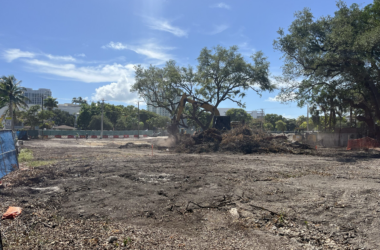
Meanwhile in May, developer Canero Group closed a more than $17 million purchase of the 25-unit Chateau Grove off Virginia Street north of Cocowalk. Built in 1963, the building was running behind on completing its mandatory 60-year recertification.
The Real Deal reported that the developer plans to rent out Chateau Grove units and is considering redeveloping the site.
The buyout deal took only six months to consummate – a contrast to other acquisitions in and around the Grove that have triggered more prolonged holdout periods.
Wilkinson believes high-rise development interest in the Grove will continue to ramp up and generate friction between longtime Grove residents and developers.
“We’re on the map as a highly desirable area, and developers are very aware. As projects like The WELL come in, it will only increase their interest,” Wilkinson says. “Locals want to keep the Grove as a cute Bohemian village while developers want to cash in and make this place look like Brickell.”
Florida condo law in focus
Florida statutes require at least 80% of a condominium’s voting interests to initiate the termination process that precedes demolition and redevelopment.
However, it takes only a small contingent of owners – 5% of voting interests — to block a condo termination. Unit owners opposed to buyouts seek to leverage that clause to fend off redevelopment.
Many residents in South Florida condominiums are weighing whether to accept buyout offers or mount opposition while shouldering the cost of special assessments and compliance with the regulations put in place following the Champlain Towers collapse.
Attorney Michael Ungerbuehler, a condo association law expert at Sachs Sax, tells the Spotlight that recently enacted legislation, Florida House Bill 913, sought to refine some of the initial post-Champlain Towers condo reforms, in an attempt to balance safety regulations with the financial burdens on owners.
“There was a catch-all [provision] with reserves. It used to be that anything that cost more than $10,000 was a reserve item. They finally changed it to $25,000, which took effect July 1 and will be adjusted for inflation starting next February,” Ungerbuehler says. “It was a very positive step.”
Another clause that provides relief for condo owners allows a pause in reserve contributions for up to two years while residents address urgent repairs identified in inspections.
Ungerbuehler says the clause was well-intentioned but puts additional administrative burden on condominiums by requiring a new structural reserve study to unpause contributions.
“I think legislators tried to help. But there was a little disconnect between the law and what it takes to actually operate a condominium,” Ungerbuehler says.