

The landmark estate is working to restore five historic buildings, including a chicken house and dairy barn, that once supported James Deering’s palatial home overlooking Biscayne Bay.
Vizcaya Museum and Gardens may be best known today for the palatial home where industrialist James Deering once spent his winters. The truth is, though, it took a village with a chicken house and a dairy barn back in the day to keep the estate humming.
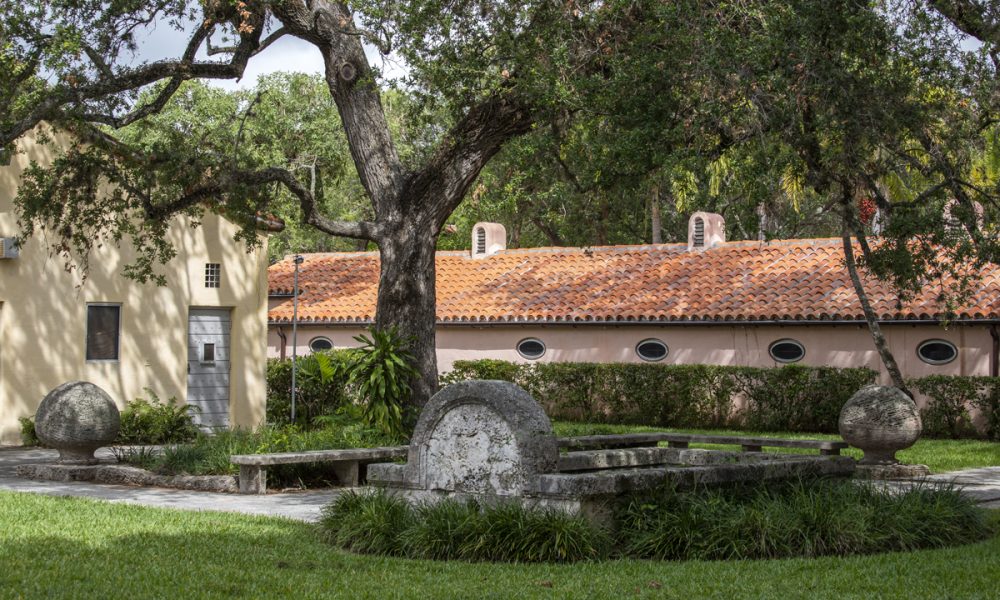
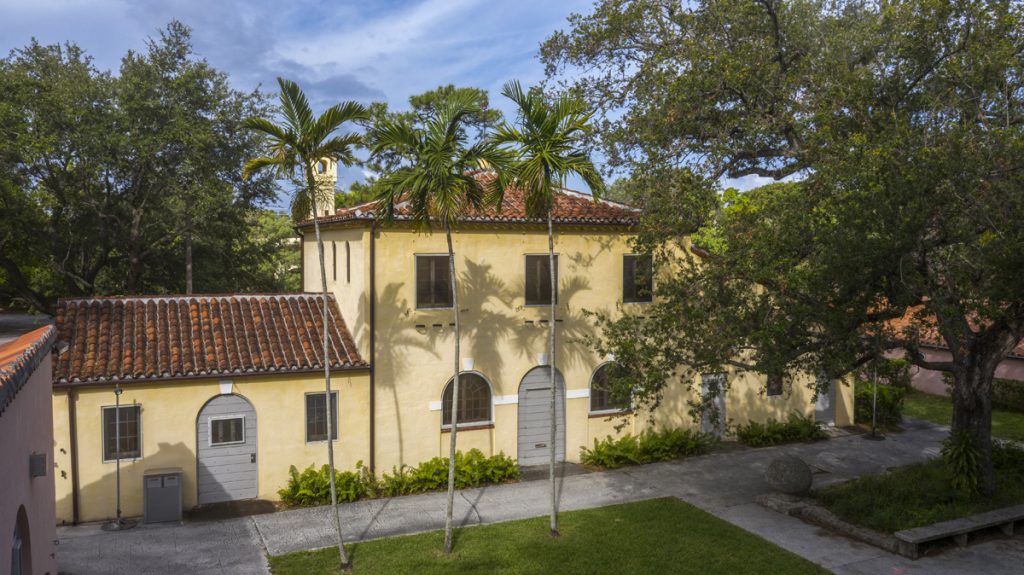
The 12 original buildings that made up Vizcaya Village more than 100 years ago constituted a working farm, with gardens and greenhouses, garages and workshops, a dairy barn and a pump house that fed, fixed and watered the bayfront estate.
Five of those buildings – the chicken house, the dairy barn, the farmhouse, the stable and the wagon shed – are now the focus of a restoration effort that museum managers hope will make the historic property a community hub for Miami residents today.
“We’re hoping this will be a new era for Vizcaya,” says Vizcaya’s Director of Marketing and Communications Alejandra Serna.
The masterplan to revitalize the 12-acre village across South Miami Avenue from the estate’s main house and formal gardens was approved by the Miami-Dade County Commission in 2017. The first phase of the plan included the demolition of the former Miami Science Museum. That land was reclaimed and restored as a pine forest.
Museum managers also converted the former superintendent’s house to office space, opened a cafe on weekends with a functional garden, and turned the village’s old paint shop into a horticultural complex.
For the next phase of the project, Vizcaya plans to add new classrooms and workshops, additional office space and a teaching kitchen.
“In the main house, we’re kind of tapped out in terms of what we can do with students. We don’t have a space where they can go and create art,” Vizcaya’s Chief Facilities Officer Martha Dixon said.
The village revitalization solves that space issue. In the coming year or so, each of five village buildings targeted for restoration will be transformed into new functional spaces:
The stable will have a wet classroom for arts programs; the wagon shed will house a teaching kitchen for urban agricultural history sessions; the dairy barn will have tech features and classrooms; the chicken house will be home to a conservation lab; and the farmhouse will have archival exhibits, a reference library, and offices.
“For each of these buildings, we’re trying to provide a touchpoint for the community to come in and observe how the museum is functioning,” says Kevin Storm of Beyer Blinder Belle, the D.C.-based architect leading the project.
“[The Village is] infused with little moments of whimsy. The chicken house has these egg-shaped windows, the dairy barn has a cow-jumping-over-the-moon weathervane. These fun details help tell the history of this place.”
Beyer Blinder Belle has worked on projects with the Smithsonian Institution and the Metropolitan Museum of Art.
“We’re known for our work with adaptive reuse and breathing new life into historic buildings,” Storm said. “We want to bring these buildings to life in a way that tells the story but relates to the needs of current visitors, students, and residents.”
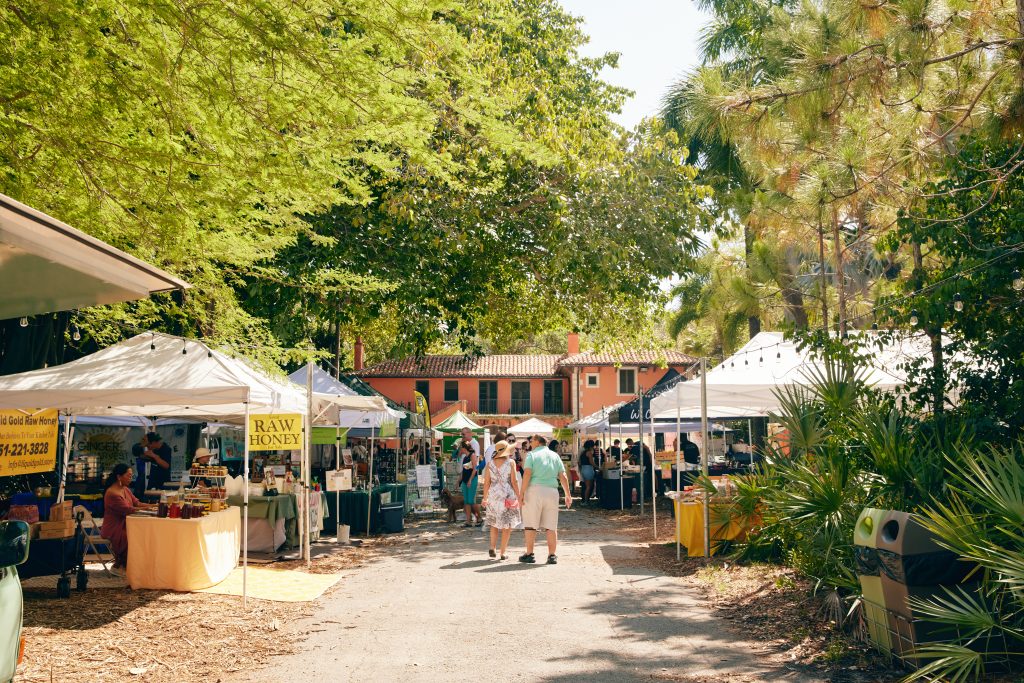
Early on, the greenhouses and gardens of Vizcaya Village provided food for the main house, while overflow was sold to the surrounding community.
Now, the museum again is connecting with the community through its land. It hosts a popular Sunday farmers’ market, free gardening workshops and an annual Dinner for Farmers to welcome and connect with the local farming community.
In addition, Vizcaya managers are seeking to cultivate more community connections through urban agricultural programming, including telling lesser-known stories, like those of the original Bahamian workers who were employed by the estate.
“The connective tissue through all of this is the landscape,” Storm says.
All the proposed work for this phase of the masterplan was approved unanimously on July 1 by the City’s Historic and Environmental Preservation Board. Kenneth Kalmis, the city’s preservation officer, noted how the restoration plan not only preserves the past, but creates new possibilities for the future.
“For [Vizcaya], it’s really important, not only that these resources are preserved, but they serve a purpose. They are not just a relic,” Kalmis said.
Dixon, Vizcaya’s chief facilities officer, confirms that.
“Once we get those buildings open, we really want to be an integral part of the community, more so than we have been,” Dixon said, so that Vizcaya becomes “a second home to Miamians for their enjoyment, for their pleasure, to satisfy their curiosity, and engage in all sorts of activities that will enrich their lives.”