The wildly popular cult classic – a midnight mainstay in the 1970s and 80s at the independent and artsy Grove Cinema – will return next month for a handful of showings across Miami-Dade to celebrate the anniversary of its 1975 U.S premiere.
Miranda Johnson, a photographer and Coconut Grove native, recalls fondly waiting with friends in line, in the late 1970s, for midnight screenings of “The Rocky Horror Picture Show” – the low budget, Frankenstein-spoof musical that enjoyed a 15-year run at the now-defunct Grove Cinema on Grand Avenue in Center Grove.
“There was no calling or texting anybody,” Johnson reminisces. “You knew if you wanted to see all of your friends, go to the theater at that time. It was like a little cult.”
The film, which indeed has earned a worldwide cult-classic following, later this month celebrates the 50th anniversary of its U.S. premiere. And for many, like Johnson, few cultural highlights of Coconut Grove in the years following its release quite resonate – and capture the village’s artsy, slightly-off-kilter, counterculture vibe — like the impromptu, late-night gatherings for a showing of “The Rocky Horror Picture Show.”

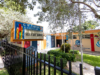
At the time, Johnson recalls, moviegoers lined up around the block for tickets — if it wasn’t sold out — at the Grove Cinema’s location in what is now the Coconut Grove Post Office. The film ran for 15 years there, from 1977 to approximately 1992, longer than in any other U.S. theater, say the theater’s former owners.
With just two rented 16 mm projectors and a flimsy screen, Richard and James Fendelman – doing business, in eclectic Grove fashion, as the Fabulous Flying Fendelman Brothers — opened Grove Cinema in 1973 in a small retail space on Virginia Street.
James had worked at a movie theater in Austin and was convinced it would be an easy money-maker. Richard, who majored in film at the University of Miami and who is still a Grove resident, says, in retrospect, it was neither easy nor a money-maker.

But what they lacked in money, he says, the brothers made up for it with a windfall of memories. In addition to the “Rocky Horror” midnight screenings, the theater showed a wide variety of mostly independent films and art-house offerings. The crowds were diverse, attracting locals countywide, tourists and the occasional celebrity. One night in early 1974, Richard recalls, the rock star Eric Clapton showed up for a screening of “The Harder They Come” – a Jamaican film featuring a rendition of Clapton’s “I Shot the Sheriff” by the reggae singer Jimmy Cliff.
In 1976 the Grove Cinema moved a few blocks west to the corner of Grand Avenue and McDonald Street. The crowds grew and so did their concessions, as the theater became one of just a handful in the country to receive a license for beer and wine.
Richard recalls soliciting suggestions from the community for what to show. “They said [midcentury director/choreographer] Busby Berkeley, and we’d do a Busby Berkeley festival,” he recalls. “We [also] studied New York: the Bleeker Street Cinema, the Waverley.”
Indeed, the unlikely success of “Rocky Horror Picture Show” at the Waverley Theater convinced the brothers that a run of midnight screenings could work in the Grove. But the now-closed Riviera Cinema on U.S. 1 enjoyed exclusive rights to showing in Miami-Dade. When those rights ended in 1977 the Fendelmans pounced. “As soon as they let it go, I grabbed it,” Richard says.
“It became our signature,” James says. From opening weekend, the demand was high. Eventually they had midnight screenings on Fridays, Saturdays, and Wednesdays and, for non-night owls, occasional 10 p.m. showings.
“I probably didn’t know the scope of what [the movie plot] was really all about. We just had fun singing the songs and dressing up,” Johnson says. The midnight screenings are notorious for being rowdy with actors, sing-alongs, props, and costumes. “People would bring water guns, so you’d get soaking wet… all the Tim Currys, at the moment, would stand up and sing their songs,” referring to the movie’s campy main character, Curry’s Dr. Frank-N-Furter.
“We had a cast that came together organically,” Richard says of the unpaid audience members that acted out scenes from the film, in the theater, during the screenings. “Over time, it got pretty wild.” The theater was always a mess after a show, he says. Eventually, they distributed bags, printed with the movie’s logo, containing the rice and other props used during the freewheeling performances.
“The audience was the show,” observes James. “Just watching the excitement of the people, especially people coming for their first time, or people who’d been there 50 times, it was a lot of fun to participate and see it happen.”
The hit TV series “Miami Vice” used the cinema in one episode, and Richard got to know the crew. This led to work as a location scout and later as a producer, director, editor, animator, and web page developer, launching his own production company, Expect A Miracle Productions, Inc. James transitioned to the technology and finance sectors.
At the second anniversary of the film’s Grove premiere, the brothers rented a roller skating rink in Kendall and flew in “Rocky Horror” cast members Richard O’Brien, the film’s screenwriter who also played the character Riff Raff; Nell Campbell who played Columbia; and the film’s costume designer, Sue Blane, who brought paraphernalia to auction off.
Kendall was considered “almost farm land” at the time, and James recalls being worried that few would make the long drive west from Miami’s coastal neighborhoods. They arrived in droves, he says, some in limousines.
But their home base in the Grove was the center of the “Rocky Horror” community, James insists. “It was the heyday of the hippie Grove scene, and we kind of fit right in. Even with creative energy buzzing, there wasn’t much culture or entertainment in Miami at the time, so that gave the cinema an edge, and the midnight showings met a need. It brought the counterculture and creative culture to the area at a time when Miami lacked that outlet, and made it available to everyone,” he says.
“The Grove likes quirky and strange stuff,” observes playwright William Hector. Hector founded the Coconut Grove Theatre Festival which premiered this year with local playwrights’ staged play readings.
He says the festival leveraged the history of a Bohemian Grove.
“Even if [audiences] don’t actually know what was going on in Peacock Park in the ‘70s, or the full history of the Coconut Grove Art Festival, it’s all built on that, the legacy. It’s like an evolutionary tree, and in that evolutionary tree in the Grove is that spark of curiosity and innovation. There’s maybe something in the water or in the air from Biscayne Bay, but there’s a love for the weird and the quirk,” he says.
“I think one of the things that’s changed as years go by, with the level of digitization and accessibility of culture and the means of cultural production, there’s so many more niches. So something like “Rocky Horror” is very special. It was a time when there were less niches, so everyone was united in this one thing,” Hector observes.
James agrees. “Now online, you can meet anybody, every kind of thing you’re into, and form a group. Then, it was in person, and people were forming a group based on their common love for the film.”
A few years ago, for her 50th birthday, Johnson and a group of friends dressed up to attend a screening of “Rocky Horror Picture Show” at Pinecrest Gardens. They all wore costumes from the movie — she donned a Magenta maid get-up.
“It’s nostalgic,” Johnson says of its appeal. “If a movie came out like that now, would it have the same flair? I don’t know. But if this movie came on right now, I could sing all of the songs.”
In honor of its 50th anniversary, The Rocky Horror Picture Show will return to the big screen next month with special screenings in Coral Gables, Pinecrest, and Miami Beach.