




Local organizers say they have collected the signatures of 15,000 Miami voters, roughly 75% of the number needed to place their proposed political reforms on the ballot next year.
A grassroots effort to reform Miami’s municipal government is gaining momentum, organizers announced this week, just days before local voters head to the polls to pick a new mayor to lead the city’s $3-billion government.
Miami residents embraced change last month when they voted to erect new guardrails at City Hall, including lifetime term limits for local politicians, mandatory charter review, and citizen oversight of Miami’s district voting maps.
Organizers of the Stronger Miami petition drive now say 15,000 of those same voters have signed up to bring additional change to Miami City Hall.
If all of those voter signatures are valid, that brings Stronger Miami within striking distance of its goal – an August 2026 referendum that, if passed by voters, would add four new City Commission members and move local elections to even-numbered years.
Stronger Miami needs roughly 20,000 signatures from Miami voters, representing 10% of the city’s voting population, to win a spot on the August ballot.
Organizer Josh Kaufman said the organizations behind the petition drive – Engage Miami, One Grove Alliance, and the ACLU of Florida, where Kaufman works – hope to reach that 20,000 goal in early spring.
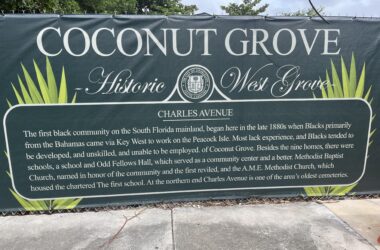
To date, Kaufman said, voters throughout the city have embraced the petition drive, especially voters in Coconut Grove.
“Coconut Grove has been a great location (to collect signatures) but every neighborhood has been supportive,” Kaufman said. “This is popular, and the way we are doing it is popular.”
Read More: City of Miami Voters Embrace Change
Not everyone is on board with the proposed changes, however, especially the provision that would expand the Miami City Commission from five to nine members.
One of the two candidates competing to become Miami’s next mayor – Emilio Gonzalez, a former city manager – has expressed reservations about the proposed reforms.
“I don’t think we need more commissioners,” Gonzalez said at a political forum last month. “We need better commissioners.”
The other candidate for mayor – former Miami-Dade County Commissioner Eileen Higgins – has endorsed a larger commission, saying more commissioners would result in better representation for Miami’s neighborhoods.
Each of Miami’s five commissioners today represents approximately 88,500 residents (based on a 2020 census population of 442,241). If the commission were expanded to nine members, each commissioner would represent approximately 49,000 residents.
“The nine-seat objective was established when looking at the population of the City of Miami,” Kaufman said. “We felt that nine was the appropriate number.”
The Stronger Miami effort to shift the city’s election calendar may also encounter some political turbulence in the months ahead.
Miami City Commissioners Damian Pardo and Ralph Rosado are backing an alternative plan to move city elections to even-numbered years.
The key difference? The proposal floated by Pardo and backed by Rosado would give all five city commissioners and the mayor an extra year in office, for one term only, so the election calendar could be pushed back a year starting in 2031.
The Stronger Miami proposal would subtract a year from those same terms of office so the election calendar could be moved ahead by a year, possibly as soon as 2028.
Proponents say changing the city’s election calendar to coincide with state and federal elections would boost voter turnout, and reduce the cost of city elections.
But if Pardo wins City Commission support for his proposal, Miami voters might be forced to choose between two election-reform proposals in August 2026 – one backed by Stronger Miami and a competing proposal backed by the City Commission.
The Stronger Miami petition drive also embraces a third reform that would add new language to the City Charter to prevent politicians from approving voting maps that favor political parties, or disrespect neighborhood and geographic boundaries.
Although Miami voters approved a charter amendment in November that provides safeguards against political gerrymandering, Kaufman said the Stronger Miami proposal would strengthen the November reform embraced by voters.
“That was a huge win for the people in the City of Miami,” Kaufman said.
Editor’s Note: Mel Meinhardt, the publisher of the Spotlight, is a local activist working to advance the Stronger Miami petition drive. He was not involved in the writing or editing of this story. The Spotlight organization safeguards its independence by maintaining a strict separation between its editorial function and the outside activities of its members.

















Nine is definitely the right number of commissioners. And shortening terms is definitely the way to go. If the sitting commissioner is doing such a great job, they should win re-election, right? Although campaigning is an arduous task. So I understand why they wouldn’t want to campaign and govern at the same time. It’s almost as if campaign finance reform would eliminate the need to attend all those fundraisers and solve a lot of that issue, but heaven forbid we touch the coffers.