



When construction projects close sidewalks, pedestrians are pushed into traffic — often with deadly consequences.
Editor’s note: Coconut Grove resident Paris Wallace is founder of Miami Safe Sidewalks. He is an Entrepreneur in Residence at Harvard Business School and founder of Ovia Health, a global women’s health platform.
Last month in Miami Beach, a pedestrian was killed after a construction sidewalk closure forced her into a bike lane where she was struck by a motorized scooter.
When sidewalks disappear, pedestrians do not disappear with them. They are pushed into traffic — and sometimes the consequences are deadly.
Which is why the reopening last week of the sidewalk at South Bayshore Drive and SW 27th Avenue in Coconut Grove matters.
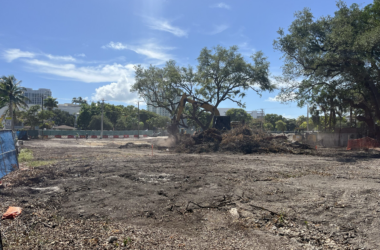
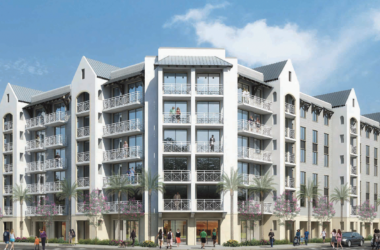
For nearly two years, that stretch of sidewalk was closed to accommodate construction of the Four Seasons development. During that time, pedestrians were forced to cross South Bayshore Drive twice just to continue along their route.
Read More: Christmas Wish List: A Sidewalk on South Bayshore
In effect, public space was taken away from the public and handed over to a private construction project while pedestrians were pushed into traffic.
Several Grove residents spent nearly two years documenting the safety hazards, filing complaints, and pressing the City of Miami to restore the sidewalk. Their persistence finally paid off.
But it should not take two years of citizen advocacy to reopen a sidewalk that should never have been closed in the first place.
Across Miami, sidewalk closures are increasingly treated as a routine convenience for construction rather than a serious public safety decision.
And in a county like Miami-Dade, that carries real consequences.
Miami-Dade remains one of the most dangerous places in the United States to walk. In 2025 alone, 81 pedestrians were killed in the county — roughly one-third of all traffic fatalities — and thousands more were injured.
Transportation safety research consistently shows that when pedestrians are forced out of protected walking space and into vehicle traffic, the risk of crashes rises sharply.
Yet long-term sidewalk closures have become routine.
Even as the South Bayshore sidewalk finally reopens, other dangerous closures remain across the city. In Coconut Grove alone, multi-year closures include the sidewalk along Tigertail Avenue at The WELL development, the Oak Avenue sidewalk — which has already received multiple safety violations — and the upcoming Matilda Street closure for the Ziggurat project.
As Miami grows, neighborhoods cannot be turned into long-term construction zones where residents lose safe sidewalks for years at a time.
Development should not mean sacrificing basic safety.
Many of these closures violate federal accessibility standards, state safety requirements, and the City’s own code provisions. Yet enforcement is inconsistent, allowing construction projects to occupy public space far longer than the law permits.
The result is that sidewalks — public infrastructure that belongs to everyone — are quietly converted into construction staging areas.
Miami already has the laws needed to protect pedestrians. What is missing is consistent enforcement.
Commissioner Damian Pardo’s office has been supportive of efforts to address this issue, and residents across the city are now pushing for Miami to begin following the rules already on the books — rules that limit long-term sidewalk closures and require safe pedestrian access during construction. Because sidewalks are not optional infrastructure.
In a county where dozens of pedestrians are killed every year, they are life-saving infrastructure.
Residents interested in supporting safer sidewalk standards can learn more at MiamiSafeSidewalks.org.














It’s quite ironic that a luxury condo promoting itself as a “Transit Oriented Development with a high walkability score”, will be closing the sidewalk on Tigertail for an extraordinary length of time.
This situation is deplorable but hardly surprising. The City of Miami routinely caters to the developers at the expense of the residents.