


The final two candidates competing to become Miami’s next mayor – Emilio Gonzalez and Eileen Higgins – are both running against the status quo, promising to reform a city government they say is corrupt and dysfunctional.
With less than three weeks to go before Miami voters choose a new mayor, the two remaining candidates are having trouble differentiating their visions on how to get the city’s government to work for the people.
Most of their priorities – the stuff they say they’ll fix – are almost indistinguishable.
Eileen Higgins and Emilio Gonzalez both want a better public transportation system, more housing that residents can afford, and a more efficient city government.
They both say they want to reform the city’s image as a magnet for corruption and questionable decision-making.
And both say Miami’s permitting process is such a nightmare that business owners either avoid the city altogether, or choose not to expand existing businesses.
Higgins, 61, a former two-term Miami-Dade County commissioner, and Gonzalez, 68, who served a two-year stint as Miami’s city manager, emerged as the two top vote-getters in a crowded field of 13 candidates in the Nov. 4 general election.
Higgins received 36% of the vote, Gonzalez 19.5%. They’re now engaged in a runoff for the city’s top post. The election is Tuesday, Dec. 9.
“I work across the aisle. My legislation didn’t fail at the county commission,” Higgins told the Spotlight, pointing to her successful push to eliminate single-use plastic and build affordable housing. “I do what I talk about. I have a track record.”
Read More: Eileen Higgins Aims for Miami’s Top Job
Gonzalez touted his track record as well, explaining how he oversaw more than 10,000 employees as director of U.S. Citizenship and Immigration Services for Homeland Security in Washington D.C.
“We both want an honest and transparent government. The biggest difference is I have a lifetime of leadership experience. I’ve actually taught leadership and I know how to manage bureaucracy,” Gonzalez told the Spotlight.
Read More: The Race for Mayor: Candidate Emilio Gonzalez
Higgins, a mechanical engineer by training who said she oversaw a half-billion dollar budget working for Seagram’s in New York City, says she knows how to get things done.
Gonzalez, a retired U.S. Army colonel and military attache, says he has experience overseeing large bureaucracies.
The two candidates do differ on a few significant issues.
Gonzalez wants to eliminate property taxes for residents who live in the homes they own, saying taxes from those homesteaded properties only amount to 10% of the city’s operating budget – money that could be easily offset with spending cuts.
Higgins and others say the math doesn’t add up.
Higgins would like to increase the number of city commissioners, saying it would help tamp down corruption, while Gonzalez sees it as only adding more problems.
“Everything I’m talking about is a massive change,” Higgins said.
Gonzalez promises change as well, and both candidates say they will work to restore public trust at Miami City Hall.
“But how we get there is different,” Gonzalez said.
Read More: The Candidates in Their Own Words
With both candidates backing a reform agenda, election watchers say it’s anyone’s guess who will come out on top next month.
A look back at a similar election 25 years ago may offer some insight – but beware, political experts warn – the city’s demographics are changing.
In November 2001, just like today, a host of well-known and experienced political veterans competed to become Miami’s next mayor.
Manny Diaz, an attorney who represented young Cuban rafter Elian Gonzalez during his family’s fight to keep the child in Miami, made the runoff. As did Maurice Ferre, a veteran county commissioner who served as Miami’s mayor from 1973 through 1985.
Ferre, like Higgins, came out of the general election with a large lead, getting 32 percent of the vote, almost nine points more than Diaz.
But Diaz – the lone remaining Cuban-American in the race – was able to unite the Cuban vote and win the runoff by a significant margin.
Some political experts say it will be harder for Gonzalez to repeat that feat, even though he was born in Cuba, given Miami’s changing political dynamics. Higgins is not Hispanic, although she speaks Spanish and has represented Little Havana.
Dario Moreno, a political science professor at Florida International University, points to three changes in voting demographics that could sway the election: Anglos moving into the downtown corridor with the city’s growth; younger Hispanics being more assimilated; and his belief that partisanship has become just as important as ethnicity.
Although the race is officially non-partisan, Gonzalez is a conservative Republican who was endorsed this week by President Donald Trump. Higgins is a Democrat who has the support of Miami-Dade Mayor Daniella Levine Cava.
Moreno said he can’t pick a winner.
“I think it’s a fascinating race,” said Moreno, who has been following Miami politics for decades. “We’re no longer divided as much by race and ethnicity. I think it’s a sign of assimilation.”
Ken Russell, a former Miami City Commissioner who ran for mayor this year and missed the runoff by about 700 votes, wasn’t willing to pick a side, either.
Had Russell beat Gonzalez to make the runoff against Higgins, it would have marked the first time in more than 50 years that Miami would have had a non-Hispanic mayor.
“The Cuban block, do they stay home or do they gather around Emilio?” Russell asked. “This is a toss-up. I don’t give it to him easily.”
GENUINE AFFECTION
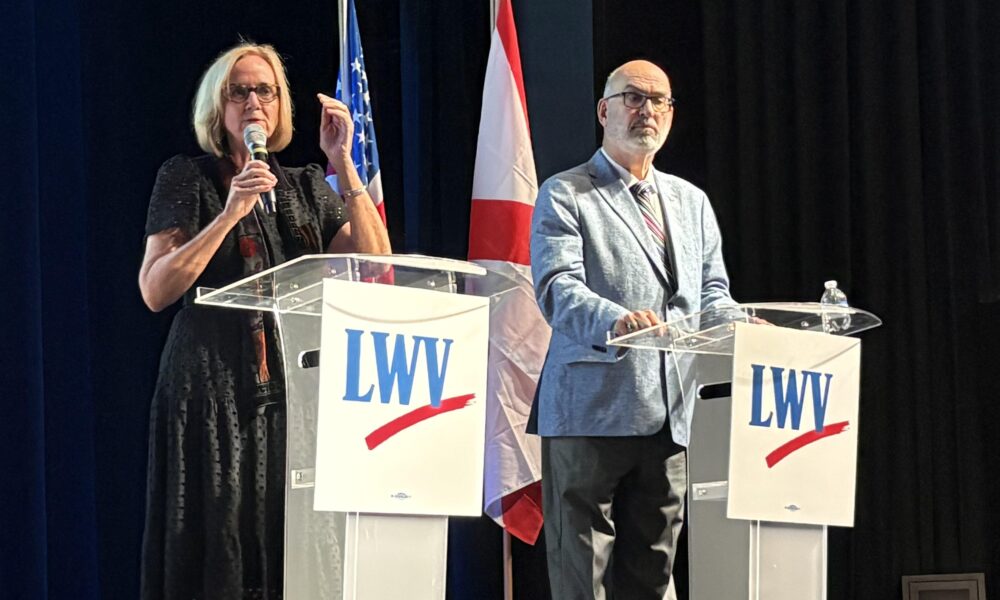
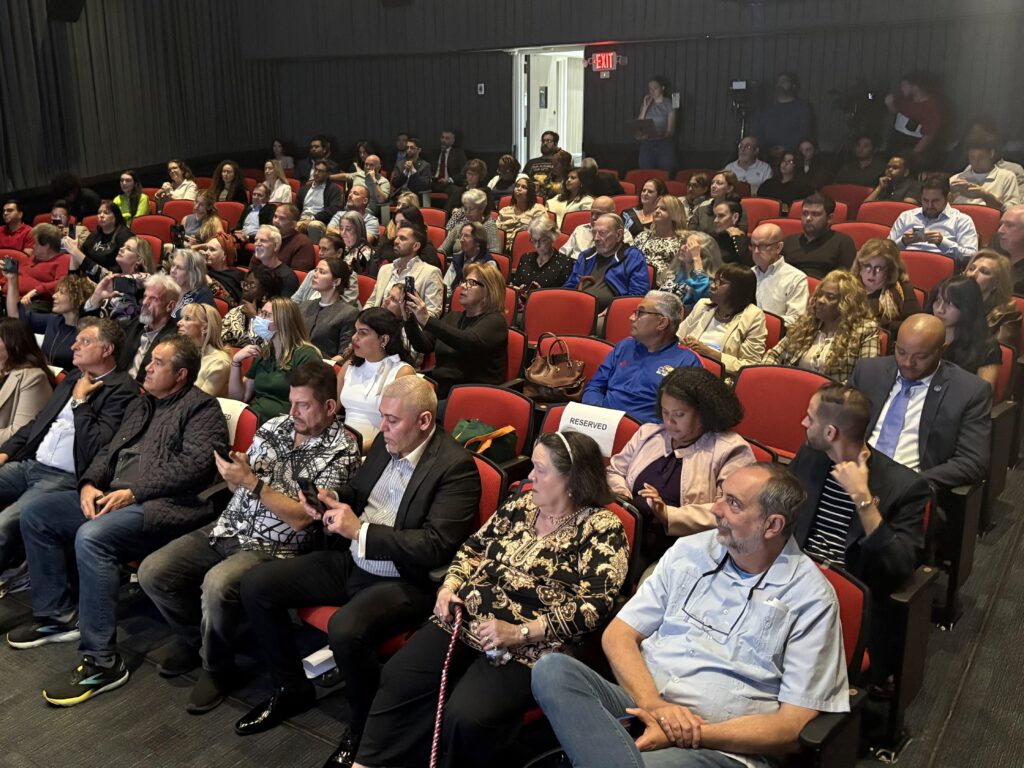
Just last week Higgins and Gonzalez came together for a candidate forum at the Koubek Center in Little Havana.
The event, sponsored by the League of Women Voters and the ACLU of Florida, was mostly a lovefest – something the crowd seemed to grab onto given the name-calling and anger that engulfed recent debates and other candidates.
When it ended, Higgins and Gonzalez hugged and laughed. It was genuine. The two candidates like each other and have worked together in the past. Higgins was a county commissioner representing a slice of Miami while Gonzalez was city manager.
Gonzalez, who received Trump’s endorsement through a Truth Social post on Sunday (although the president misspelled his name), backed out of a second forum with Higgins this week in Coconut Grove, citing a last-minute conflict.
The Trump endorsement could prove to be significant, if it drives more Republicans to the polls in what is expected to be a low-turnout runoff election.
In response, the Democratic National Committee announced this week that it was getting involved in the race as well, to support Higgins, according to Politico.
Early voting begins Friday, Dec. 5 and concludes Sunday, Dec. 7. The election date is Tuesday Dec. 9. Follow this link for a list of early voting sites.