


In the first community meeting since the Old Smokey toxic exposure litigation was certified as a class action, attorneys walked residents through the levels of potential involvement and urged them to pressure city officials to settle the case.
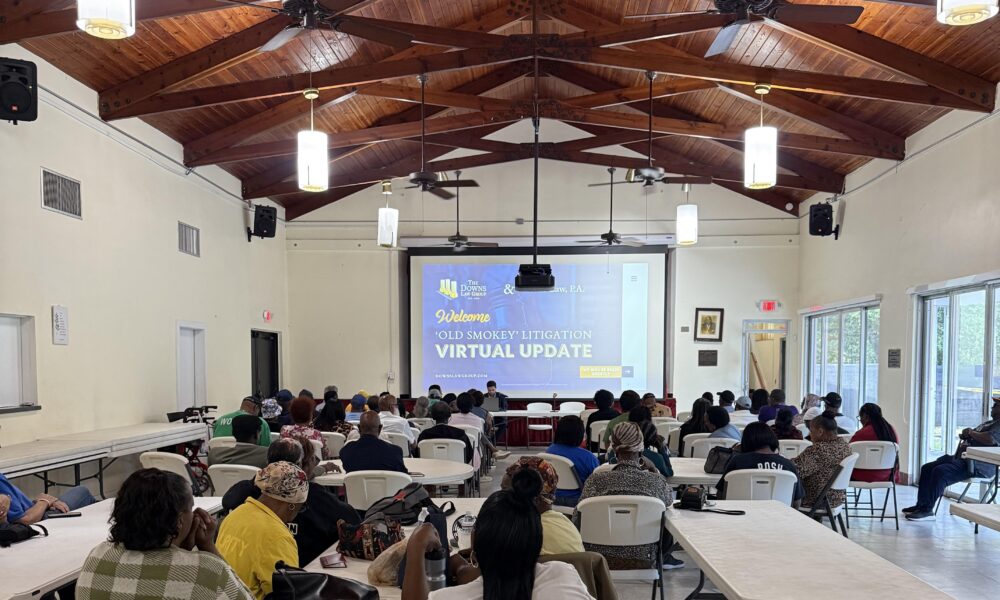
More than 75 people gathered at Christ Episcopal Church on Tuesday to learn how they might be affected — and what comes next — following a recent class-action ruling in a long-running lawsuit over toxic ash exposure in the West Grove tied to a former city-owned garbage incinerator known as Old Smokey.
“The strong turnout reflects how deeply this issue continues to affect our families,” said Carolyn Donaldson, a plaintiff in the case and one of the meeting’s organizers. “For many, this is not just a legal case, it is about recognition, dignity and justice for generations who have carried this burden.”
The lawsuit alleges that area residents were exposed for decades to toxic, cancer-causing substances — including dioxins and arsenic — through clouds of billowing ash, as well as contaminated soil left behind after nearly 50 years of incinerator operations.
The case, which has stretched on for more than eight years, was certified as a class action against the City of Miami last month by Judge Spencer Eig after five days of public and expert testimony in the case.
Read more: Residents Cheer Judge’s Decision in Old Smokey Lawsuit
“It’s a huge advantage to have the class certified,” said Jason Clark, an attorney with the Downs Law Group representing the plaintiffs, drawing applause from the room. “You have the full weight of everybody in this room going forward, as opposed to trying to fight the city one by one.”
While seen as a victory for plaintiffs in the case, the class-action ruling does not assign liability for the alleged exposure. Instead, it opens the lawsuit to the 2,200 properties included in the area around the former incinerator — up to a mile from the former site — and their current and former residents.
“This milestone affirms what our community has long known – that the impacts were real, widespread, and deserving of acknowledgment,” Donaldson said. “But our work is not done. We must continue to stand together to ensure every voice is heard and every family has access to the information and support they need.”
The majority of the meeting focused on explaining who qualifies for the three classes established in the ruling — a point several attendees said had been confusing — and what they stand to gain from participating.
The first class — open to current owners of single-family and townhome properties within the affected area — seeks compensation for soil testing, potential remediation and property damage if contamination is confirmed by the court. It also allows for damages tied to any loss in property value associated with the site.
The medical monitoring class applies to anyone under age 75 who is determined to have an increased risk of cancer due to fly ash exposure, as assessed by a scientific expert. Unlike the property damage class, it is also open to former residents who no longer live in the neighborhood.
Those found to be at elevated risk would qualify to have medical exams and testing covered for nine types of cancer, beginning 10 years after their first exposure.
The third class will be open to anyone with an existing, current health condition that can be linked to Old Smokey.
Several attendees sought clarity on how to join the case as plaintiffs.
“That’s where we are a little confused,” said Bridget Lee-Moody, president of the Coconut Grove Negro Women’s Club, addressing Clark during the meeting. “There were so many things going out that people did not understand that this was a real thing.”
Clark said qualifying residents will automatically be included in the class, but encouraged those with questions to contact the Downs Law Group or sign up for updates.
He also said notifications have not yet been sent because the case is stalled while the Third District Court of Appeals considers a sovereign immunity appeal — a legal provision that can shield governments from certain lawsuits — filed by the city before the class-action hearing.
Clark said he “fully expects” the city will file an additional appeal of the judge’s decision to certify the case as a class action. In the meantime, he urged the community to help pressure city leaders to settle the case.
“The ones who are saying to delay are your elected officials,” he said. “I can’t force the city to settle, but these people can.”









I attended the meeting that included a great many older and elderly folks in the audience. As the attorney reviewed the various “exclusions” from the three classes of plaintiffs allowed to seek damages, it is abundantly clear that delay favors defendant, City of Miami. People die, people move away, and gentrification of the entire area of 2200 residences deemed affected by Old Smokey continues at an increasing pace. If the City can delay long enough, the settlement figure will be a lot less. “Justice deferred is Justice denied.”