




A proposal to allow residential and mixed-use development on more than 660 properties with Civic Institution zoning failed amid concerns about affordability mandates and the churches’ vulnerability to developer pressure.
The Miami City Commission on Thursday soundly rejected a proposal to allow multifamily housing development on hundreds of properties citywide controlled by religious, educational or government entities.
Under the plan, backed by Miami District 4 Commissioner Ralph Rosado, more than 660 properties zoned Civic Institution, or CI, would have been eligible for mixed-use residential development “by right,” meaning without a rezoning or a separate land-use policy vote — a process that typically includes public hearings and gives neighbors the ability to formally challenge or appeal decisions.
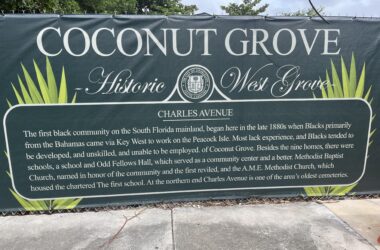
One of the most obvious beneficiaries of the proposed law would have been the 72-acre waterfront parcel in Coconut Grove controlled by the Catholic Church’s Archdiocese of Miami and currently occupied by the for-profit HCA Florida Mercy Hospital and Immaculata-La Salle High School.
Rosado argued the measure would help ease the housing crunch in what he called “arguably the least affordable city in the United States of America.”
But Commission Chairperson Christine King, representing District 5, gave the plan a “firm no,” arguing that many churches lacked the resources, and savvy, to navigate development deals.
Under the plan, nonprofit entities controlling CI-zoned properties could have developed the sites themselves or assigned their development rights, by contract, to private developers.
“I have a church in my district that is going into foreclosure because they got in bed with a developer that is unscrupulous,” King said before the vote.
City of Miami Planning Director David Snow echoed those concerns, telling commissioners that “the undue stress placed on churches in our community by the development sector is real.”
King, whose district includes the majority-black neighborhoods north of downtown Miami, also pushed back on the claim that the measure would truly move the needle on the city’s housing crisis.
Despite its billing as a housing affordability measure, the ordinance, as written, would not have required any units to be built in the city-designated “affordable” category, as defined by those accessible to lower-income households earning 60% to 80% of area median income (AMI), or about $52,000 to $69,000.
The words “affordable” or “affordability” were absent from the legislation, contradicting Rosado’s claim before the vote that “affordable requirements are built in.”
They were not.
Instead, the ordinance would have required some units to be priced as more expensive “workforce housing,” defined as attainable for households earning between 100% and 140% of AMI — or roughly $86,800 to $121,500 for a single person in Miami-Dade County. That threshold drew the ire of King, who said it misses where the city’s housing needs are most acute.
“One hundred percent of AMI is not affordable housing,” King snapped. “Not for moderate-income families.”
And while the proposal was framed around “workforce housing,” it notably did not specify how many units would be required, what share of a project they would represent, or how long they would have to remain priced at workforce levels — potentially allowing largely market-rate or even luxury developments with only token workforce units.
King raised a similar concern in November while debating another affordability-linked zoning amendment, warning of changes that function as a kind of Trojan horse — an opening for high-priced development under the guise of affordability.
“Let’s be clear, we all deal with developers,” she said. “You might have two units at 60% [AMI], two units at 80% [AMI], and a hundred units that are not affordable.”
Under the proposal, development within CI properties would not have been limited to housing alone. Projects could have included mixed-use development, integrating residential units with commercial, retail and office space.
The measure was defeated 4 to 1 with Rosado, who cast the lone vote in favor, vowing to bring the measure back for future consideration – a prospect that seemed to gain the support of newly elected Mayor Eileen Higgins, who shared her views with commissioners.
“In our county, the largest landowners are local governments, the Catholic Church and our school system,” said Higgins, who can weigh in on commission matters and veto legislation, but has no vote. “And the idea of being able to activate that land for housing, to me, is important.”


















While the initial proposal went down in flames, it’s not dead. Rosado, with the Mayor’s encouragement, plans to bring it back. But this time he’ll be better prepared with obtuse language and vocal supporters.